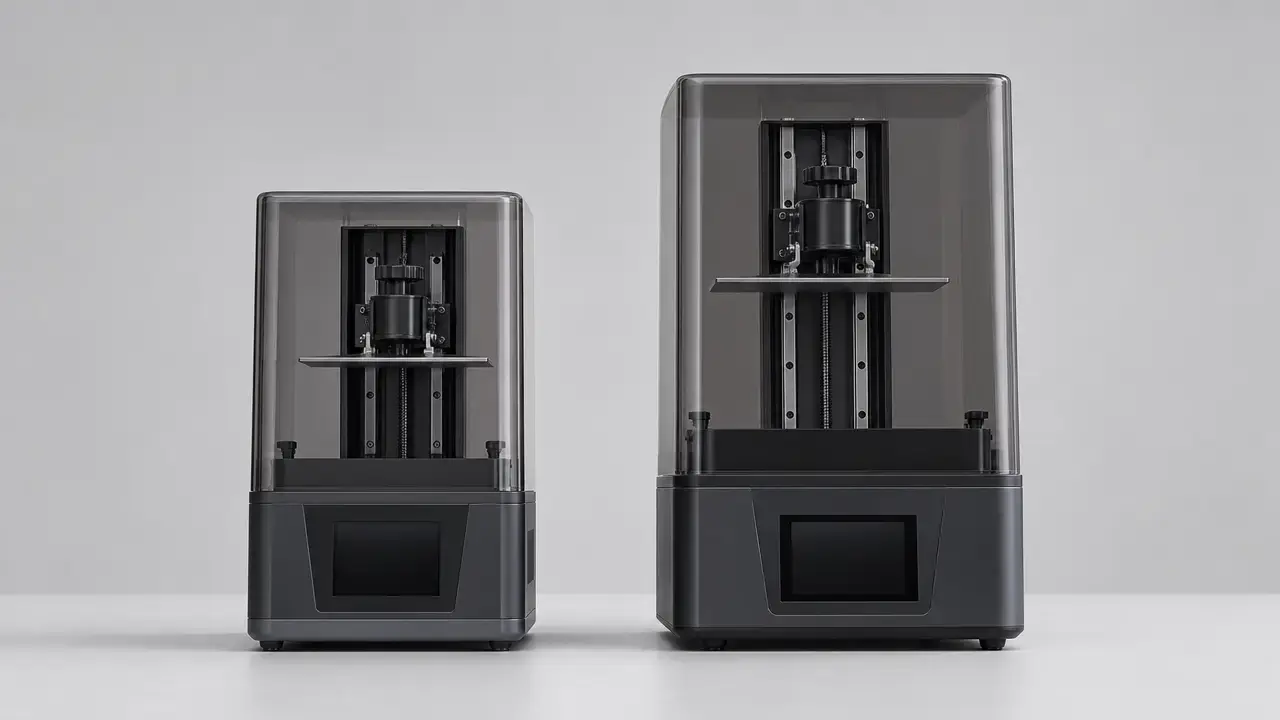

Verdict
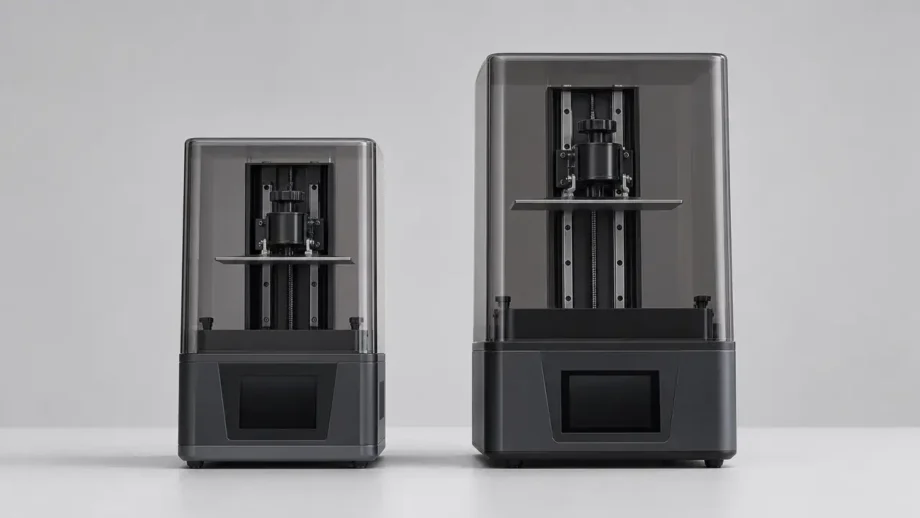
For most first-time buyers, the Mars 5 is the better value in the elegoo mars 5 vs mars 5 ultra decision. It keeps the entry price lower, uses a 6.6-inch 4K mono LCD, lists 35 µm XY resolution, and carries a manufacturer-rated maximum print speed of 70 mm/h. [1]
The Mars 5 Ultra makes more sense if you will actually use its finer planar sampling and added workflow features. It moves to 18 µm XY resolution, raises the headline speed rating to 150 mm/h, and adds Wi‑Fi, tilt release technology, AI camera functions, and power-loss resume printing. Elegoo also says the Ultra’s 5.5 s/layer figure requires fast print mode and Chitubox default parameters, including a 2.5 s default exposure time, so that number is conditional rather than universal. On September 21, 2026, the Mars 5 page showed $179.00, while the Mars 5 Ultra page showed $259.00 in the main price area and $269.00 in the option selector, so the value gap is real but live. Hands-on coverage exists for both printers, but no reliable side-by-side lab benchmark appears in the reviewed sources. [1] [2] [3] [11] [12]
Side-by-Side Spec Table
Specs are useful here, but only if you read them carefully. Official listings can tell you LCD size, XY pixel size, build volume, interface, connectivity, and the manufacturer’s stated speed or Z-axis figures. They cannot, by themselves, prove finished-part accuracy, guarantee visible quality gains on every resin, or promise that one printer will always be faster in real jobs. In resin printing, exposure tuning, support strategy, release behavior, washing, and curing all affect the result. [1] [2] [3]
| Spec | Mars 5 | Mars 5 Ultra | Why it matters |
|---|---|---|---|
| Build volume (X × Y × Z) | 143.43 × 89.6 × 150 mm. [1] | 153.36 × 77.76 × 165 mm. [2] | Mars 5 is wider on Y; Ultra is longer on X and taller on Z. |
| LCD / resolution label | 6.6-inch 4K mono LCD. [1] | 7-inch 9K mono LCD. [2] | Resolution labels matter less than physical pixel size. |
| XY pixel size / matrix | 35 µm; 4098 × 2560. [1] | 18 µm; 8520 × 4320. [2] | The Ultra can sample finer features on the build plane. |
| Layer height range | 0.01–0.2 mm. [3] | 0.01–0.2 mm. [3] | This is a process setting, not proof of print accuracy. |
| Z-axis accuracy (manufacturer-stated axis spec) | 0.02 mm. [3] | 0.02 mm. [3] | Do not read this as guaranteed part tolerance. |
| Max print speed | MAX 70 mm/h. [1] | MAX 150 mm/h. [2] | Throughput claims are profile-dependent. |
| 5.5 s/layer note | — | Fast mode plus Chitubox default parameters, including 2.5 s exposure. [3] | The Ultra’s fastest quoted figure is conditional. |
| Connectivity | USB. [1] | Wi‑Fi, USB. [2] | Wi‑Fi changes transfer and monitoring workflow more than print quality. |
| Screen protection | PET scratch-resistant film. [3] | 9H hardness tempered glass. [3] | Protection affects maintenance risk more than output. |
| UI / screen | 3.5-inch resistive touch screen. [3] | 4.0-inch capacitive touch screen. [3] | This mostly affects day-to-day usability. |
| Official slicer listing | Chitubox and Voxeldance Tango. [3] | Chitubox. [3] | Official listings are not the same as exhaustive compatibility. |
| Dimensions / net weight | 230 × 230 × 433.5 mm; 6.6 kg. [1] | 260 × 268 × 451.5 mm; 8.8 kg. [2] | The Ultra takes more desk space and is less portable. |
| Price snapshot (2026-09-21) | $179.00. [1] | $259.00 main price; $269.00 option selector. [2] | Time-sensitive; recheck before buying. |
| Best for | Lower-cost entry. | Higher-detail, higher-feature workflow. | Editorial summary, not a spec. |
The two biggest buyer-facing differences are the 35 µm vs 18 µm XY pixel size gap and the USB-only vs Wi‑Fi + USB workflow split. The speed row also needs careful reading: 70 mm/h and 150 mm/h are manufacturer maximums, and the Ultra’s best-known per-layer figure is explicitly tied to a fast-mode setup rather than every resin or model. [1] [2] [3]
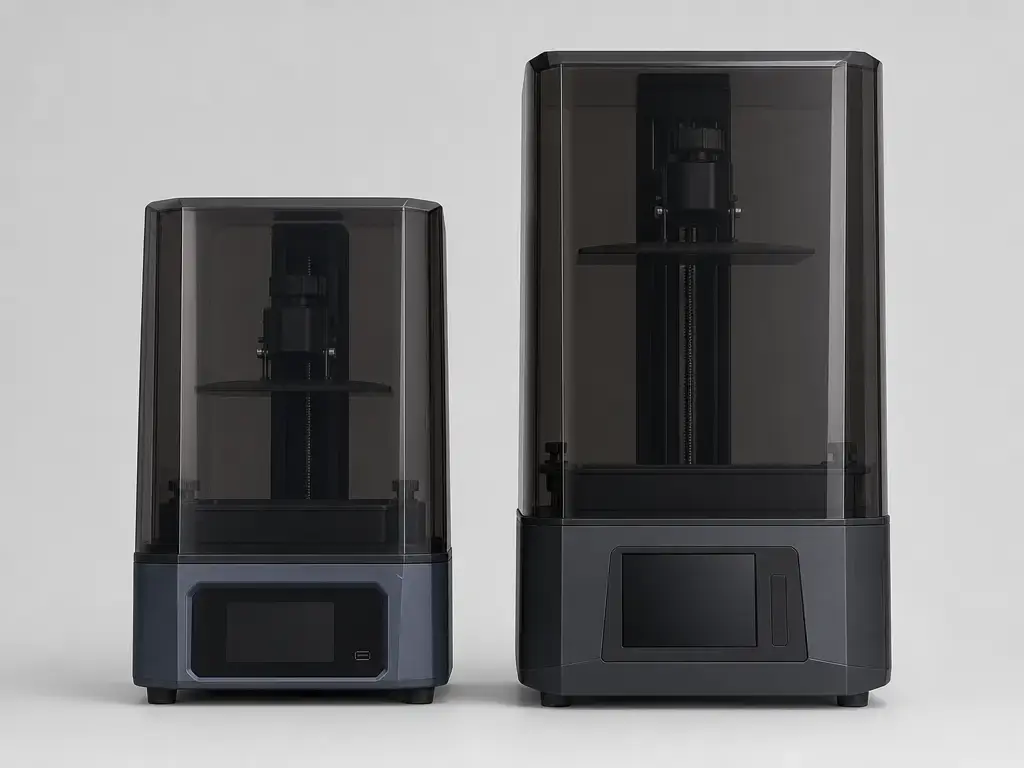
What Actually Differs
If you only need the short version, these are the differences most likely to affect a buying decision. [1] [2] [3]
- XY detail potential: Mars 5 is 35 µm; Mars 5 Ultra is 18 µm. [1] [2]
- Headline speed rating: Mars 5 is MAX 70 mm/h; Mars 5 Ultra is MAX 150 mm/h. [1] [2]
- Fastest Ultra claim is conditional: the 5.5 s/layer figure requires fast mode and Chitubox default parameters, including 2.5 s exposure. [3]
- Build shape differs by axis: Mars 5 is wider on Y, while Ultra is longer on X and taller on Z. [1] [2]
- Connectivity differs: Mars 5 is USB-only; Ultra adds Wi‑Fi. [1] [2]
- Protection differs: Mars 5 uses PET film; Ultra uses 9H tempered glass. [3]
- UI differs: Mars 5 uses a 3.5-inch resistive screen; Ultra uses a 4.0-inch capacitive screen. [3]
- Ultra-only workflow extras: tilt release technology, AI camera features, and power-loss resume printing. [2]
Terminology & Metrics
This comparison gets confusing when different terms get treated as if they mean the same thing. ISO/ASTM 52900 provides the vocabulary baseline for additive manufacturing, and ISO/ASTM 52902 covers geometric capability assessment with test artefacts rather than reliance on a single brochure number. Both Elegoo machines are listed as MSLA printers, and NIST places this class within vat photopolymerization, where liquid photopolymer resin is cured with ultraviolet light. That means “4K” or “9K,” “18 µm” or “35 µm,” “0.01 mm layer height,” and “0.02 mm Z-axis accuracy” are not interchangeable ideas. [6] [8] [9] [1] [2] [3]
- MSLA / vat photopolymerization: a resin-printing process class where UV light cures liquid photopolymer layer by layer. [6]
- LCD resolution label: “4K” and “9K” describe the panel class or pixel count, not the whole quality story. [1] [2]
- XY pixel size: the physical spacing of pixels on the build plane; here, 35 µm on Mars 5 and 18 µm on Mars 5 Ultra. [1] [2]
- Layer height: a slicer setting in Z; Elegoo lists 0.01–0.2 mm for both machines. [3]
- Z-axis accuracy: a manufacturer-stated motion-system figure of 0.02 mm for both machines, not a promised final tolerance. [3]
- Dimensional accuracy: a measured print outcome after exposure, shrinkage, washing, and curing; no reliable model-specific measured figure was found in the reviewed sources. [9]
Print Quality and Speed in Practice
For mars 5 vs mars 5 ultra print quality, the Ultra has the stronger hardware ceiling on paper. Its 18 µm pixels can place smaller XY features than 35 µm pixels. In practice, that tends to matter most on tiny engraved textures, chainmail-like surfaces, crisp edges, micro text, and other geometry that benefits from denser planar sampling. That advantage is real, but it remains a ceiling rather than a guarantee that every Ultra print will look obviously better than every Mars 5 print. [1] [2]
Pixel size is also not the whole story. NIST’s work on LCD-based vat photopolymerization points to light-engine uniformity, irradiance variation, spectral behavior, and other optical characteristics as factors that can influence polymerization, surface texture, and part fidelity. In practical use, the usual variables still matter: resin choice, exposure time, layer height, slicer smoothing behavior, lift and release settings, supports and orientation, plus washing, curing, and finishing. [7] [6]
The same caution applies to speed. Mars 5 is rated at MAX 70 mm/h and Mars 5 Ultra at MAX 150 mm/h, but those are manufacturer maximums rather than guarantees for every job. As one review-specific example, Tom’s Hardware reported a Mars 5 Ultra “Rocket Bust” print in 2 h 27 min using 2.2 s exposure. That is a useful real-world data point, but it is still one reviewer’s model, resin, and profile rather than a universal benchmark. [1] [2] [11]
Running Costs
The machine price is only part of ownership cost. On September 21, 2026, the Mars 5 page showed $179.00, while the Mars 5 Ultra page showed an internal conflict between $259.00 and $269.00. That makes the Ultra the pricier buy before you spend anything on resin, gloves, filters, funnels, wash liquid, paper towels, or other normal resin-workflow supplies. [1] [2]
After that, the picture becomes more qualitative because no reliable model-specific lifetime data for LCDs, films, or failure rates appeared in the reviewed sources. One verified maintenance difference is the screen protector: PET scratch-resistant film on the Mars 5 versus 9H tempered glass on the Ultra. Cleanup is also unavoidable; Elegoo’s own washing guide treats post-processing as a standard part of the workflow, and Prusa’s maintenance guidance says used IPA should typically be treated as hazardous liquid under local rules. [3] [5] [17]
Ecosystem and Software
Elegoo positions the two machines slightly differently on software. The Mars 5 is listed with Chitubox and Voxeldance Tango, while the Mars 5 Ultra is listed with Chitubox. On file transfer, the Mars 5 uses USB only, while the Ultra supports Wi‑Fi and USB. That gives the Ultra the better-documented remote workflow, while the Mars 5 stays with the simpler thumb-drive path many resin users already know. [1] [2] [3]
Tom’s Hardware says the Mars 5 Ultra ships with ChituBox Basic and is compatible with Lychee Slicer, but also notes that the camera does not work with Lychee Slicer at the moment of that review. That is useful, but it is time-sensitive and Ultra-specific. For the standard Mars 5, no reliable confirmation for Lychee support appeared in the reviewed sources, so it should not drive the verdict. [11]
Workflow Features Explained
Both printers share the beginner-friendly baseline features that matter most during setup. Each model includes one-click automatic leveling, self-check behavior, overheat protection, and smart mechanical sensor alarms for resin shortage, residue detection, and leveling failure. That is meaningful convenience, but “automatic leveling” should still be read as automating part of setup rather than eliminating all calibration, resin tuning, or support choices. [1] [2]
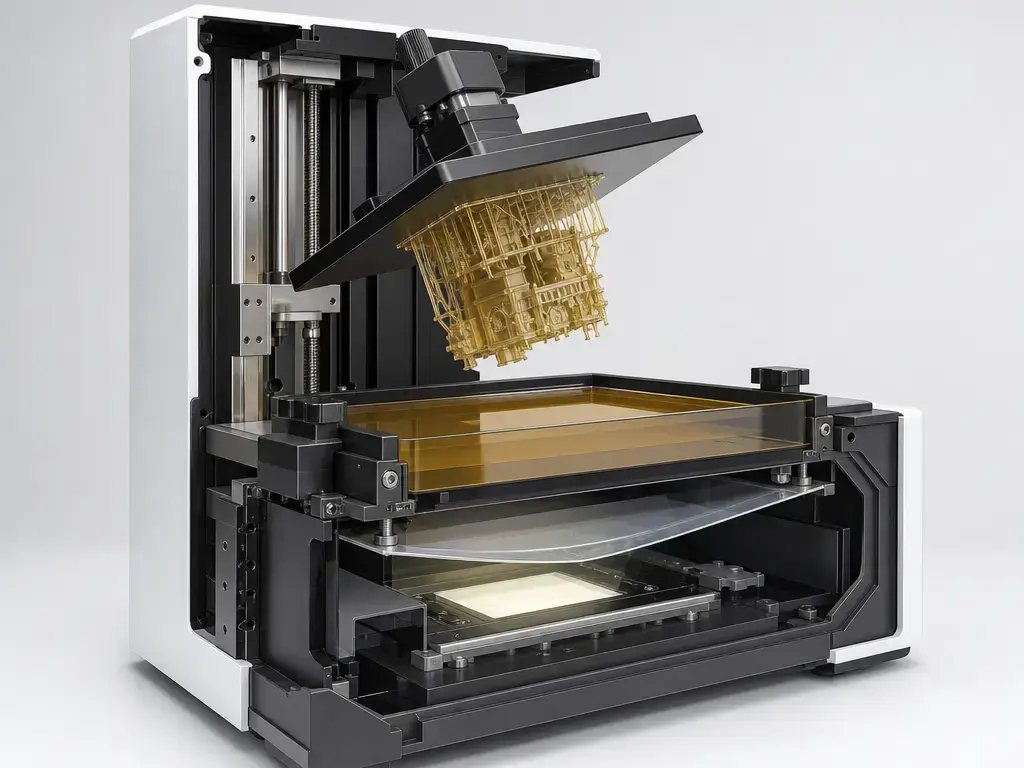
The Ultra is where the workflow split becomes clearer. It adds tilt release technology, Wi‑Fi, AI camera functions, power-loss resume printing, and a section-based exposure feature on the series page. Tilt release is best understood as a release-motion method during layer separation; in practice, that can help reduce peel load or shorten cycle time under suitable settings, but it is still resin- and profile-dependent. The AI camera is not a universal safety net either: Elegoo says detection results may vary depending on the environment, model, and resin type. [2] [3]
Speed & Tilt Release — Throughput, Peel Forces, and the Fine Print
The official speed gap is straightforward on paper: MAX 70 mm/h for the Mars 5 and MAX 150 mm/h for the Mars 5 Ultra. The reason the Ultra can plausibly chase a higher figure is its tilt release feature, which changes the release motion when separating cured layers from the film instead of relying only on a more conventional straight release cycle. That makes sense as a speed-oriented feature, but it does not mean every print will run anywhere near the headline number, and it does not automatically improve detail. The fine print matters because Elegoo explicitly says the Ultra’s 5.5 s/layer figure depends on fast print mode and Chitubox default parameters, including a 2.5 s default exposure setting. Real throughput is still a system result rather than a single spec-sheet promise. [1] [2] [3]
- Model geometry changes peel load and cycle behavior.
- Resin viscosity and room temperature change flow and release behavior.
- Exposure changes can trade speed for adhesion or detail.
- Lift and retract timing still affect total cycle time.
- mm/h does not equal total job time once supports and post-processing are included. [3]
Build Volume, Footprint, and Desk Space
Axis by axis, this is not a simple “smaller” versus “larger” comparison. The Mars 5 offers 143.43 × 89.6 × 150 mm, while the Mars 5 Ultra offers 153.36 × 77.76 × 165 mm. That means the Mars 5 is wider on the Y axis, while the Ultra is longer on the X axis and taller on Z. If your parts are short but broad in one orientation, the Mars 5 can actually be the better fit on that axis. [1] [2]
The machine bodies follow the same pattern. Mars 5 measures 230 × 230 × 433.5 mm and weighs 6.6 kg; Mars 5 Ultra measures 260 × 268 × 451.5 mm and weighs 8.8 kg. The Ultra takes more bench space and is less convenient to move, which matters once you add wash and cure gear around it. For taller busts and slightly longer parts, the Ultra is more flexible; for a tighter workspace, the standard Mars 5 is easier to place. [1] [2]
Who Should Buy Which?
The clearest way to answer mars 5 ultra vs mars 5 is to match each machine to an actual use pattern rather than a feature count.
-
Budget-first beginner — pick Mars 5. If your goal is to enter resin printing as cheaply and simply as possible, the Mars 5 is the cleaner choice. It was listed at $179.00 on September 21, 2026, stays USB-only, and has the smaller, lighter body at 6.6 kg. You still get the core automation features without paying extra for Wi‑Fi, camera functions, or power-loss resume. [1] [3]
-
Detail-chasing hobbyist — pick Mars 5 Ultra. If your priority is the best planar detail potential in this pair, the Ultra is the stronger fit because it moves from 35 µm to 18 µm XY resolution and adds the more feature-rich interface, Wi‑Fi workflow, and recovery features. That makes the most sense when you print small, detail-sensitive parts often enough to justify the price jump. [1] [2] [3]
-
Convenience-focused frequent user — pick Mars 5 Ultra. If you print regularly and care about easier transfer, monitoring, and interruption recovery, the Ultra has the stronger case thanks to Wi‑Fi, AI camera functions, tilt release, and power-loss resume printing. [2] [3]
Independent evidence remains limited in one important way: the reviewed sources include hands-on coverage for both machines, but not a controlled lab-style side-by-side benchmark using the same resin, model set, and measurement protocol. That makes the buying call strongest when it stays tied to verified specs and workflow differences rather than broad print-quality promises. [11] [12]
Short Background
For timing context, All3DP published launch coverage of the Mars 5 pair on June 24, 2024, and Elegoo’s own RAPID + TCT post lists the event dates as June 25–27, 2024. That places the Mars 5 and Mars 5 Ultra in the same product-cycle moment rather than separate generations. More broadly, NIST’s June 10, 2026 photopolymer AM workshop report shows that metrology, standards, safety, and process consistency remain active topics in vat photopolymerization beyond any single consumer printer release. [13] [18] [10]
Safety & Ownership Reality Check
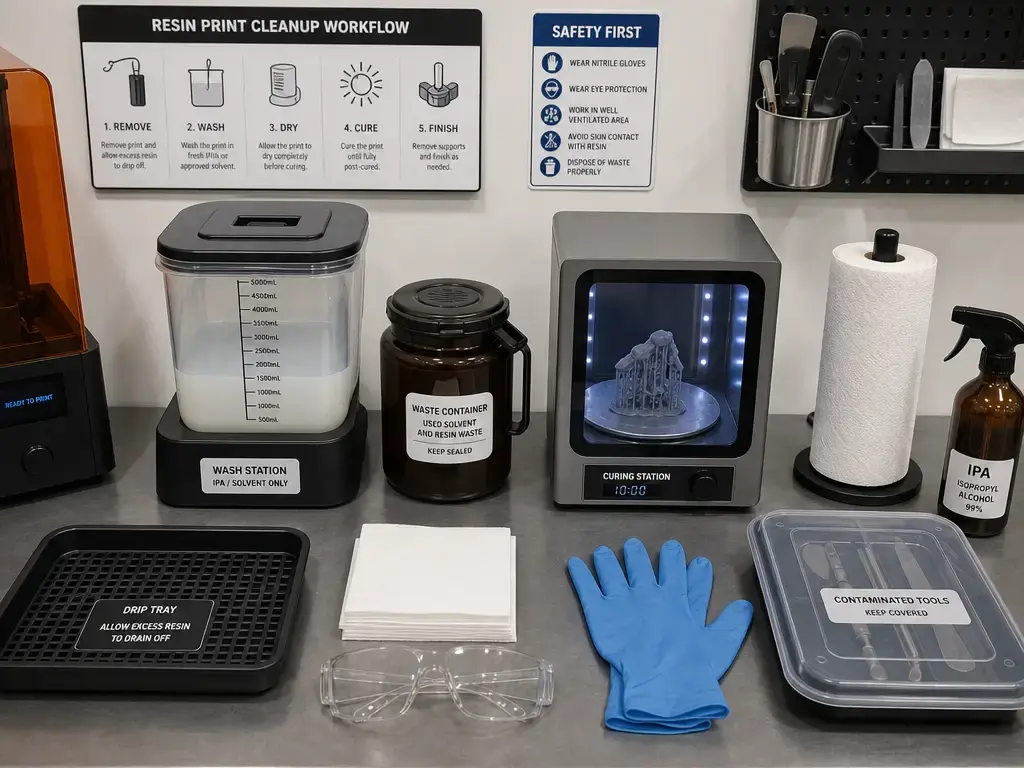
Resin ownership is not just a hardware decision. NIOSH says additive-manufacturing hazards can include VOC emissions and dermal exposure to hazardous materials, and its additive-manufacturing bulletin specifically lists vat photopolymerization hazards such as inhalation of VOCs and dermal exposure to resins and solvents. So “low odor” should never be treated as the same thing as “safe.” Elegoo’s own cleaning guidance also makes clear that washing and cleanup are normal parts of the process, not edge cases. [14] [15] [5]
- Wear nitrile gloves when handling uncured resin or contaminated tools. [16]
- Use eye protection during pouring, washing, and cleanup. [16]
- Have a ventilation strategy; do not rely on smell as your exposure gauge. [14] [15]
- Plan spill handling before the first print, including wipes and a way to isolate contaminated waste. [5] [16]
- Treat washing and curing as part of the print workflow, not optional cleanup. [5]
- Treat used IPA or other contaminated solvent as hazardous waste and follow local disposal rules. [17]
That practical overhead matters in the buying decision. If cleanup, PPE, and solvent handling sound manageable, either printer can make sense. If they sound like a mismatch for your space or habits, the right answer may be to pause before buying any resin machine at all.
FAQ
What is the difference between Elegoo Mars 5 and Mars 5 Ultra?
The main differences are XY pixel size, speed rating, and workflow features. Mars 5 is a 35 µm, USB-only machine rated at MAX 70 mm/h, while Mars 5 Ultra is 18 µm, adds Wi‑Fi, and is rated at MAX 150 mm/h with extras such as tilt release, AI camera functions, and power-loss resume printing. [1] [2]
Is the Mars 5 Ultra worth it over the Mars 5 for miniatures?
It can be, but only if you value the finer 18 µm XY sampling and will actually use the workflow extras. For a budget-first miniatures buyer, the Mars 5 still covers the basics at a lower entry price. On September 21, 2026, the Mars 5 showed $179.00, while the Ultra page showed $259.00 and $269.00 in different places. [1] [2]
Does 18 µm vs 35 µm XY pixel size guarantee better print quality?
No. It guarantees a finer sampling grid on the build plane, not a guaranteed visual win on every print. Final results still depend on exposure, resin behavior, orientation, supports, light uniformity, and post-processing. The Ultra has the stronger hardware ceiling; it does not come with an automatic quality guarantee. [1] [2] [7]
How much faster is the Mars 5 Ultra in real use, and what does “5.5 s/layer” actually mean?
The official headline jump is 70 mm/h to 150 mm/h, but the 5.5 s/layer figure is not universal. Elegoo says it requires fast print mode and Chitubox default parameters, including 2.5 s exposure. Real job time still varies with resin, temperature, geometry, support load, and release settings. [1] [2] [3]
Is the Mars 5 Ultra build volume bigger than the Mars 5?
Axis by axis, yes and no. The Ultra is longer on X and taller on Z at 153.36 × 77.76 × 165 mm, but the Mars 5 is wider on Y at 143.43 × 89.6 × 150 mm. So the better fit depends on how your parts are oriented, not just on total volume. [1] [2]
Do both printers have automatic leveling — and what still needs calibration?
Yes. Both official feature lists include one-click automatic leveling. But that does not remove the need to choose the right resin profile, exposure time, supports, orientation, and post-processing workflow. Automatic leveling reduces setup friction; it does not replace print tuning. [1] [2]
What standards exist for assessing dimensional accuracy or geometric capability in additive manufacturing, and why doesn’t Z-axis accuracy equal part tolerance?
ISO/ASTM 52900 is the vocabulary standard for AM terminology, while ISO/ASTM 52902 covers geometric capability assessment using test artefacts. That matters because a printer’s 0.02 mm Z-axis accuracy is a motion-system spec, not a measured promise that finished prints will land within ±0.02 mm. Real dimensional accuracy has to be tested on printed artefacts. [8] [9] [3]
Sources
- Elegoo Mars 5 US product page — https://us.elegoo.com/products/mars-5-4k-6-6inch-monochrome-lcd-resin-3d-printer
- Elegoo Mars 5 Ultra US product page — https://us.elegoo.com/products/mars-5-ultra-9k-7inch-monochrome-lcd-resin-3d-printer
- Elegoo Mars 5 Series comparison page — https://us.elegoo.com/pages/elegoo-mars-5-series
- Elegoo Product Safety Information — https://www.elegoo.com/pages/product-safety-information
- Elegoo cleaning guide for resin prints — https://www.elegoo.com/blogs/3d-printer-user-guide/how-to-safely-clean-your-resin-3d-prints-using-resin-washing-solution
- NIST Vat Photopolymerization overview — https://www.nist.gov/additive-manufacturing/research-areas/technologies/vat-photopolymerization
- NIST publication page on LCD light-engine uniformity — https://www.nist.gov/publications/characterizing-light-engine-uniformity-and-its-influence-lcd-based-vat
- ISO/ASTM 52900:2021 listing — https://www.iso.org/standard/74514.html
- ISO/ASTM 52902:2023 listing — https://www.iso.org/standard/79683.html
- NIST AMS 100-78 Photopolymer Additive Manufacturing 2025 Workshop Report — https://nvlpubs.nist.gov/nistpubs/ams/NIST.AMS.100-78.pdf
- Tom’s Hardware Elegoo Mars 5 Ultra review — https://www.tomshardware.com/3d-printing/elegoo-mars-5-ultra-review
- 3D Printer World Elegoo Mars 5 review — https://www.3dprinterworld.com/elegoo-mars-5-review/
- All3DP launch-context article on Mars 5 and Mars 5 Ultra — https://all3dp.com/4/elegoo-fully-reveals-mars-5-and-mars-5-ultra-3d-printers/
- CDC/NIOSH additive manufacturing hazards overview — https://www.cdc.gov/niosh/manufacturing/additive/index.html
- CDC/NIOSH bulletin on potential hazards of additive manufacturing — https://www.cdc.gov/niosh/bulletin/2019/additive-manufacturing.html
- Prusa blog on resin safety and PPE — https://blog.prusa3d.com/everything-you-always-wanted-to-know-about-resins-and-safety-sla-printing-but-were-afraid-to-ask_70758/
- Prusa Knowledge Base on used IPA disposal considerations — https://help.prusa3d.com/article/cw1-maintenance_112145
- Elegoo Rapid + TCT 2024 event post — https://www.elegoo.com/blogs/news/meet-elegoo-at-rapid-tct-2024-to-explore-the-future-of-3d-printing