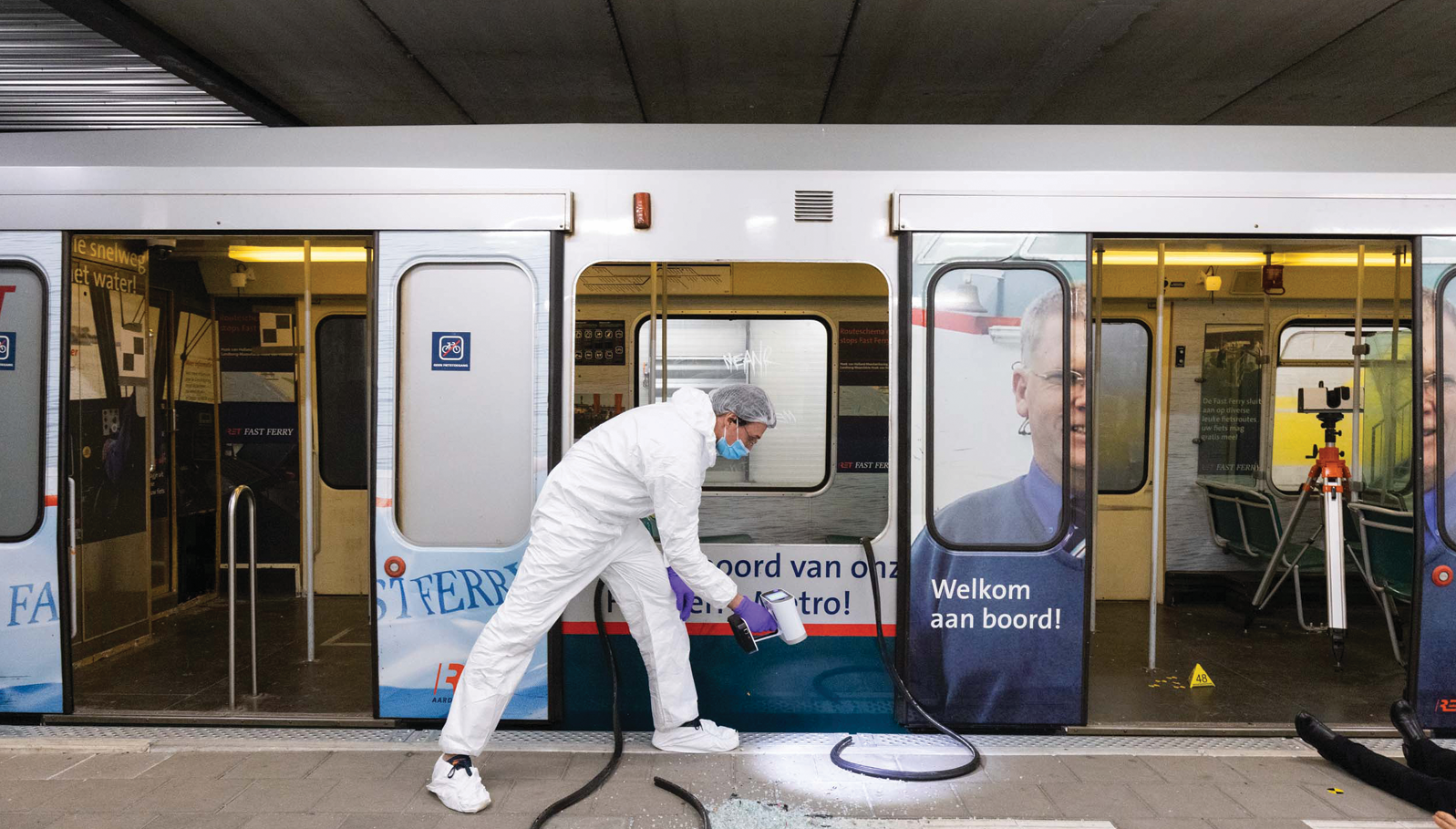

A crime scene is a fragile thing. The very moment investigators arrive, it starts to change: footsteps shift debris, bloodstains dry, and evidence gets moved, bagged or lost. Photographs and sketches capture a moment, but they flatten it. 3D scanning can change that.
3D scanning for forensics means using optical or laser scanners to record the exact shape, size and surface detail of a scene or object as a precise digital twin. Investigators can measure that 3D model, rotate it, share it, and revisit it years later, long after the physical scene is gone.
In short
- 3D scanners capture crime scenes, accident sites, objects and human remains as accurate digital copies.
- The data can be measured, shared and reanalyzed, and used in simulations.
- 3D models can be presented in court, helping judges and juries understand locations, evidence and injuries they cannot visit or see in person.
- Scanning is contact-free, which protects fragile evidence from handling.
- Forensic teams worldwide already use it, from police units to university labs.
- The right scanner depends on scale: room-sized scenes, handheld evidence or microscopic detail.
Where forensic 3D scanning is used
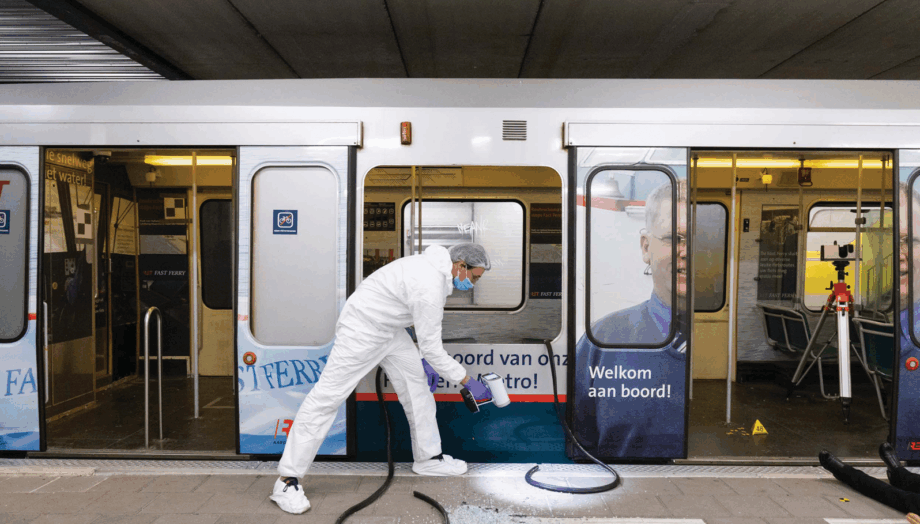
Crime scene documentation and reconstruction. Scanners record entire rooms or outdoor sites in minutes, preserving the spatial relationships between every object. Investigators can later measure distances, test lines of sight and examine details nobody noticed at the time.
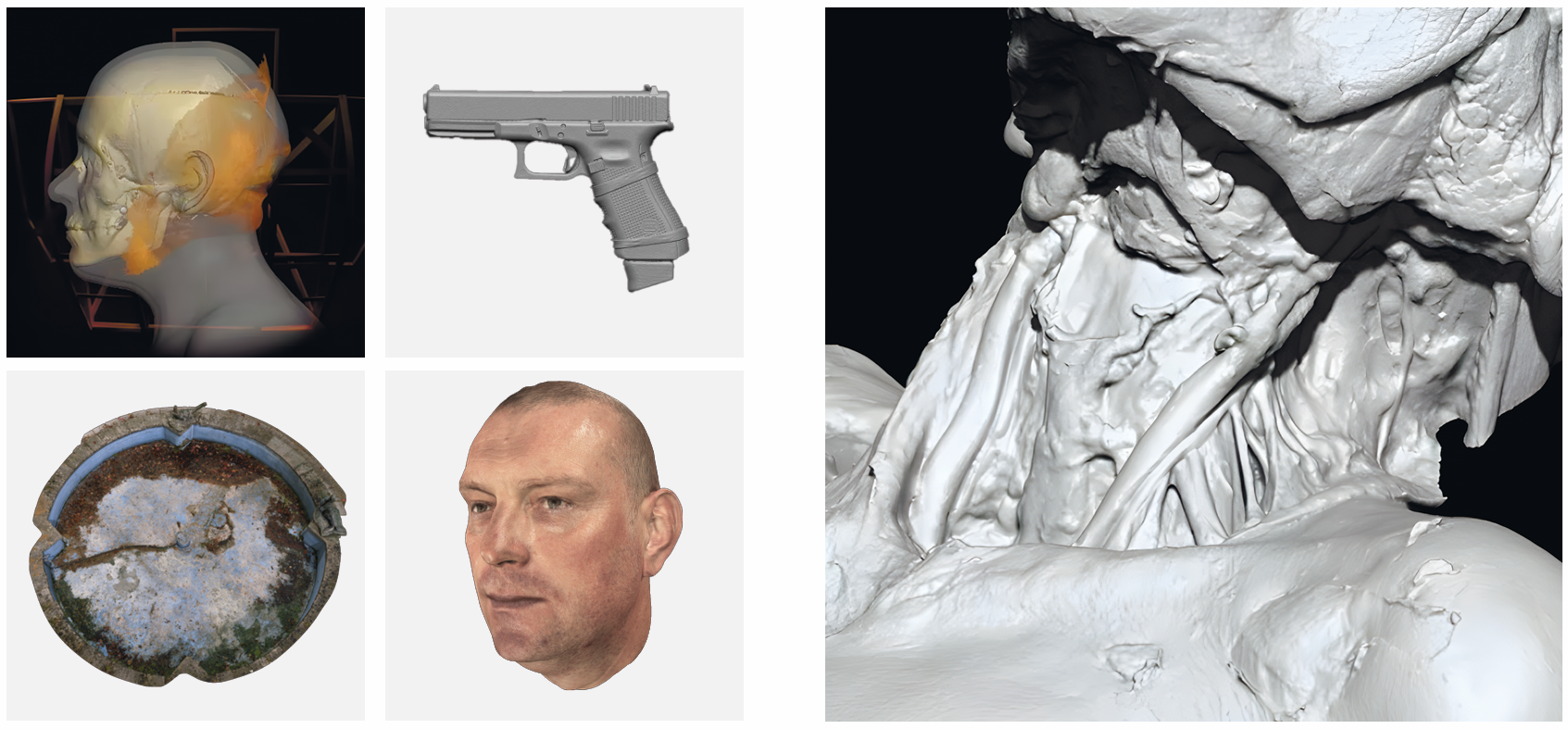
Collecting and digitizing evidence. Bloodstain patterns, bullet holes, tool marks, shoe prints and tire marks can all be captured in detail, along with the surrounding context. Evidence that cannot be moved, or that degrades quickly, can be recorded once and studied indefinitely.
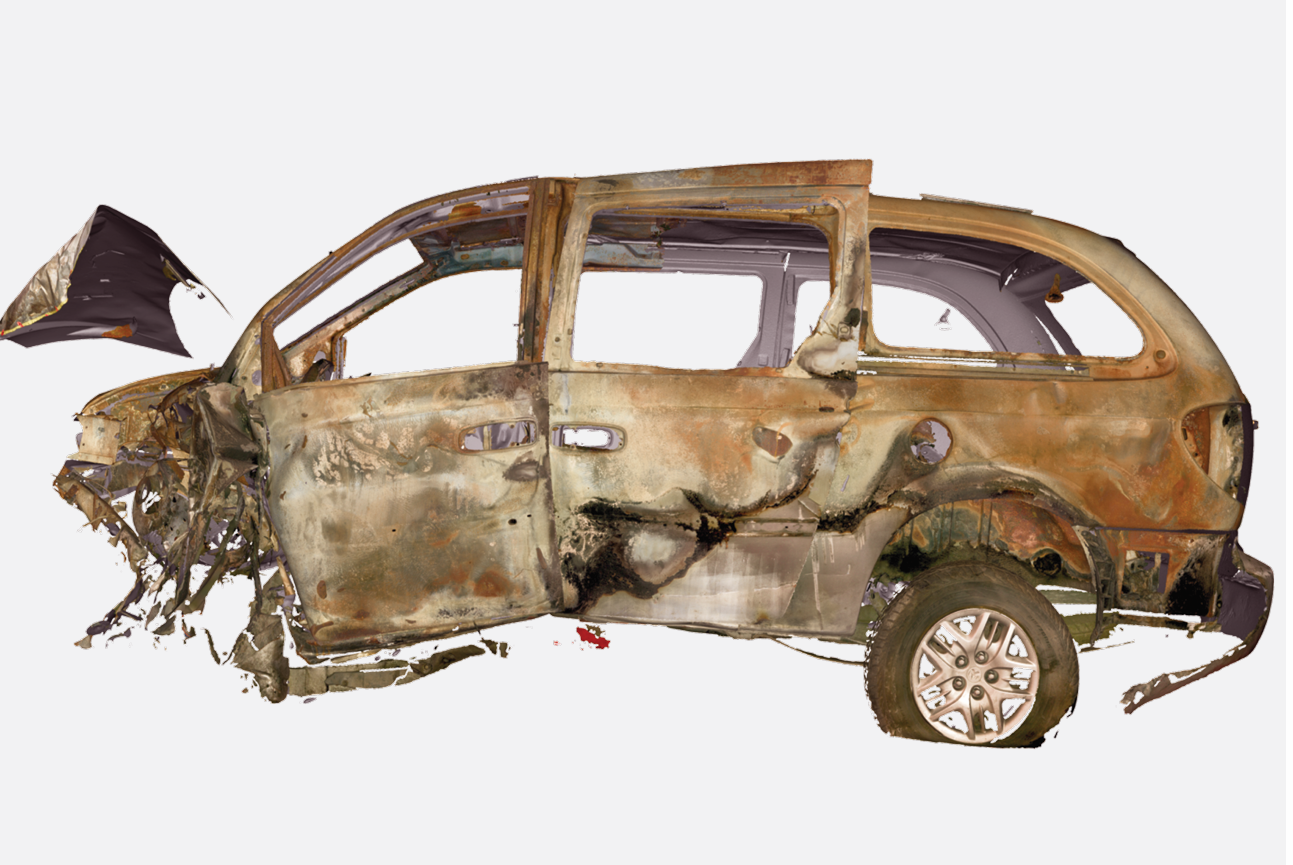
Crash reconstruction. After a serious vehicle accident, teams can document vehicle crush patterns, asphalt gouges and tire marks quickly, which also shortens the time responders spend on a dangerous road.
Simulations of different scenarios. Digital evidence can be exported to simulation software, so analysts can test competing accounts of an event and see how each one plays out on screen.
Virtual crime scenes for court. Detailed models help judges and juries understand a location or an injury they cannot visit, in pre-trial and courtroom settings alike.
Forensic anthropology and odontology. Scanning skeletal remains, entire death scenes and dental evidence supports work such as identifying the deceased, estimating time of death and interpreting signs of trauma.
What’s in it for investigators
Speed. Modern scanners capture up to 35 million points per second, which can turn hours or days of on-site documentation into minutes.
Completeness. A scan records everything within range, from the wider environment down to details as small as fingerprints, so nothing depends on what an investigator thought to photograph.
Accuracy. Top-end systems reach accuracy of 0.005 mm and resolution of 0.04 mm, enough to reveal marks that are easy to miss by eye.
Preservation. The scene is captured as it was at the moment of scanning, and the data can be revisited whenever new questions arise.
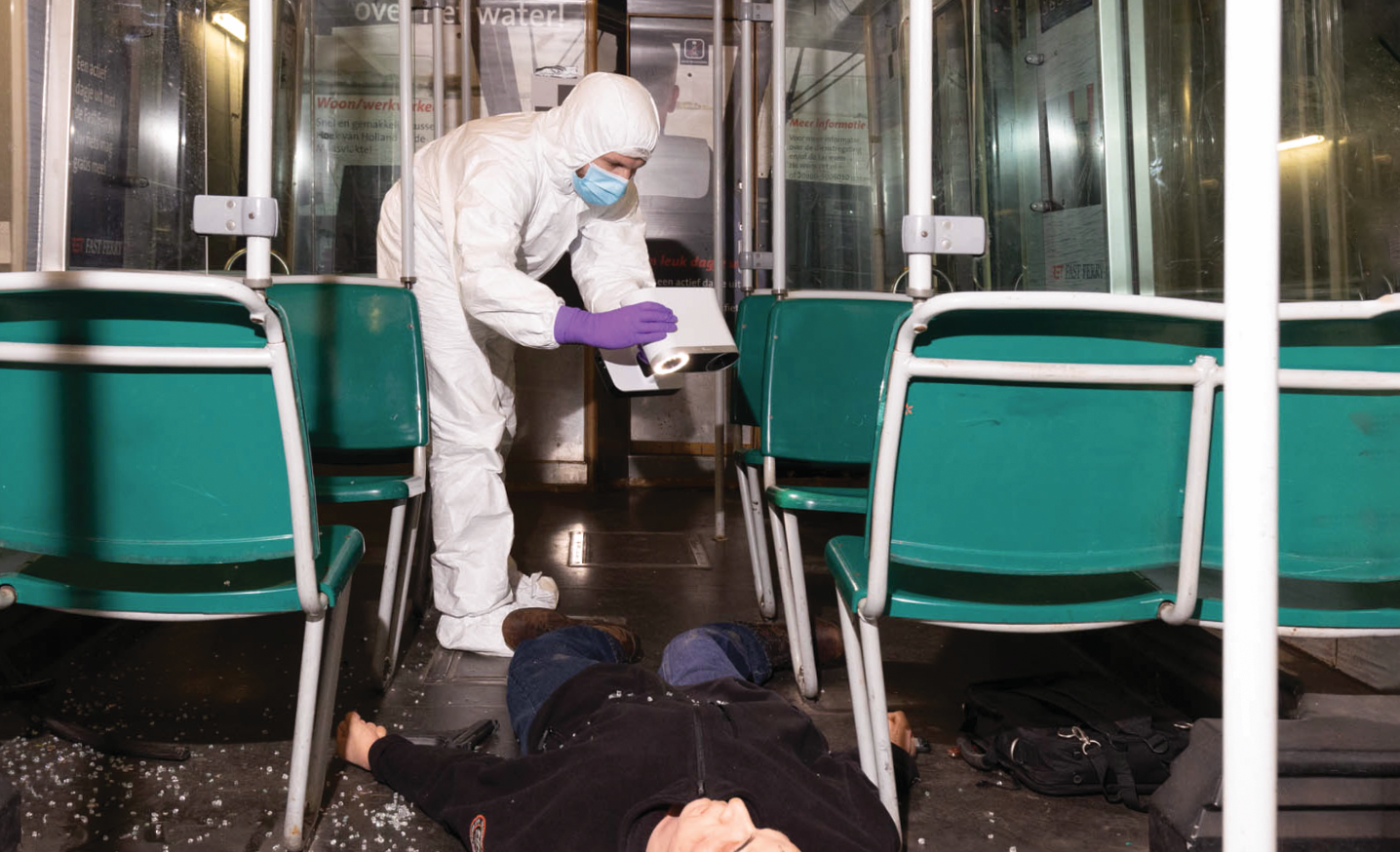
Safety and non-contact capture. Scanning avoids handling delicate evidence and limits exposure to hazardous sites.
Low barrier to entry. Training on some scanners takes under two hours, so teams can start capturing usable data quickly.
Which scanner for which job
There is no single best forensic scanner, because the work covers everything from a highway pile-up to a single tooth. Choosing by scale and detail is simpler:
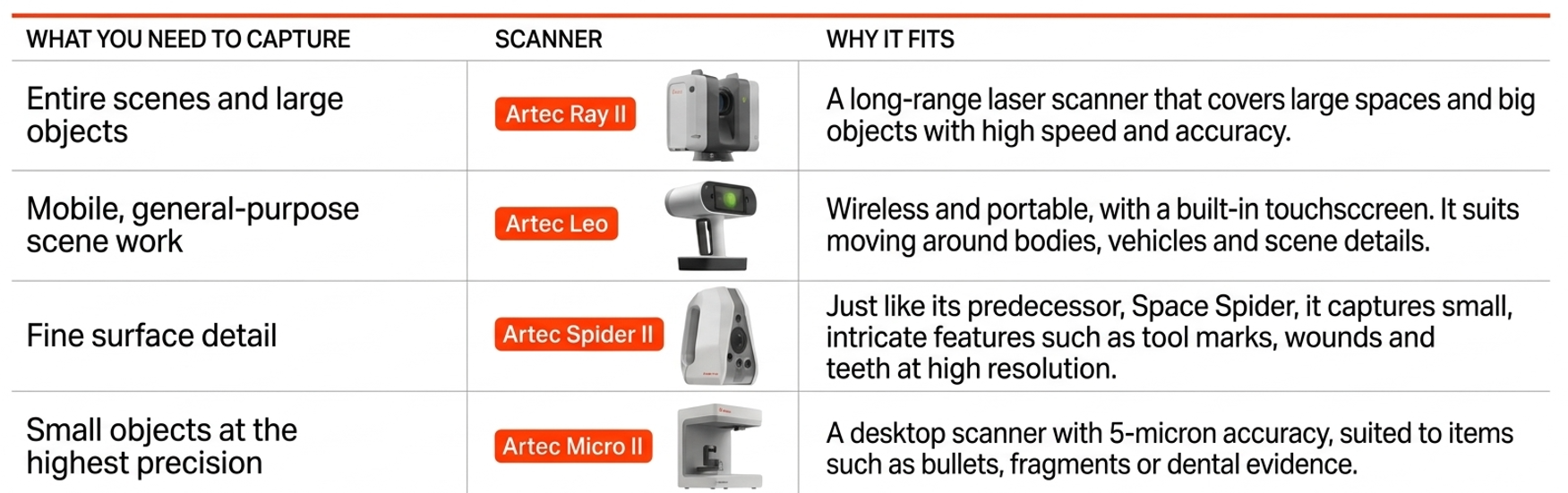
Most teams combine two or three devices, and the data from all of them can be merged in Artec Studio.
Case Files: 3D scanning at work in the real world
Capturing the scene: Artec scanners in forensic anthropology
Forensic anthropologist Dr. Dennis Dirkmaat, PhD, needed a way to 3D scan bones, skeletons and entire death scenes quickly, with minimal post-processing. His answer was a trio of Artec 3D scanners (Space Spider, Leo and Ray), which he uses to digitally capture everything in high-resolution color, from the bones themselves and all potential evidence to the surrounding ground, leaves and landscape.
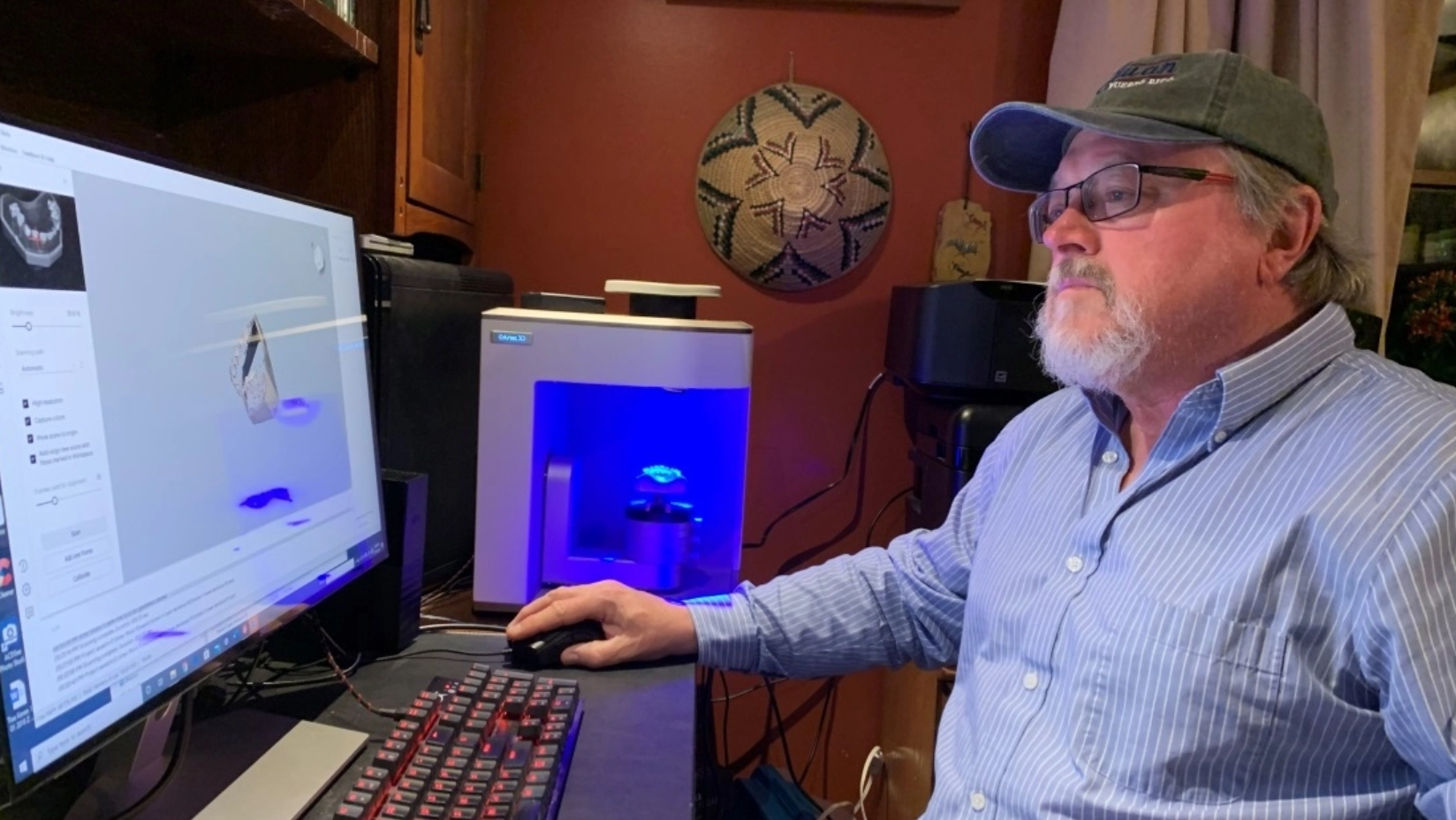
The technology has become part of his daily fieldwork as well as the regular and special classes he teaches for investigators, law enforcement officers and college students. “Artec has truly changed the face of forensic anthropology with Space Spider, Leo, and Ray,” he says. “My students pick up the scanning process quickly, and the levels of detail we get now, especially considering the little time needed for doing so, are truly remarkable.”
Faster, freer scanning for traffic accident reconstruction
When investigating a crash, every detail of the damage matters, especially if the evidence is headed for court. Origin Forensics needed to 3D scan crashed vehicles for accident reconstruction, capturing the full extent of body damage in color and submillimeter detail for legal proceedings. Previously, the team relied on a terrestrial laser scanner, which meant three to four hours per vehicle. With Artec Leo, the same job now takes under one hour.
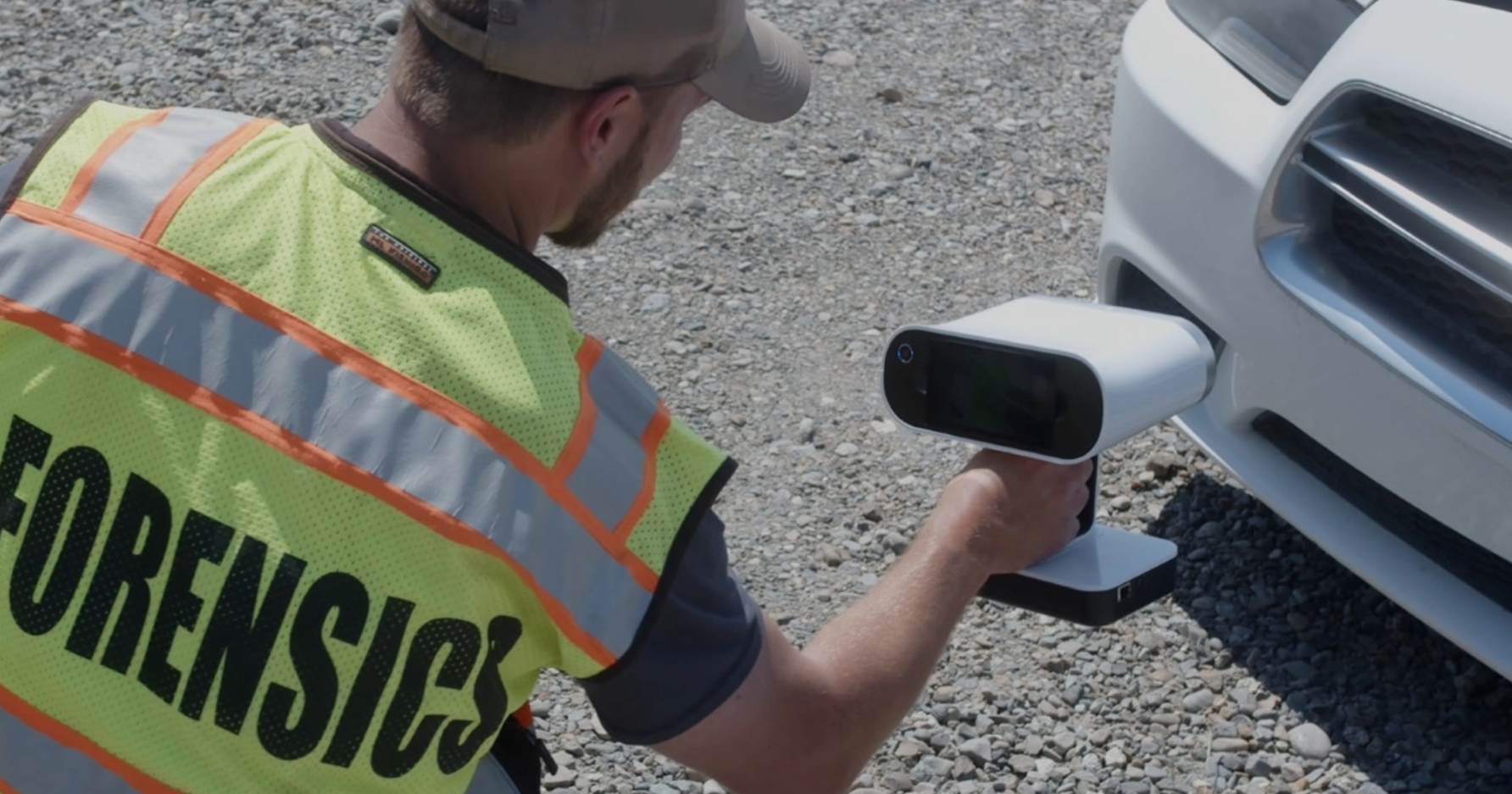
For Jarrod Carter, Ph.D., the appeal is freedom of movement: “I was looking for speed and flexibility, which Leo gives us, especially since it has no cables or attached computer to slow you down. I no longer feel as though the rest of the inspection is being rushed so that I can make sufficient time to scan the vehicle.”
Giving a face to a 3,500-year-old warrior
Forensic scanning also reaches deep into the past. In Greece, researchers set out to digitally reconstruct the skull of the 3,500-year-old Griffin Warrior and create a painstakingly accurate approximation of his face as it appeared in life. Each cranial fragment was scanned, along with groups of fragments, and the skull was digitally reconstructed in Artec Studio software.
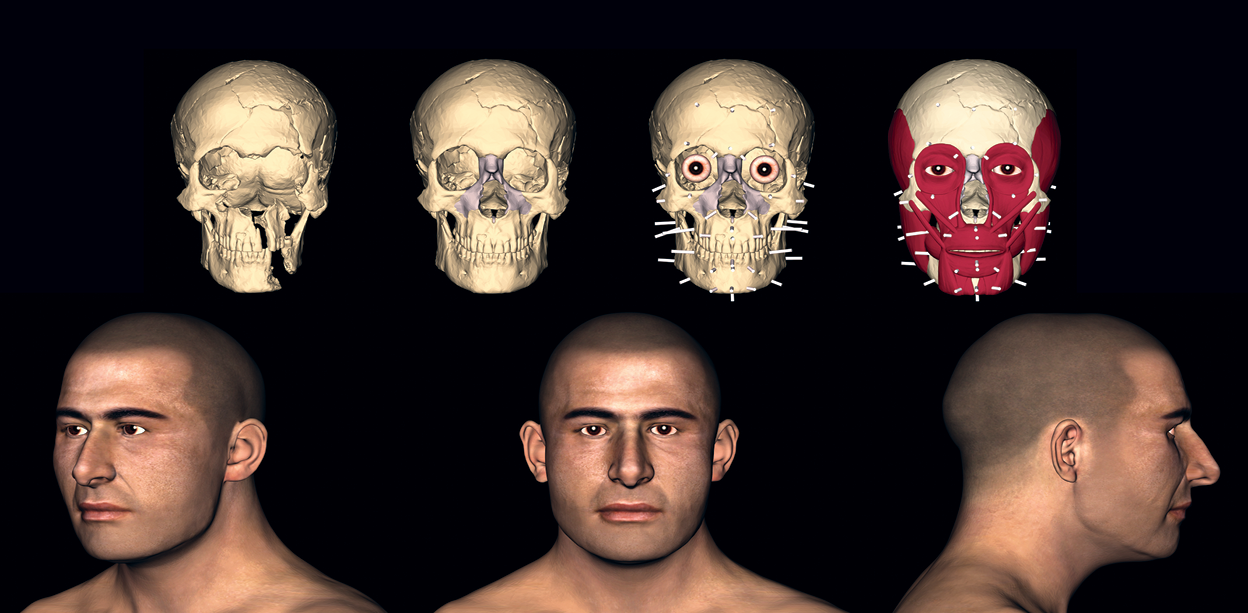
The 3D model was then exported to Geomagic Freeform, where it served as a detailed reference for building the facial approximation, which is now ready for use online, in research and for 3D printing. As Dr. Tobias Houlton of the University of Dundee puts it, “When you’re looking at the Artec 3D scans, it’s as close to looking at the real skull as anything else.”
Putting bitemark analysis on firmer ground
Bitemark analysis has a troubled reputation. Human teeth vary enormously, skin distorts under pressure, and the traditional method of photographing marks and comparing dental impressions is subjective. The field has been linked to wrongful convictions later overturned by DNA evidence.
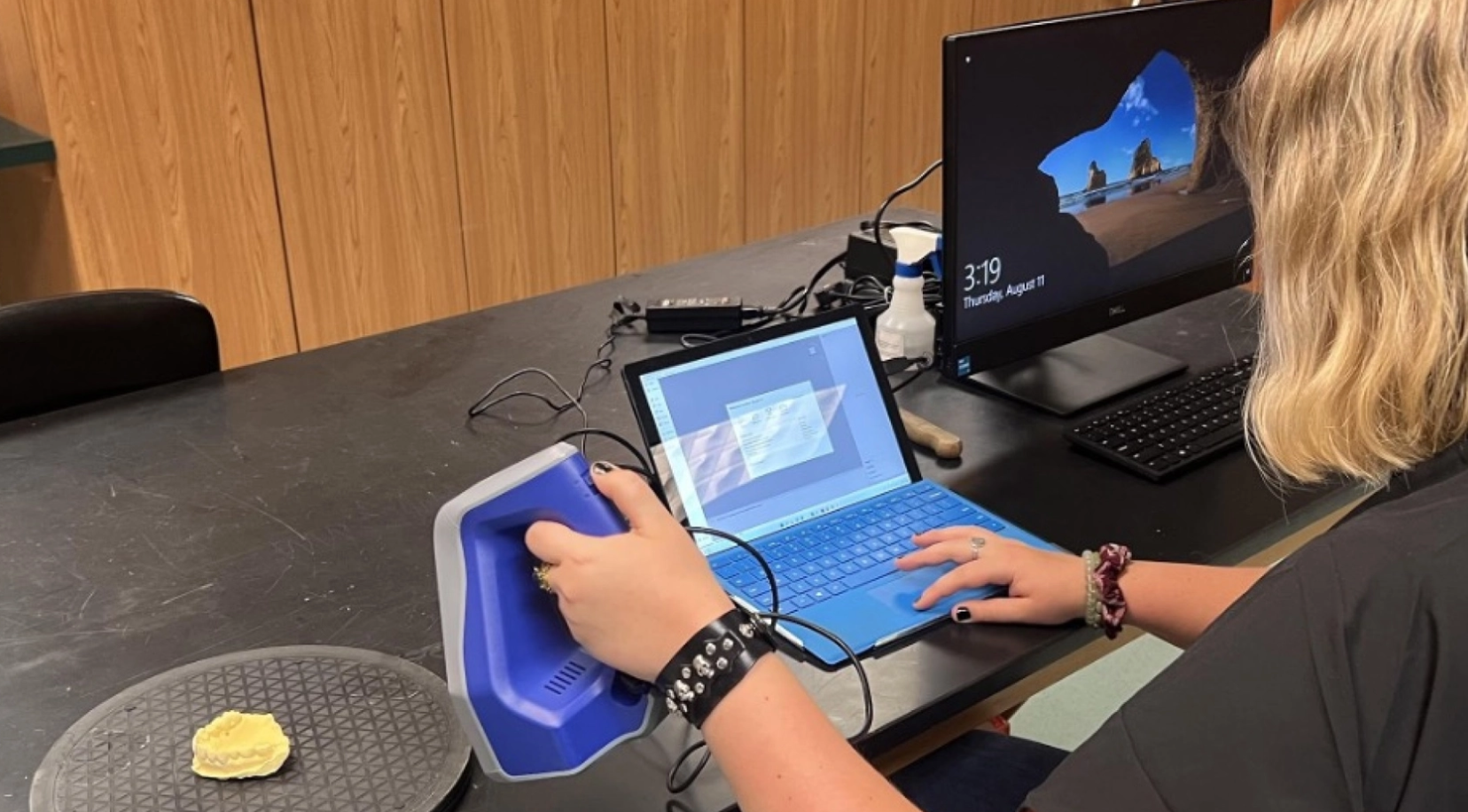
Forensics graduate student Erika Franze, working with forensic scientist Carol Ritter, set out to bring objectivity to it. Using Artec Space Spider, she digitized dental casts and bite marks, capturing the angle of every tooth involved. Artec Studio software aligned the scans, and Autodesk 3ds Max was used to create a “virtual bite outline” for comparison. In trials with 15 volunteers, scanning a cast took less than a minute.
“Every image captured looks brilliant,” said Franze. The models can be shared with investigation partners without risk of cross-contamination. Eugene Liscio, a 3D forensic analyst who introduced Franze to the technology, sees a larger shift ahead, saying, “3D scanning can be a gateway to greater objectivity.”
Where this is heading
The cases above share a pattern: scanning does not replace the investigator, it gives them a better record to work from. A scene can be revisited, a fragile specimen can be studied without handling, and a courtroom can see what the investigators saw.
Artec 3D publishes many more forensic stories, from anthropology to forensic pathology. If you are exploring digital documentation for your own team, you can book a free demo with a local Artec reseller or talk to an expert about the setup that fits your casework.