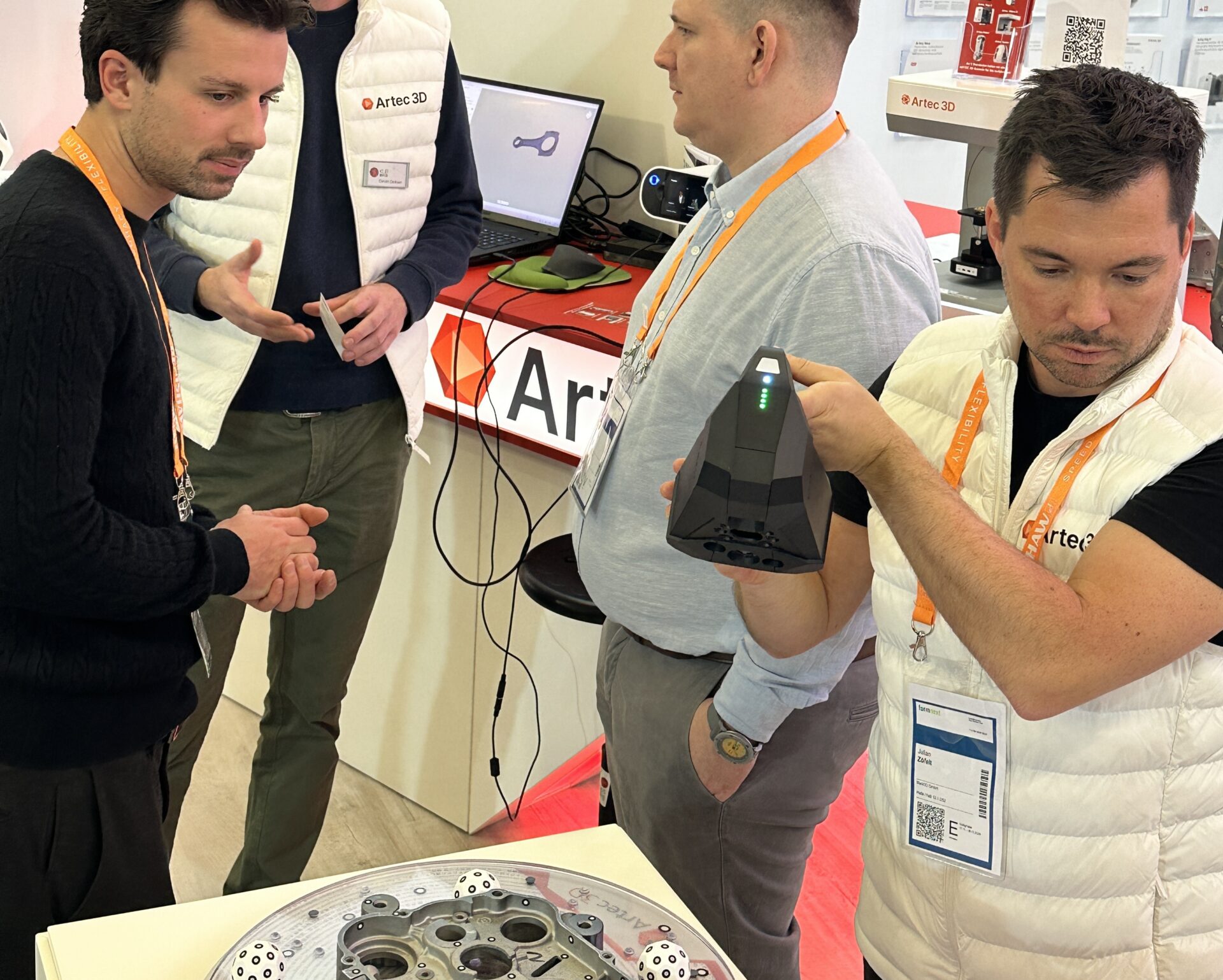

Additive manufacturing’s biggest week of the year has delivered a wave of new 3D scanning hardware. At Formnext 2026, Artec 3D has given the tolerance-focused Artec Neo a European premiere, Revopoint has activated a Kickstarter campaign for Miraco 2 , and Shining 3D’s Einstar brand has introduced a new phone-powered device.
Around 800 exhibitors have packed into a reshaped Messe Frankfurt, where organizer Mesago expects more than 38,000 trade visitors across three separate halls. Between the industrial printers, a new Defense Summit, and the first dedicated Post-Processing Showcase, scanner makers have arrived with launches pitched at every budget.
For engineers, the direction of travel is clear. Wireless operation and onboard processing are spreading to ever cheaper devices, while the top end of the market is pushing the envelope on speed, accuracy, and versatility. These are the five scanners to find before the halls close. For the rest of the show, see our Formnext 2026 preview.
1. Artec Neo brings tolerance-driven scanning to Europe
Accuracy: 0.025 mm with targets; 0.05 mm target-free
Speed: Up to 8 million points/s
Price: €35,100
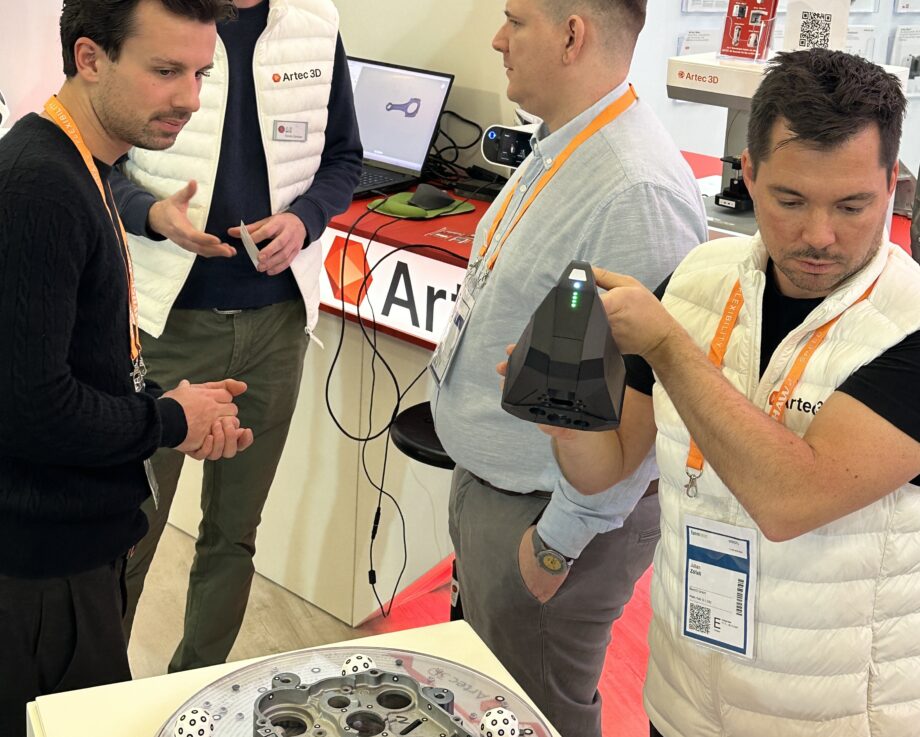
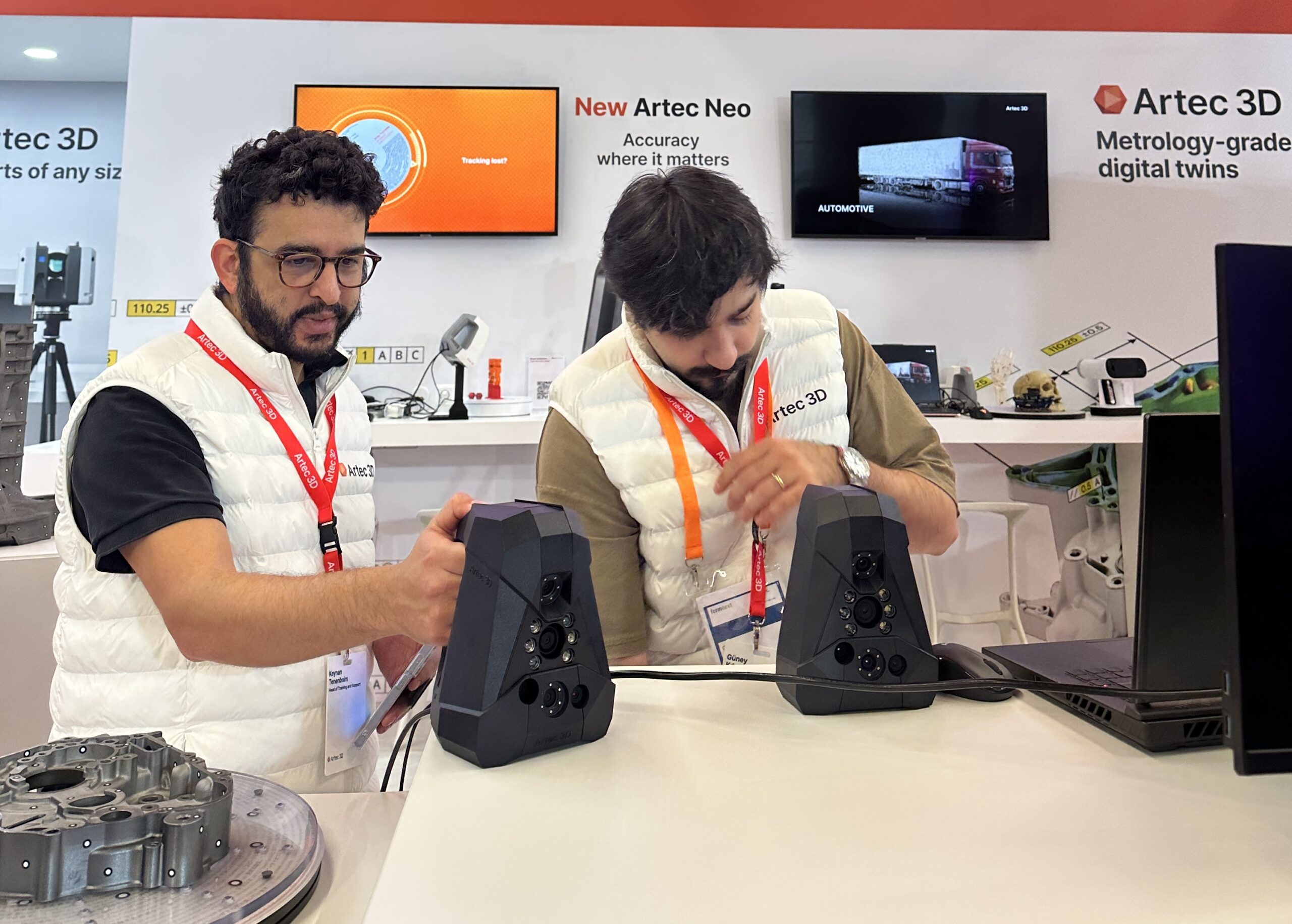
Two months after its debut at IMTS in Chicago, Artec Neo has landed in Europe. The wireless handheld, already named in DEVELOP3D’s D3D 30 for 2026, introduces what Artec 3D calls tolerance-driven 3D scanning: engineers place targets only around the features their drawings flag as critical, then capture the rest of the part target-free.
Covering a whole part in markers is one of the most tedious jobs in precision scanning, and Neo confines that work to the areas that decide whether a part passes or fails. Every unit is tested to VDI/VDE 2634 Part 3 in an ISO/IEC 17025-accredited lab and ships with its own accuracy certificate. Read our full Artec Neo overview.
2. Revopoint launches Miraco 2 mid-show
Accuracy: Up to 0.02 mm single-frame; 0.02 mm + 0.05 mm/m volumetric (multi-line laser mode)
Speed: Up to 10 million points/s (hybrid HD mode)
Price: Kickstarter pledges from US$1,425
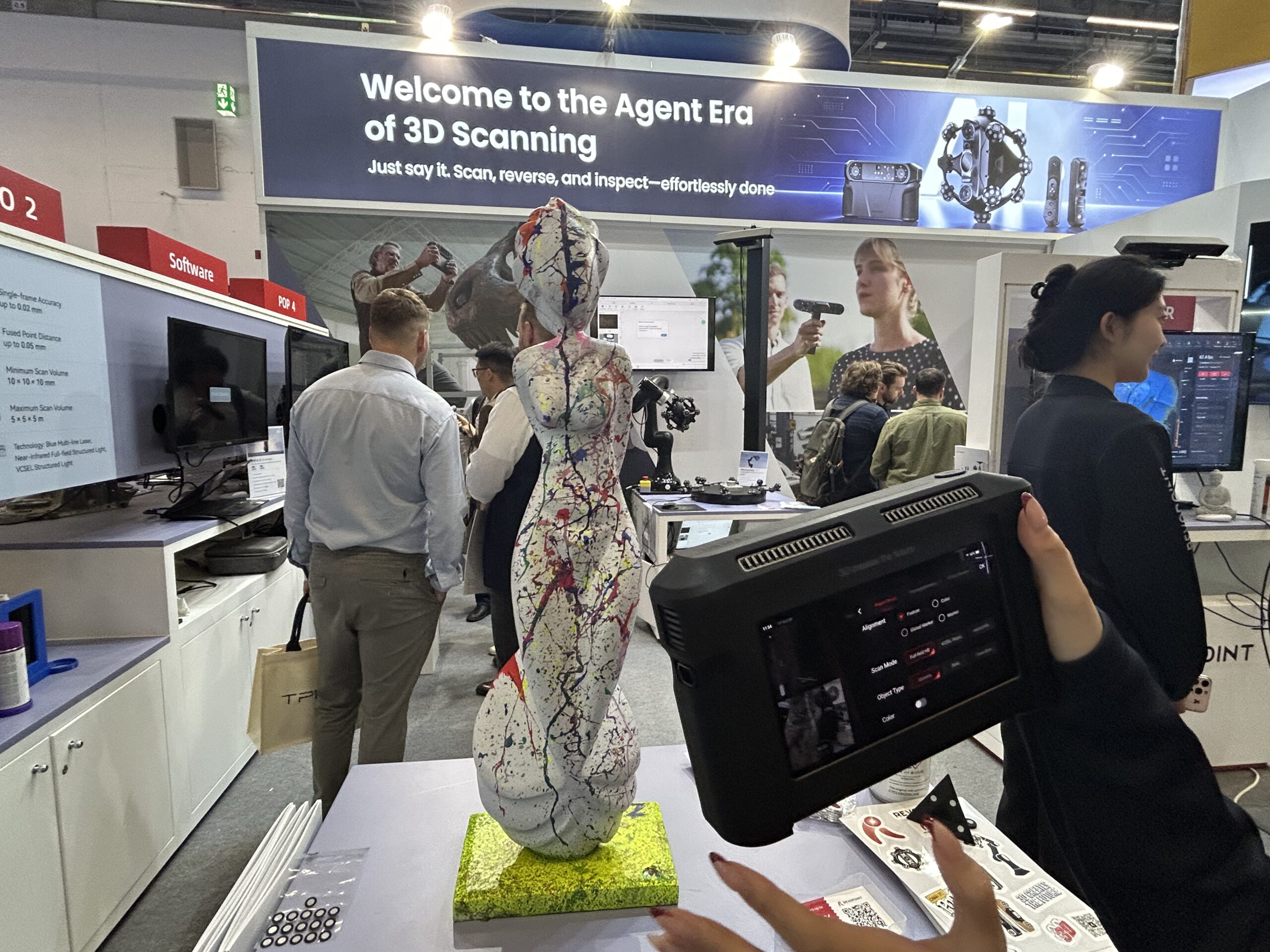
Revopoint timed its biggest launch of the year for Formnext, opening the Kickstarter campaign for Miraco 2 on 18 November with the scanner already on show in Frankfurt. Early backers can pledge from US$1,425, with discounts of up to 38%, and the company reports that the scanner drew considerable attention from the opening day.
Miraco 2 packs six scanning modes into a 960-gram handset, switching between blue cross lasers for fine mechanical detail, a single-line laser for deep holes, and infrared for people and large objects. An onboard processor, 2K touchscreen, and three-hour battery life lets users scan, process, and edit without a PC, while dual RGB cameras add colour and, in PC mode, scaled 3D Gaussian Splatting.
3. 3DMakerpro takes on buildings with Owl
Accuracy: 5 mm at 10 m
Speed: 192,000 points/s; range up to 120 m
Price: From €1,930 (Owl Standard, launch price)
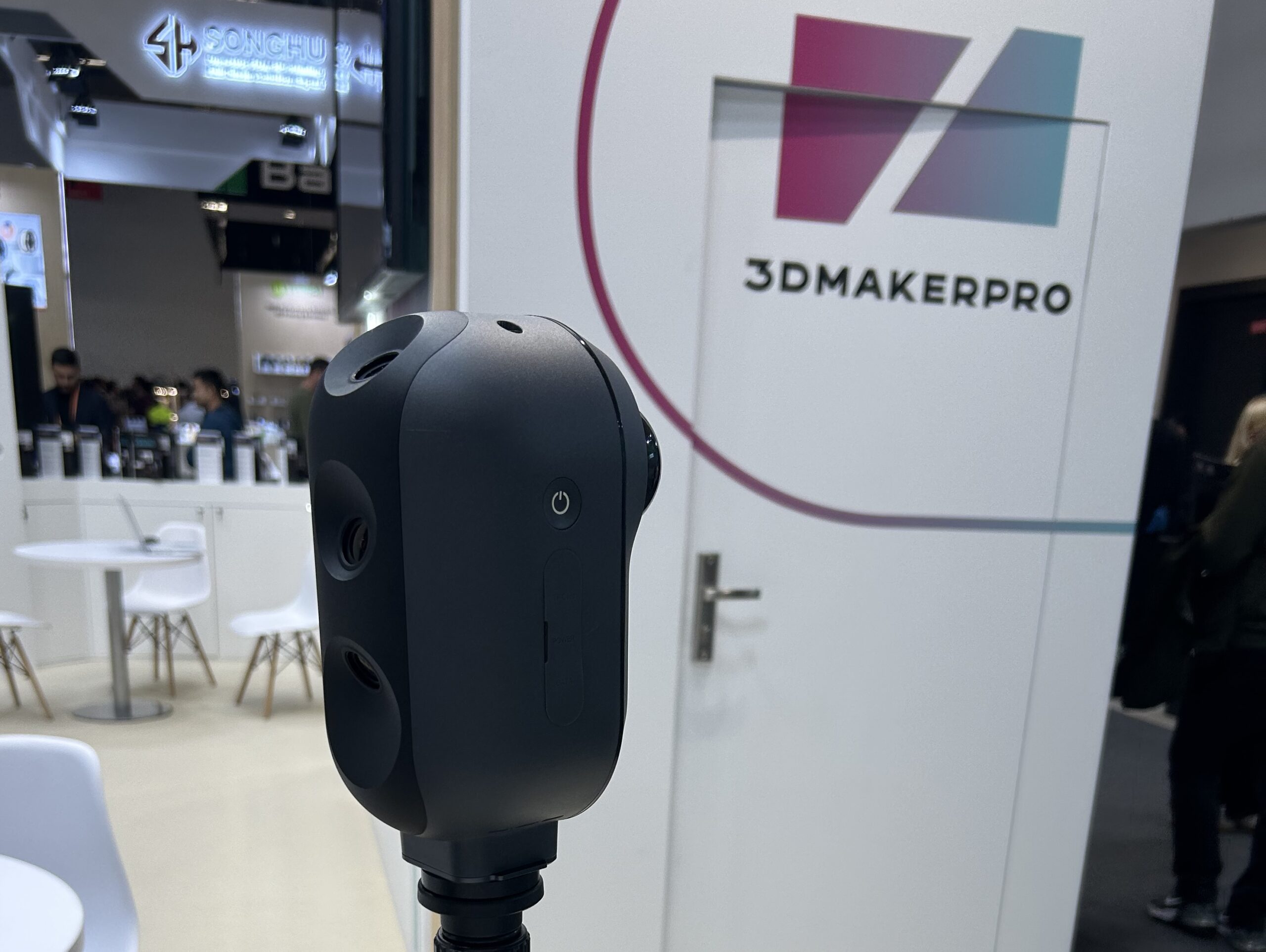
Best known for compact scanners aimed at makers, 3DMakerpro has brought something far bigger to Frankfurt. Owl, unveiled earlier this month, is a tripod-mounted LiDAR scanner that records a 360° point cloud and 4K HDR panoramas in a single pass, with a reach of up to 120 metres.
At a launch price of US$1,599, it brings reality capture of construction sites, interiors, and car parks within reach of much smaller firms. 2D floor plans and a Class 1 laser that is safe in occupied buildings underline its practical focus. Teams that need to capture while walking, rather than station by station, should weigh it against handheld SLAM scanners such as Artec Jet.
4. Einstar EZ GO puts a 3D scanner on your phone
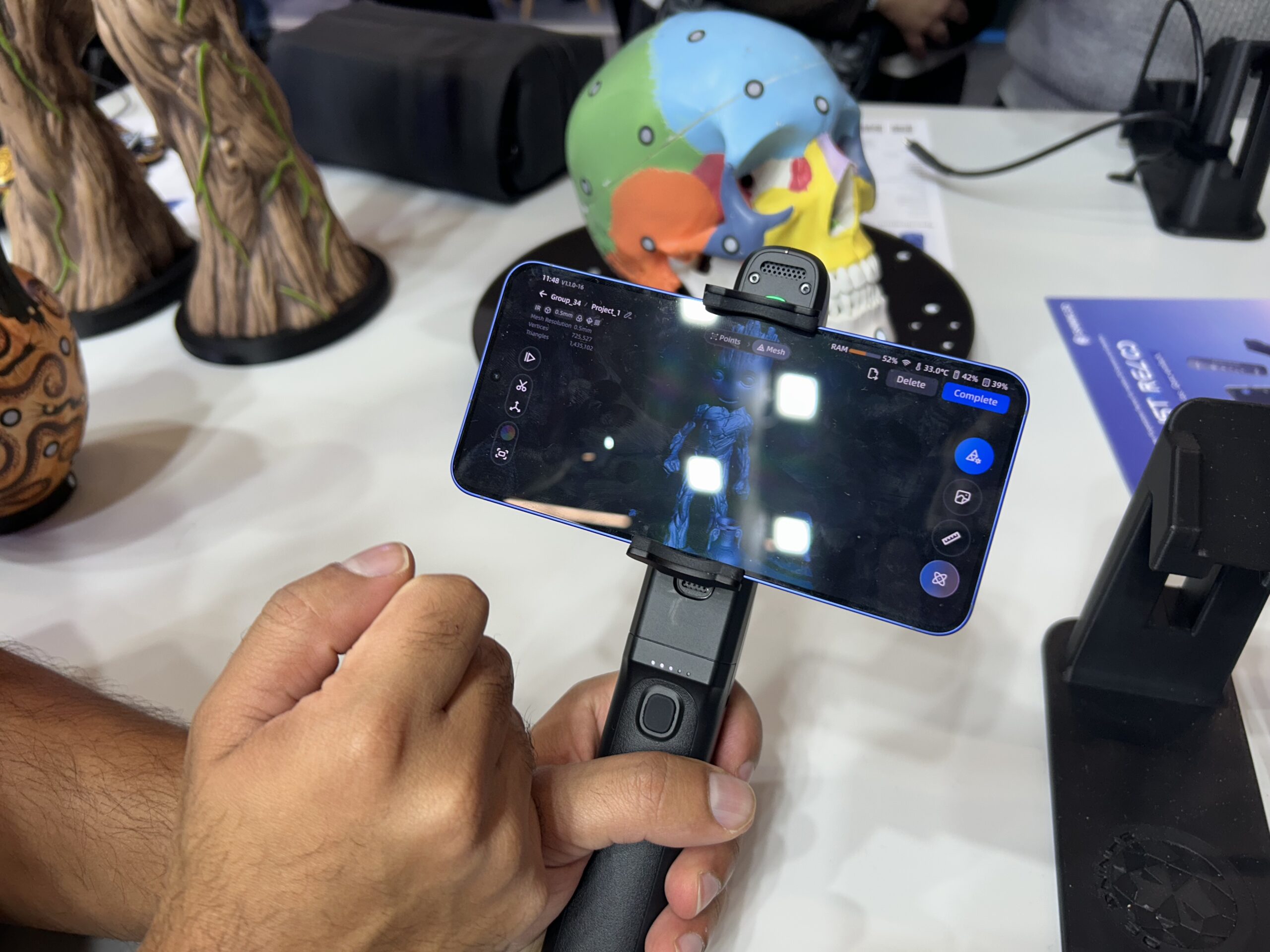
Accuracy: Not published; resolution down to 0.05 mm (Laser HD mode)
Speed: Up to 6.55 million points/s (IR Rapid); up to 60 fps
Price: €1,199 incl. VAT (launch offer €1,079 until 11 December)
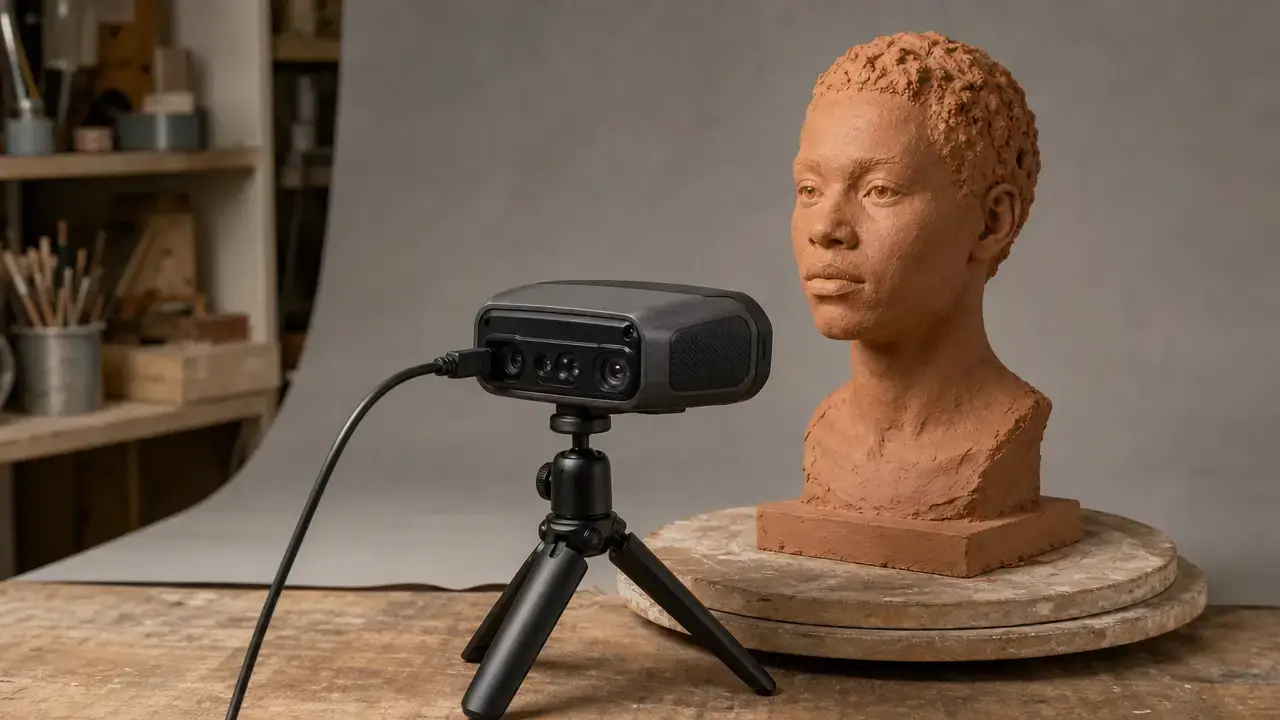
Einstar launched EZ GO on 11 November, and Formnext is the first major show where visitors can get their hands on it. Its 125-gram scanning unit clips onto a battery grip and turns a smartphone or tablet into the display and processor, so the complete kit weighs just 288 grams before the phone goes on.
Two modes cover most of what a maker needs: a blue laser for detail and an infrared mode that reaches 6.55 million points per second for people and larger objects. Free cloud-based Gaussian Splatting adds photoreal results for AR, VR, and game content. Einstar has published no accuracy figure, a clear sign that EZ GO belongs in the workshop and the classroom, away from the inspection bench.
5. Scanology shows MT Gen2 and teases a new 3DeVOK scanner
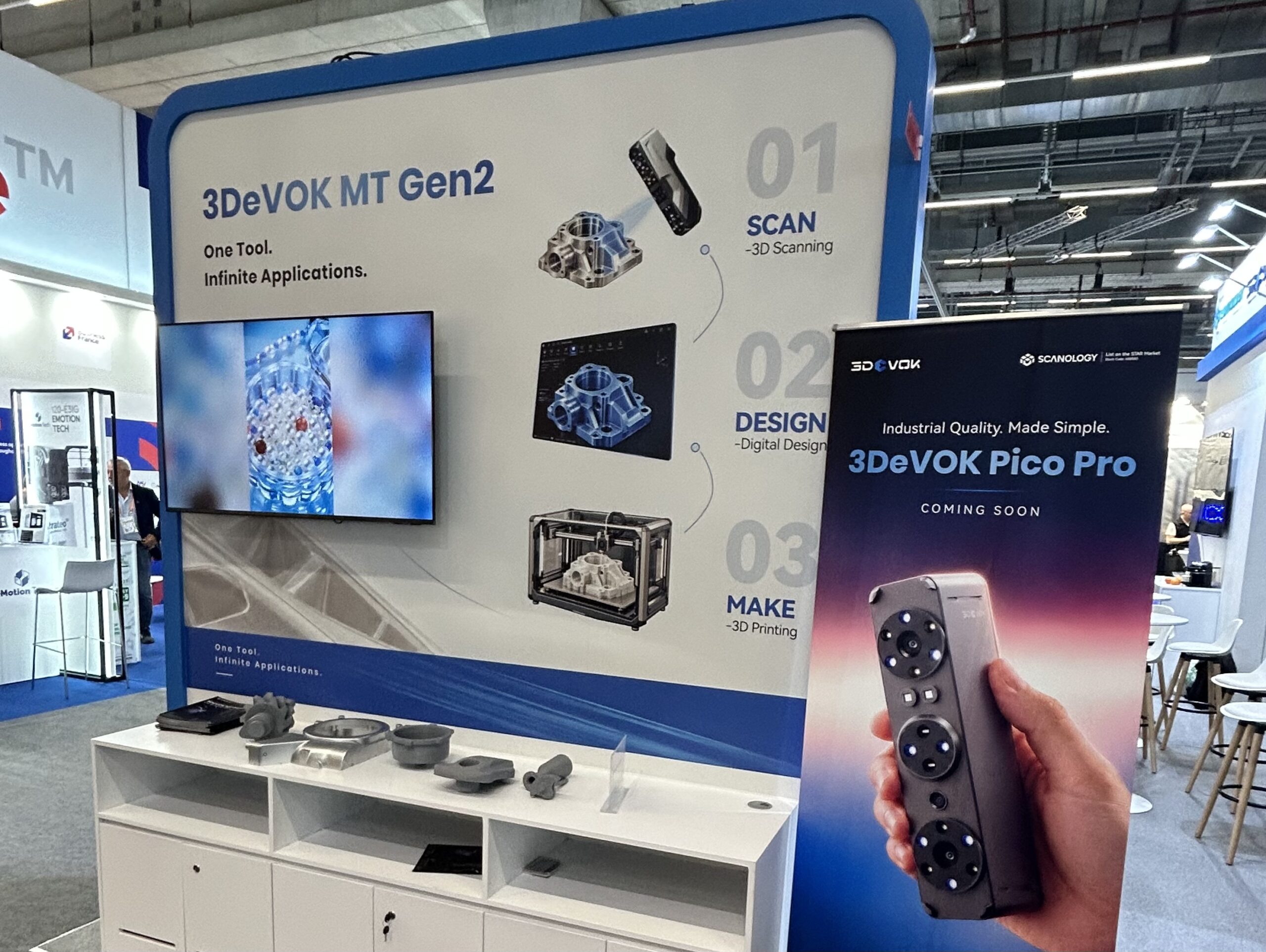
Accuracy: 0.03 mm; 0.03 mm + 0.04 mm/m volumetric
Speed: Up to 3.3 million points/s at 80 fps (blue laser); 4.5 million points/s (infrared)
Price: From around US$7,000
Scanology came to Frankfurt with its 3DeVOK MT Gen2 and a teaser: a first look at an unannounced 3DeVOK product for automotive customisation and 3D replication, with details held back for visitors to the booth.
The MT Gen2 packs four light sources into a 620-gram handheld, combining 34 crossed blue laser lines, 11 parallel lines, a single line for recesses, and infrared structured light for marker-free work on larger objects. It scans black and reflective surfaces without spray, ships with a factory calibration report, and goes wireless with the optional Airgo handle.
In our humble opinion, these are the top five new 3D scanners you should definitely check out at this year’s Formnext. Stay tuned for more coverage of the show!