
Frankfurt, 17–20 November: around 800 exhibitors, a new, tightened three-hall layout and seven launches that deserve a place in your calendar! Here is what is being unveiled and exactly where to find it.
Your floor cheat sheet
Three of the seven stage a reveal on opening day, all within three hours, so plan in advance so that your Tuesday doesn’t feel like a relay race. Formnext runs Tuesday 17 to Friday 20 November at Messe Frankfurt, in Halls 11.0, 12.0 and 12.1 (12.1 is the upper level of Hall 12).
| Launch | When | Hall and booth |
| Nikon SLM Solutions, MACHX | Tue 17 Nov, 10:00 | Hall 12.0, D119 |
| EOS, new polymer production platform | Tue 17 Nov, 11:00 | Hall 12.0, D71 |
| Stratasys, new production system | Tue 17 Nov, 13:00 | Hall 12.1, D129 |
| Raise3D, T450 and T700 | Show debut, all four days | Hall 12.1, D21 |
| Fronius, Additive Cell | All four days | Hall 12.0, B59 |
| Solukon, SFM-AT850 | World premiere, orders open at the show | Hall 12.0, D58 |
| Artec 3D, Artec Neo | European debut | Hall 11.0, D45 |
Nikon SLM Solutions: MACHX, the mid-size contender
First on stage is the show’s biggest metal drumroll. Nikon SLM Solutions unveils MACHX, a new laser powder bed fusion platform built for scaling production, on Tuesday 17 November at 10:00 CET.
The pitch is great: parts that are too demanding for a small system but do not need the build volume of the company’s largest machine. Nikon says the mid-size segment is where most of the daily production sits, and the platform is engineered to scale more easily. TCT reports that MACHX will be a series of several machines that joins, rather than replaces, the SLM 280, SLM 500 and NXG lines. Specs are still under wraps, so the reveal is the real news.
Where: Hall 12.0, booth D119. Nikon is also handing out free tickets to the show through its website.
Also in the news: a PanX simulation integration with PanOptimization for build preparation (that partner is in Hall 11, D49), and 2 m build height systems based on the NXG 600E.
EOS: the polymer platform everyone has been whispering about
At 11:00 on opening day, EOS pulls the cover off a new polymer production platform made for contract manufacturers and high-mix work. They promise the first-time-right quality, higher throughput, less operator effort and more transparency across the production floor. Official specifications wait for the reveal, but early users have been sharing their impressions. Materialise reports 44% higher productivity than on the previous EOS platform, with over six minutes saved per part. FKM Additive Manufacturing cites a 67% productivity gain and a build time cut from more than three hours to under two on its own test part. Materialise’s write-up also mentions a three-laser architecture, a new roller recoater and open process controls. Treat those as customer-trial results, not final datasheet numbers.
Where: Hall 12.0, booth D71. Note the new spot: EOS has moved this year. The booth also covers metal applications and an Innovation Zone.
Stratasys: a new production system and a European first
The day-one unveils close at 13:00 with Stratasys unveiling a manufacturing-scale solution for high-volume production of consistent, end-use polymer parts. The name, process and specifications stay secret until the stage lights come on, so you will be among the first to hear them. The same booth gives the F870 FDM system its European debut. It is a large-format printer for tooling, fixtures, jigs and manufacturing aids, shown with factory-floor applications from Toyota, GM and LAIKA. Stratasys also shows an SLA route to antimony-free investment casting patterns (Neo800+ with Somos ShellCast resin and ShellGen software) and sCure, an automated post-processing unit for the Origin P3 DLP platform. The company also joins the Formnext Defense Summit on Tuesday.
Where: Hall 12.1, booth D129. Hall 12.1 is the upper level of Hall 12, so allow time to get up from the Nikon and EOS booths.
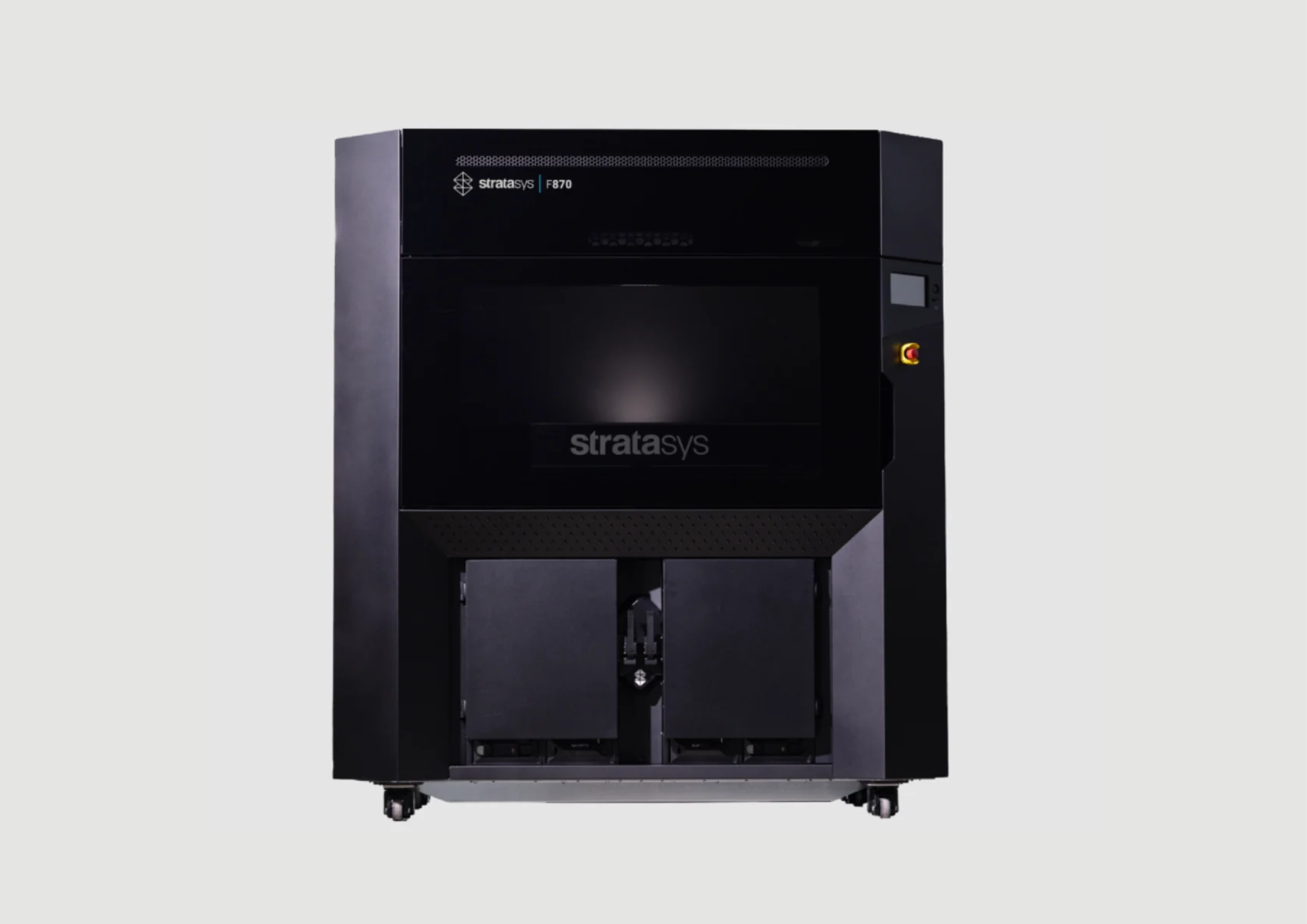
F870™ Industrial 3D Printer. Image: Stratasys
Raise3D: big prints, small price tags
Raise3D arrives with two large-format FFF printers and the kind of price that makes procurement look up from the spreadsheet. The T450 costs US$4,999 (€4,999 in Europe) and prints 450 × 350 × 400 mm in a chamber heated to 70°C. The T700 is US$15,999 (€15,999) with a 700 × 500 × 1,000 mm build volume and a 60°C chamber. Raise3D calls them the most affordable large-format industrial printers with an actively heated chamber.
Both use TwinFlow, which merges two filament paths into one nozzle for high flow, plus a four-motor CoreXY system. The headline speed is up to 600 mm/s under specific test conditions. The party trick is one-piece parts: a foundry pattern from RBP Metallurgy in Mexico that once had to be printed in four sections now comes off the T450 in one go, and the stand shows it.
Where: Hall 12.1, booth D21, the first public showing of both machines.
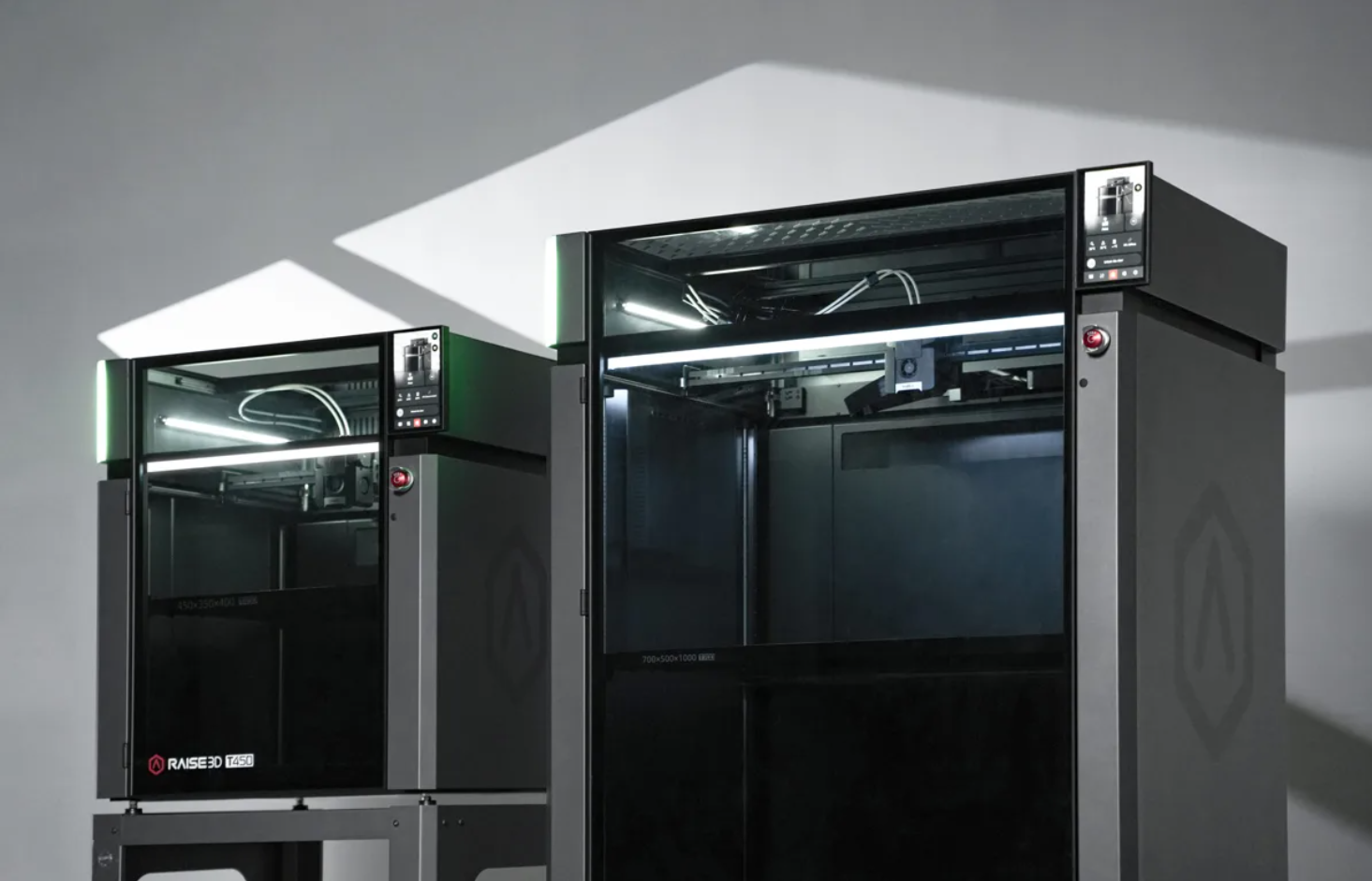
The Raise3D T Series. Image: Raise3D
Fronius: a WAAM cell that arrives ready to work
Wire arc additive manufacturing often means a pile of parts and a long integration project. Fronius would like to hand you a finished cell instead. The Additive Cell combines CMT Additive PRO welding characteristics, the iWave power source, the Polaris system control and the new Vectris software bundle, which brings the machine tool service kit and the post-processor onto one platform.
The software includes a kinematic model, an interface built for additive work and validated welding operations. The twist is commercial: validated parameter sets, which Fronius calls “build styles”, can be licensed to customers as production recipes, and Fronius also offers full process engineering. The cell targets new parts as well as reverse engineering of replacement components where tooling or CAD data no longer exists.
Where: Hall 12.0, booth B59. The Fronius team will present its wider additive portfolio and metal 3D printing services there too.
Solukon: depowdering for parts that weigh as much as a small car
After the print comes the shake. The Solukon SFM-AT850 is an automated depowdering system for laser powder bed fusion parts of up to 1,000 kg, with a 650 × 650 × 800 mm chamber (an optional longer swivel arm lifts the height limit to 1,050 mm). Programmable two-axis rotation and vibration remove powder from complex geometries, and the machine is smaller overall than the SFM-AT800-S it replaces, despite carrying 700 kg more.
A companion model, the SFM-AT850-E, adds ultrasonic excitation, a gentle and quiet method suited to lattices and long internal channels, now available for larger parts. New touches include front-top loading for crane use, a portrait-format display and remote maintenance for the first time on this line. Once current batches are delivered, it replaces the SFM-AT800-S and SFM-AT1000-S.
This is a world premiere: orders open at Formnext, with delivery expected by the end of the third quarter of 2027.
Where: Hall 12.0, booth D58. Post-processing also has its own showcase this year in Hall 11.0, booth F34.
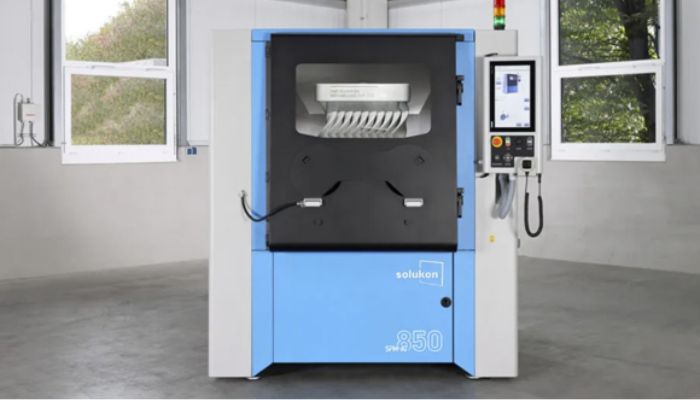
The SFM-AT850. Image: Solukon
Artec Neo: scan the tolerances that matter
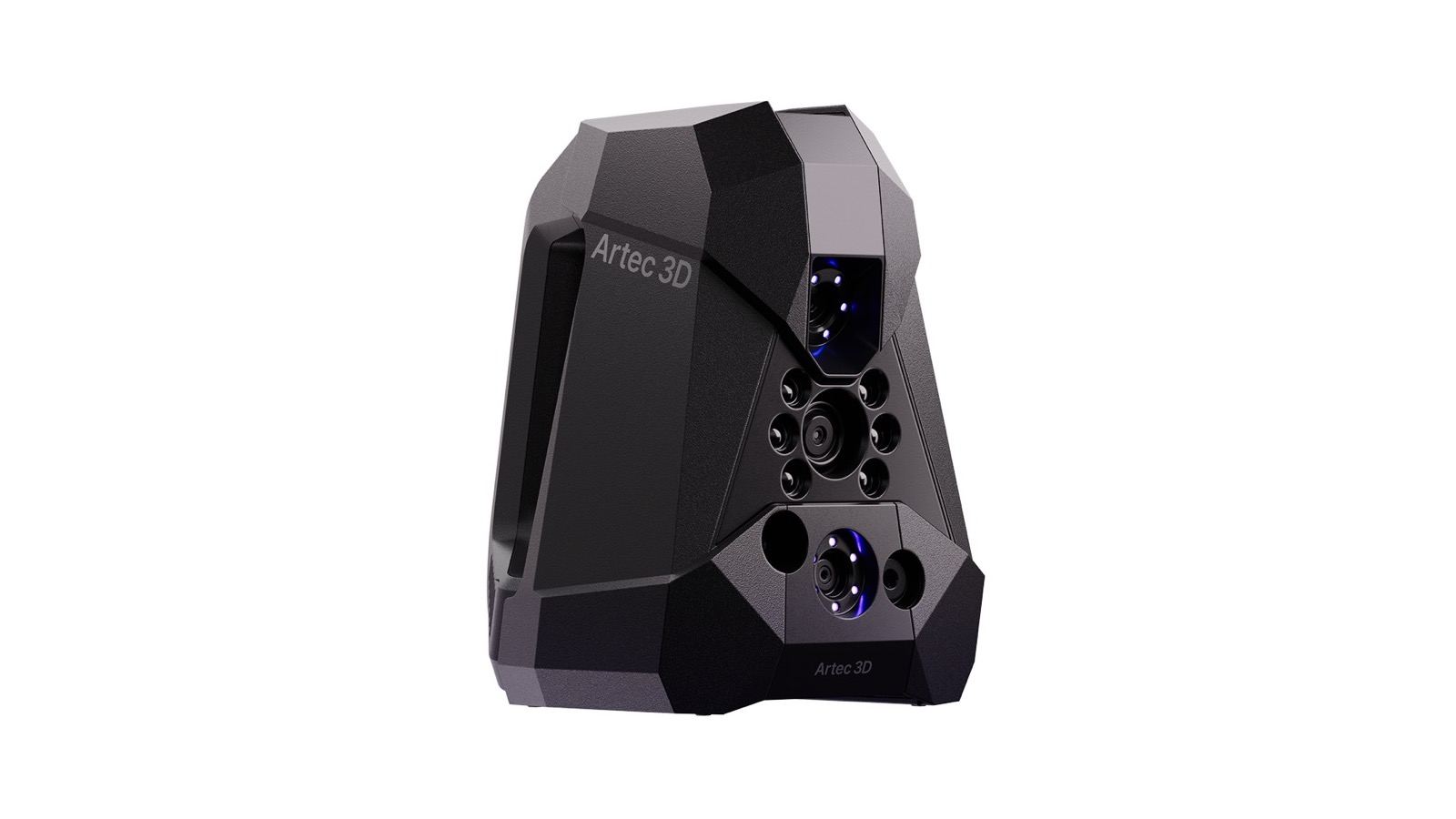
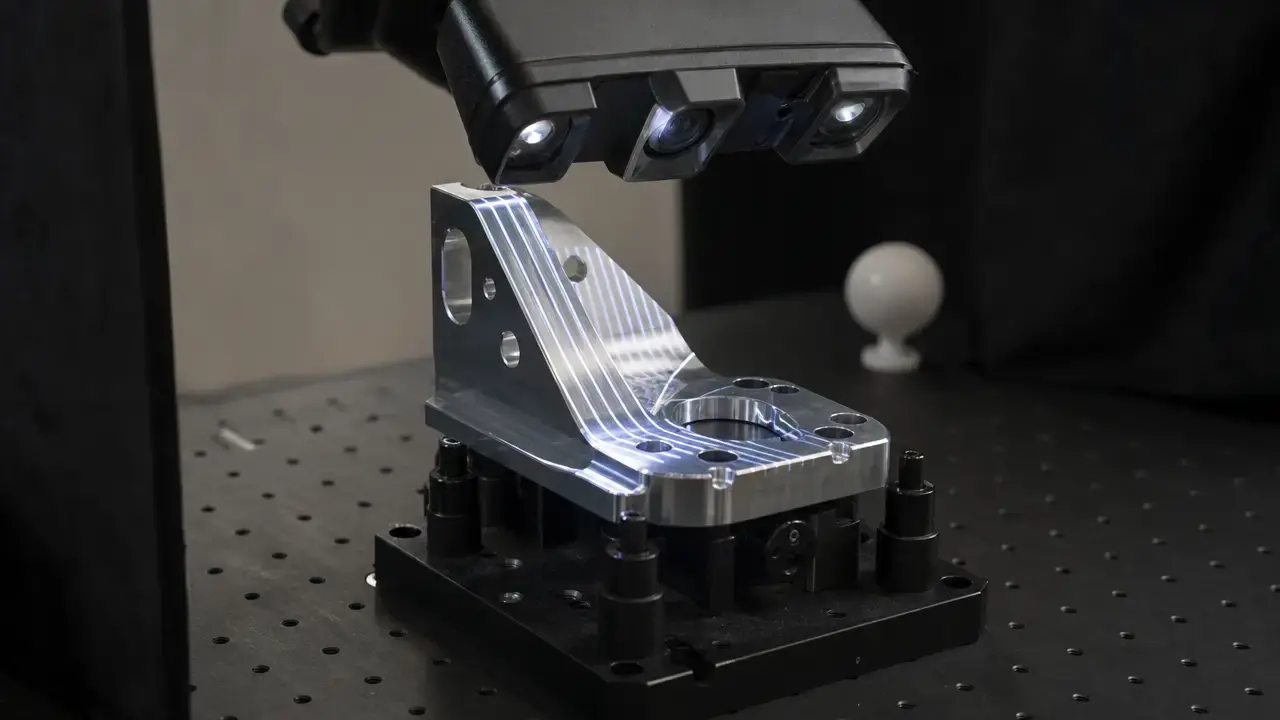
Artec Neo makes its European debut after launching at IMTS in Chicago in September. It is the first tolerance-driven wireless 3D scanner: you apply targets only where tolerances are critical and capture the rest of the part without them.
That works through a blue-light optical system and hybrid tracking, where targets act as metrology anchors and AI keeps tracking through geometry, texture and colour. With 0.025 mm accuracy where it counts, full-color capture at up to 0.05 mm resolution, and up to 50 minutes of wireless scanning, Artec Neo is a ground-breaking device. Data goes through Artec Studio, with integration for SOLIDWORKS, Geomagic and PolyWorks. Neo was also named in DEVELOP3D’s D3D 30 shortlist for 2026.
The same booth shows the wider Artec range plus Artec Twins with Gaussian Splatting, and Artec Studio 27.
Where: Hall 11.0, booth D45. Industry visitors can request free tickets via marketing@artec3d.com.
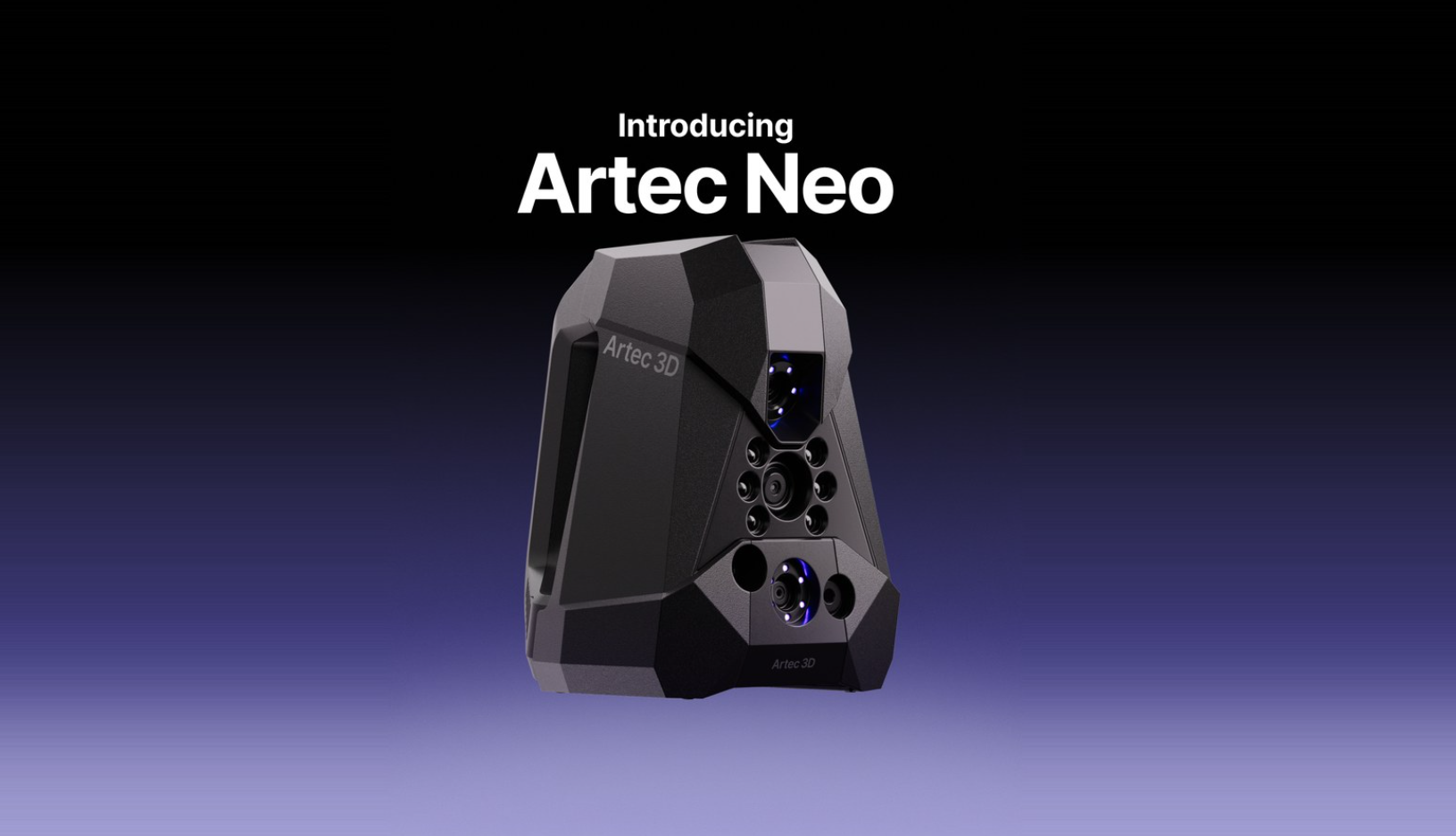
What else not to miss?
The seven above are the headliners, but the schedule has plenty of support acts. Booth details are as announced by exhibitors as of 11 November and may change.
- Bambu Lab (Hall 12.1, G01): the H3C nine-tool changer (US$2,499, tool changes in under six seconds), the R1 CO2 laser cutter, its first machine that is not a 3D printer, and Bambu Circle, a network of authorized local partners that starts in the Netherlands.
- DyeMansion (Hall 12.1, C32): the Powershot Go for smaller print shops finishing SLS and MJF parts, priced below €14,000. More details are promised for 13 November.
- Peopoly (Hall 12.1, A62): trade show debut of the Giga 800 pellet printer, on sale from US$15,000.
- Polymaker (Hall 12.1, C21): CymphoniK, which mixes custom colours for pellet printers from six base pellets, with live demos and a second announcement planned.
- Gefertec (Hall 12.1, B101): new arc10X and arcTitan wire arc machines for large metal parts.
- Meltio (Hall 12.0, C119): a Fiat Abarth 500 with a manifold printed by directed energy deposition.
- Admatec (Hall 11.0, C42): the Admaflex Discovery, a desktop-sized ceramic DLP printer. Orders open in November and shipping is planned for spring 2027.
- Elegoo (Hall 12.0, C02): its first 3D scanner, the M1 Ultra at €1,599, plus two printer previews.