
Summary
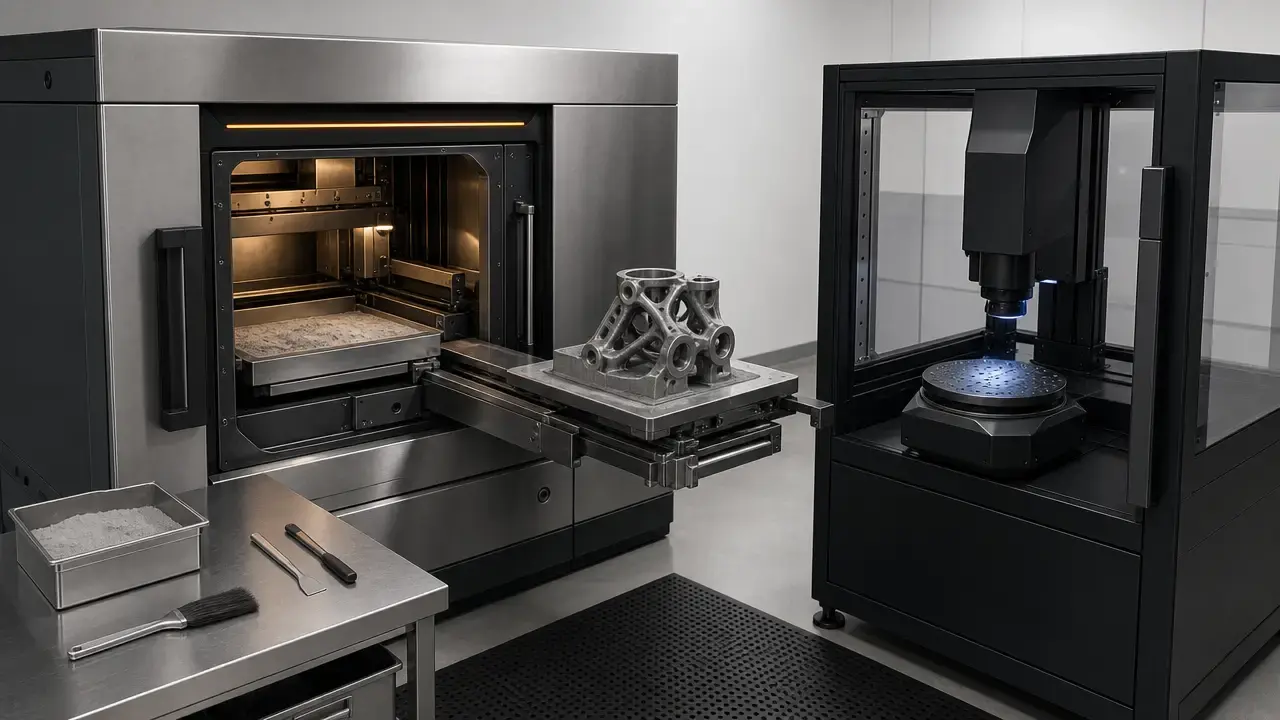
As of 1 August 2026, Formnext 2026 3D printing innovations is a pre-event tracker, not a settled best-of list. Formnext 2026 runs from 17 to 20 November 2026, and this preview uses Formnext’s nine top-level product groups as a completeness check so machine launches, materials, software, metrology, and post-processing are assessed across the full AM process chain rather than as a booth-by-booth list. [S01] [S03] Before the show opens, the page remains provisional. After 20 November 2026, it should become a post-event roundup using the same evidence rules, status labels, and source discipline. [S01]
What Counts as “New” (and “Best”) at Formnext 2026?
Before 17 November 2026, this article should not use “best” as a settled verdict unless the rubric and status labels below are applied. Process names are aligned with ISO/ASTM 52900:2021 so powder bed fusion, directed energy deposition, binder jetting, material extrusion, and vat photopolymerization are used consistently rather than as marketing shorthand. [S01] [S09]
Show-floor language often blurs the line between a confirmed launch, a first public demo, a major production-cell update, and a concept that still exists mostly on slides. Rumors, teasers, and hints without a reliable evidence trail are either excluded or labeled speculative/excluded. “Best / Featured” is therefore not a popularity signal. It requires both a documented evidence line and a score of 70/100 or higher. ISO/ASTM vocabulary provides the naming anchor, while the scoring model provides the editorial filter. [S09]
- Confirmed launch at Formnext 2026.
- First public demo or prototype at Formnext 2026.
- Announced earlier, shown in person at Formnext 2026 for the first time.
- Major system, material, or process update.
- Software, workflow, post-processing, or QA automation update.
How We Reported This: Evidence Rules + Scoring Rubric
Formnext’s 17–20 November 2026 exhibition window is the boundary for pre-event, live, and post-event labeling. [S01] In practice, a claim starts with a manufacturer primary source such as a press release, product page, or spec sheet, then looks for Formnext corroboration through official program references, exhibitor references, or in-person confirmation once the event is live. Official stage sessions and summit programming are useful corroboration paths, but they are not proof that a performance claim has been independently validated. [S04]
The inclusion rule is strict by design. A platform can be interesting and still remain on a watchlist if production status is unclear, the evidence depends on a slide rather than a demonstrated workflow, or the wording collapses setup, build, post-processing, and inspection into one headline figure. “Best / Featured” requires both the evidence threshold and the score threshold. If either fails, the item stays notable, watchlist, or excluded rather than being promoted by default.
Table A: Status labels
| Item | Status label | Minimum evidence to claim | What we won’t claim |
|---|---|---|---|
| New product or platform first shown and launched for 2026 | Confirmed launch at Formnext 2026 | Manufacturer statement plus Formnext corroboration or in-person confirmation | We will not call it Best / Featured without scoring |
| Shown at the fair but not shipping yet, or only in limited availability | Demonstrated at Formnext 2026 (not shipping / limited availability) | Demonstration evidence plus a clear non-shipping or limited-availability statement | We will not describe it as production-ready without qualification |
| Announced earlier and displayed at Formnext 2026 | Announced earlier, shown at Formnext 2026 | Earlier public announcement plus Formnext display or reference | We will not present the fair appearance as a launch |
| Rumor, teaser, or unverified hint | Speculative/excluded | No reliable event or manufacturer evidence | We exclude it from the roundup |
Table B: Scoring rubric
| Criterion | Weight | What qualifies | Minimum evidence |
|---|---|---|---|
| Technical novelty | 25 | A real step beyond routine refreshes | Product or process evidence |
| Evidence quality | 25 | Clear, attributable, cross-checkable claims | Manufacturer plus corroboration |
| Production readiness | 20 | A path toward usable deployment, not just a demo | Qualification or shipping evidence |
| Workflow impact | 20 | Changes to throughput, monitoring, automation, or post-processing | Documented workflow change |
| Standards/qualification relevance | 10 | Meaningful link to qualification or metrology standards | Named standard or test basis |
Only items scoring 70/100 or above can be called Best / Featured.
History and Event Context for Formnext 2026
Formnext’s 2025 final report described the 2025 edition as the event’s tenth year. Here, that history is continuity context only, not evidence that any 2026 launch matters on its own. [S33]
The 2026 edition is scheduled for Messe Frankfurt in halls 11, 12 and Portalhaus. [S02] Formnext’s 2026 program page says the supporting program will include two freely accessible stages — the Industry & Application Stage and the Technology Stage — and that the detailed program will be published in autumn. That makes stage appearances a useful corroboration path for launch claims without turning a talk slot into proof of measured performance. [S04]
The AM Innovation and Standards Summit is scheduled for 16 November 2026, one day before the exhibition opens, and the Formnext Defence Summit is set to debut on 17 November 2026. [S04] [S06] Formnext Awards 2026 cover six categories — AMbassador, Design, (R)Evolution, Rookie, Start-up, and Sustainability — but awards are signal sources only, not substitutes for ranking. As of 1 August 2026, the Start-up Award deadline had passed on 31 July 2026, while the other categories remained open until 31 August 2026. [S04] [S05]
Technology Taxonomy
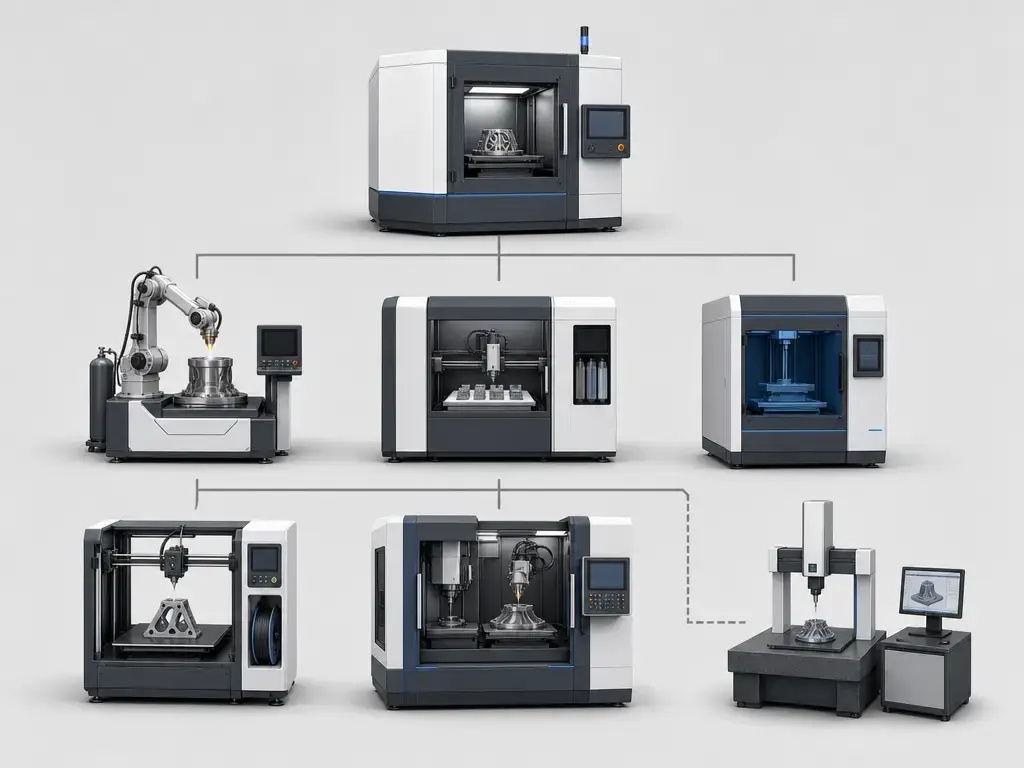
Formnext’s nine top-level product groups provide the map for this article: software and digitalization solutions, materials, AM systems, ancillary process systems, quality management/metrology, services, institutes/academia, workforce development, and associations/market research/media. [S03] The roundup itself is narrower than the fair’s full directory, but the taxonomy still helps keep machines, materials, software, ancillary systems, and inspection tools from being mixed into one vague “innovation” bucket. [S03]
Within that structure, Formnext’s AM-systems taxonomy includes ten subgroups, from powder bed fusion and directed energy deposition to material jetting, vat photopolymerization, sheet lamination, hybrid manufacturing cells, and components/consumables. [S03] That is why the roundup is organized by technology class plus workflow function rather than by booth. If a meaningful verified 2026 launch appears in a smaller class such as sheet lamination, it should be handled explicitly. If not, it should be briefly excluded rather than backfilled with weak claims.
| Technology class | What to verify | Typical innovation signal | Watch-out |
|---|---|---|---|
| PBF (metal) | Laser or electron-beam architecture, qualified materials, monitoring, and production control | Better process control tied to qualification or removal workflow | Faster scan language is not the same as critical-applications readiness |
| PBF (polymer) | Recoating, thermal management, throughput, refresh strategy, and unpacking | Lower labor or better batch repeatability | Build volume claims can hide post-processing bottlenecks |
| DED | Deposition stability, repair access, wire or powder feed, and geometry envelope | Better repair capability or integration into a larger workflow | Large format does not automatically mean tighter tolerances |
| Binder jetting + sinter routes | Green strength, debinding route, furnace throughput or capacity, shrinkage control, and finishing | A full route improvement, not just a print-stage speed claim | Green parts are not finished parts |
| Vat photopolymerization | Cure control, material stability, part handling, and production workflow | A shift from prototyping toward repeatable production use | Surface finish alone does not prove throughput |
| Material jetting | Material set, resolution basis, support removal, and multi-material scope | A real production change in output or usability | High resolution does not prove usable accuracy |
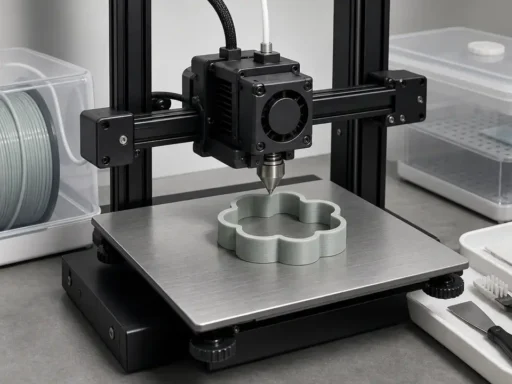
| Material extrusion | Engineering thermoplastics, automation, and repeatability | Better accepted-part workflow or farm orchestration | Spec-sheet speed often ignores post-processing cost |
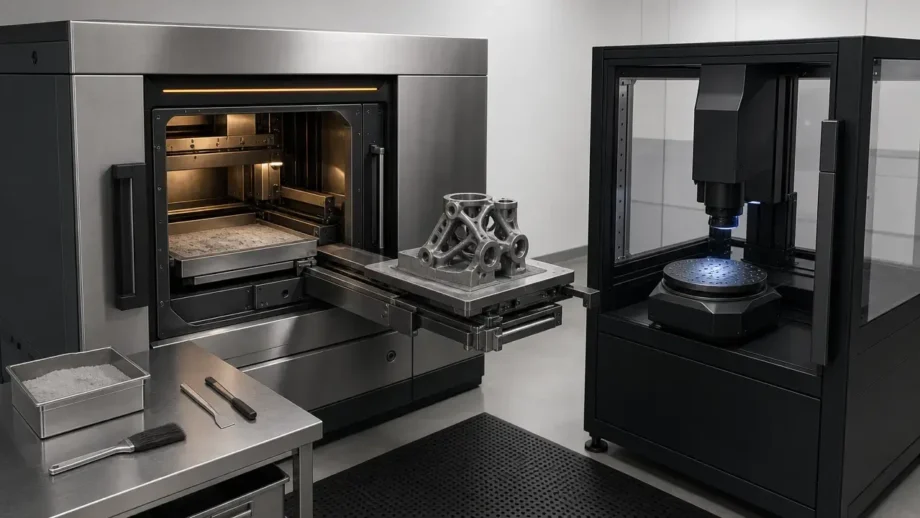
| Hybrid cells | Additive plus subtractive sequencing, handoff logic, and part handling | A clear workflow change inside one production cell | “Hybrid” can mean co-location rather than integration |
| Post-processing / QA | Depowdering, heat treatment, inspection, metrology, and traceability | Less labor or better validation evidence | Automated handling is not equivalent to validated quality |
For completeness, sheet lamination and other smaller classes are included only when a meaningful verified 2026 launch appears. Otherwise, they get a short mention or an explicit exclusion rather than filler.
Metric Glossary + Verification Checklist
Cross-process metrics are easy to compare and easy to misuse. A printer can look fast on a datasheet and still be slow once depowdering, curing, heat treatment, inspection, or cleanup are included.
| Term | Meaning | Basis to ask for | Why it matters |
|---|---|---|---|
| Throughput | Usable output over time, including workflow gates | cm³/h, parts/build, or batch/day | A figure that ignores post-processing is incomplete |
| Build rate | Material deposited or consolidated per hour inside the machine | Machine-only rate | Helpful, but not the same as accepted output |
| Utilization | Share of scheduled time the system actually produces acceptable parts | Uptime, queue time, scrap rate | Shows whether the machine is busy or productive |
| Accuracy | Closeness to the intended geometry or value | Test artefact or reference method | Not the same as resolution |
| Resolution | Smallest increment a system can command or report | Axis, pixel, voxel, or layer/Z step | Fine resolution does not guarantee accurate parts |
| Repeatability | How closely repeated runs agree under the same conditions | Same machine, same setup, same method | Central for qualification and process control |
| Tolerance | Allowed deviation on the drawing or requirement | Documented requirement | A machine spec is not a tolerance by itself |
| Surface texture | Measured surface geometry in profile or areal terms | Named parameter set | Surface claims need parameters, not adjectives |
| Density / porosity | Solid fraction or void fraction in a part | Measurement method and acceptance basis | Often tied to downstream mechanical performance |
| Cost per accepted part | Cost divided by conforming output, not raw output | Scrap, labor, post-processing, inspection assumptions | Easy to oversimplify without the baseline |
When vendors move from adjectives to measurable claims, the inspection or test basis needs to appear too. Optical 3D inspection claims should be tied to an acceptance or reverification basis such as ISO 10360-13:2021, while optical scanner specifications are often interpreted through VDI/VDE 2634 Part 1. Surface texture should name a profile or areal basis. For areal work, ISO 25178-2:2021 provides the parameter framework and ISO 25178-1:2016 covers indication rules in documentation. Geometric capability claims should lean on test artefacts such as ISO/ASTM 52902:2023, and metal-property reporting should preserve orientation and location dependence rather than flattening all results into one number. [S16] [S17] [S18] [S19] [S14] [S15]
A simple spec-sheet example shows why resolution and accuracy must stay separate: UltiMaker lists 6.25 µm, 7.8 µm, and 2.5 µm as XYZ resolution for the Factor 4 Plus, which is a resolution statement, not proof of part accuracy. When mechanical properties are quoted, a recognized evaluation framework such as ASTM F3122 should also be clear. [S30] [S22]
Required checklist for every numeric spec
- Material grade or powder/resin formulation.
- Build orientation and geometry, where relevant.
- Post-processing state.
- Test method, benchmark artefact, or inspection basis.
- If a number is machine-only, say so explicitly.
- If density, surface, or mechanical data are quoted, state the acceptance criterion and the measurement standard.
The Round-Up: Best New Technologies at Formnext 2026, by Class
This section is a template before the show and will become the evidence-backed roundup after Formnext 2026 closes. As of 1 August 2026, no item is included as Best / Featured yet. Each class below is a watch slot that should only be populated when a 2026 launch has a manufacturer primary source, a Formnext corroboration path or in-person confirmation, and enough technical detail to score against the rubric. [S01] [S04]
Metal powder bed fusion
For Formnext 2026 metal 3D printing, metal powder bed fusion is the class where production-control language matters most. ISO/ASTM vocabulary should distinguish the broader powder bed fusion family from its laser- and electron-beam metal variants, and critical-applications claims should be read through operation and production control rather than through scan speed or chamber size alone. [S09] [S10] The strongest 2026 entries here will be the ones that connect qualification, monitoring, powder handling, and controlled downstream steps rather than presenting them as separate marketing bullets.
Directed energy deposition
DED is the class to watch for repair, large-format deposition, and feature addition on existing parts, but it is also where “larger” is often mistaken for “better.” A 2026 launch only matters if it shows a real change in deposition stability, material flexibility, repair access, or workflow integration. ISO/ASTM naming still matters because the process label should make clear what kind of deposition route is being shown rather than blur wire-fed, powder-fed, and broader hybrid claims together. [S09]
Binder jetting and sinter-based routes
Binder jetting and sinter-based metal routes need unusually careful scrutiny because the printed part is only the first stage of the route. A useful 2026 launch signal is not just a print-stage speed figure, but whether the vendor can explain green strength, debinding path, furnace throughput or capacity, shrinkage compensation, density range, and secondary finishing in one coherent workflow. A launch that skips the sinter step is an incomplete claim. [S09]
Polymer powder-bed and jetting ecosystems
Polymer powder-bed and jetting systems can look mature because their demo parts often present well, but the real question is whether a 2026 change lowers labor, stabilizes repeatability, improves material refresh handling, or raises accepted-part yield. Cosmetic refreshes and broader material menus are not enough on their own. The meaningful signal is a documented workflow change.
Vat photopolymerization
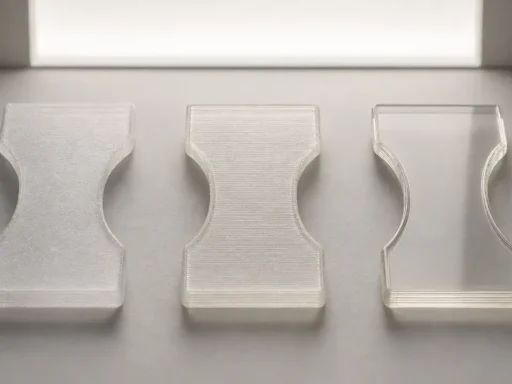
Vat photopolymerization matters most when it moves from polished sample-making toward repeatable production workflows. For 2026, the useful indicators are material stability, cure control, part handling, and whether the platform supports a qualification route rather than a sequence of isolated demo parts. “Faster” and “smoother” still need measurement context.
Material extrusion
Engineering thermoplastic extrusion remains the class where workflow discipline can matter more than raw deposition speed. For 2026, look for automation around material handling, scheduling, queue control, and repeatability that survives post-processing and inspection. A new chassis or a single speed figure is not enough to count as a meaningful workflow change.
Software, monitoring, and digital thread
Software and monitoring claims need a strict wording sequence whenever AI language appears: input data, model decision or output, feedback loop, and validation. That sequence keeps process monitoring from being mistaken for automatic qualification. Without it, “AI-powered” is just an unlabeled control layer rather than a verified production improvement.
Post-processing, heat treatment, depowdering, and QA/metrology automation
This is where many machine launches become real production tools or fail to do so. Automated inspection claims need a standards path such as ISO 10360-13:2021 or a comparable metrology framework, and scanner specifications are often read through VDI/VDE 2634 Part 1. Surface claims should use named profile or areal parameters rather than generic smoothness language. [S16] [S17] [S18] [S19]
As of 1 August 2026, the roundup table remains intentionally unpopulated because the show has not opened and no 2026 item in this article has cleared the full evidence threshold yet.
| Item | Process class | Status label | Score /100 |
|---|---|---|---|
| To be populated after verification | Metal PBF | Speculative/excluded | — |
| To be populated after verification | DED | Speculative/excluded | — |
| To be populated after verification | Binder jetting + sinter routes | Speculative/excluded | — |
| To be populated after verification | Polymer PBF / jetting | Speculative/excluded | — |
| To be populated after verification | Vat photopolymerization | Speculative/excluded | — |
| To be populated after verification | Material extrusion | Speculative/excluded | — |
| To be populated after verification | Software / monitoring | Speculative/excluded | — |
| To be populated after verification | Post-processing / QA | Speculative/excluded | — |
Applications: Where the 2026 Launches Actually Matter (and why)
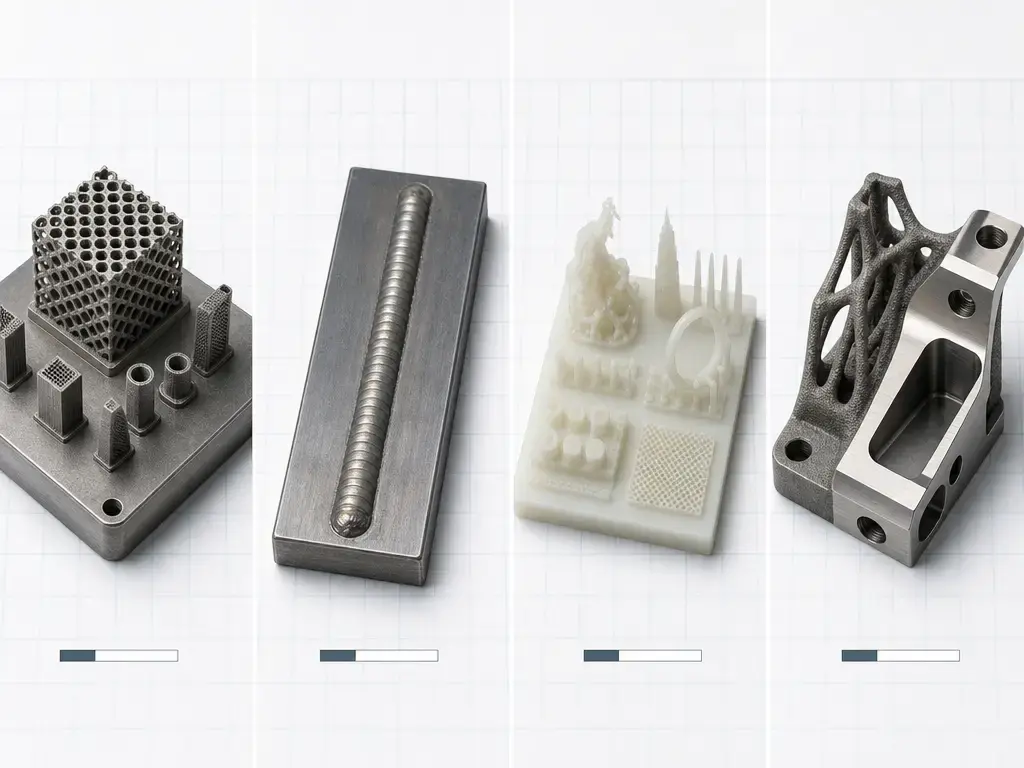
The sectors that will care most about 2026 launches are the ones where qualification, inspection, and post-processing are part of the business case rather than paperwork after the fact. Aerospace and defense will read metal PBF and DED claims through critical-applications process control and production-site qualification, not just scan speed or build envelope. Automotive and tooling buyers will care more about repeatable throughput, accepted-part yield, and documented inspection than about a single headline rate. Medical and dental users need material pedigree, surface-texture language, and mechanical-property reporting that keeps orientation and location dependence visible, because a polished sample on a stand is not the same as a qualified part. Energy and electronics teams will look for traceable inspection, stable small-feature performance, and lower downstream rework, while service bureaus have to judge whether a new platform improves scheduling, qualification evidence, and cost per accepted part across mixed customer requirements. [S10] [S11] [S15] [S16] [S18] [S19] [S20]
Limitations, Risks, and What Spec Sheets Omit
Spec sheets usually describe machine capability, not full production readiness. Powder and resin workflows can hide cleanup, waste, post-processing, and inspection assumptions, and metallic powder routes in particular need risk assessment plus prevention and protection measures under ISO/ASTM 52931:2023. Powder-characterization claims are more credible when traceability, sampling, chemistry, morphology, flowability, contamination, and packaging/storage controls are stated, not just a reuse percentage. [S13] [S12]
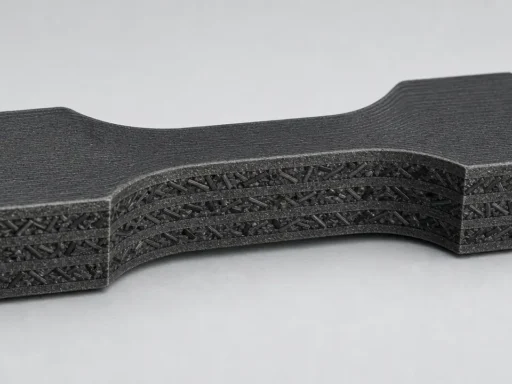
Residual stress is locked-in stress from thermal history, and anisotropy means properties can vary with build direction or location. Both affect distortion, crack risk, support removal, machining allowance, and the consistency of mechanical data. That is why benchmark artefacts, orientation-aware reporting, and post-processing disclosure matter more than show-part impressions. Geometric capability claims should be tied to benchmark artefacts rather than demo parts, and process monitoring still falls short if QA records are not exportable or machine logs cannot be linked to accepted-part traceability. When software, post-processing, and inspection assumptions stay hidden, the result is workflow fragility rather than automation. [S15] [S14] [S11] [S20]
Research + Market Context (Keep It Humble)
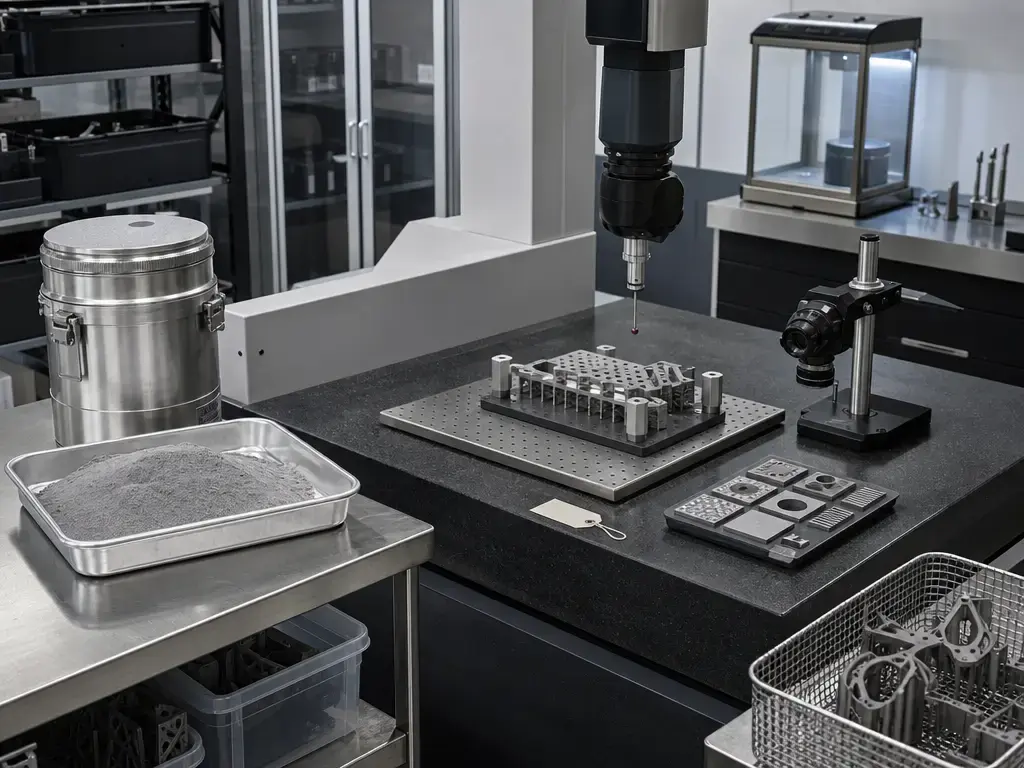
The cleanest way to read launch language is to treat it as a starting point for verification rather than as a result. That is especially true for simulation, sensing, and process-monitoring claims, where a vendor can show a convincing control loop without proving that the output improves accepted-part quality under a defined method. Benchmarking and repeat comparison remain the harder test.
NIST’s AM Bench program is useful precisely because it separates model validation from product marketing. The 2018 and 2022 cycles are complete, the 2025 cycle is nearly complete, and planning for 2028 is underway. The AM Bench 2025 challenge recorded 86 submissions from 24 groups. By home institution, those groups were 17 in North America, 2 in Europe, and 5 in Asia, and 25 awards were presented. [S25] [S26]
Market context should stay restrained too. If Wohlers figures are used here, they should be labeled press-release-reported because the clearest public framing is ASTM’s announcement, with secondary industry reporting used only to confirm that those figures were publicly reported. A busy exhibition can indicate momentum, but it does not by itself prove a market-wide shift. [S23] [S24]
What Formnext 2026 3D Printing Innovations Mean for Buyers
Formnext 2026 3D printing innovations matter most when they change what a buyer can verify, not just what a vendor can demonstrate. For purchased AM parts, documented requirements still come first, and claims about production readiness should be tested against process qualification, site qualification, benchmark parts, QA reporting, inspection method, uncertainty basis, post-processing assumptions, accepted-part yield, materials traceability, and powder-handling controls. If those elements stay vague, the right status is provisional, not best. [S20] [S11] [S12] [S13]
FAQ
What are the biggest 3D printing innovations at Formnext 2026?
Before the show opens, the biggest items are only provisional, so the useful answer is a set of watched classes rather than a final ranking. For this tracker, the highest-signal areas are metal PBF, DED, binder jetting plus sinter-based routes, workflow software, and post-processing or QA automation, but each item still needs a status label and evidence line before it can be called featured. [S01] [S10] [S11]
How do I tell a real launch from a show-only demo?
Look for three things: a manufacturer primary source, a Formnext corroboration path such as an official program or exhibitor reference, and a clear production-status statement such as shipping, limited availability, or demonstration only. If the claim is only on a stand, in a talk, or on a slide without that chain, it stays provisional or speculative/excluded. [S04]
What new metal 3D printing technologies are at Formnext 2026?
Pre-show, the metal categories to watch are laser- and electron-beam variants within metal powder bed fusion, directed energy deposition for repair or large-format work, and binder jetting or other sinter-based routes. The key is not to ask one question of all of them. Metal PBF needs process-control scrutiny, DED needs stability and access scrutiny, and sinter-based routes need end-to-end route scrutiny. [S09] [S10] [S12]
How should buyers interpret ISO/ASTM 52904 and 52920 when vendors claim “production-ready” metal PBF?
ISO/ASTM 52904:2024 is the narrower lens: it addresses operation and production control for metal powder bed fusion in critical applications, including laser- and electron-beam routes. ISO/ASTM 52920:2023 is broader: it frames qualification principles, QA measures along the AM process, and requirements for industrial AM processes and production sites. Together, they help separate a finished-looking machine from a controlled production route. [S10] [S11]
What standards should underpin automated inspection claims?
For ex-situ optical 3D inspection, claims should name the measurement method and a performance basis such as ISO 10360-13:2021. Optical scanner specifications are also commonly interpreted through VDI/VDE 2634 Part 1. Surface-texture claims should use ISO 25178 series terminology, especially when areal parameters are quoted. In-situ monitoring still needs its measured output, decision rule, and validation path stated clearly. [S16] [S17] [S18] [S19]
Is a faster printer automatically a better additive manufacturing workflow?
No. A faster machine-only build rate can still leave bottlenecks in unpacking, depowdering, curing, heat treatment, inspection, or scrap. The more useful comparison is throughput as accepted output under stated conditions, ideally tied to benchmark parts, inspection evidence, and purchased-part requirements rather than to one isolated rate figure. [S14] [S20]
Are Formnext 2026 industrial 3D printing systems ready for regulated production?
Some may be, but before 17–20 November 2026 the answer should remain provisional unless the evidence line includes qualification, QA, inspection, and production-site context. If a vendor cannot document those elements, the safest wording is “no reliable figure found” for the missing metric or claim, rather than filling the gap with assumptions. [S01] [S11] [S20]
Sources
- S01 — Formnext 2026 dates and trade visitor opening hours: https://formnext.mesago.com/frankfurt/en/expo/visitor-information/opening-hours.html
- S02 — Formnext 2026 exhibitor flyer PDF: https://formnext.mesago.com/content/dam/messefrankfurt-mesago/formnext/2026/documents/pdf/en/FON26_Ausstellerflyer_EN_WEB.pdf
- S03 — Formnext product groups taxonomy: https://formnext.mesago.com/frankfurt/en/about-us/product_groups.html
- S04 — Formnext 2026 supporting program overview: https://formnext.mesago.com/frankfurt/en/expo/program.html
- S05 — Formnext Awards 2026 submission phase open: https://formnext.mesago.com/frankfurt/en/about-us/press/press-releases/formnext-press-releases/Formnext_Awards_2026_Open.html
- S06 — Mesago press release on Formnext Defence Summit 2026: https://corporate.mesago.com/events/en/press/press-releases/press-releases-events/Defence_Summit_2026.html
- S09 — ISO/ASTM 52900:2021 Additive manufacturing fundamentals and vocabulary: https://www.iso.org/standard/74514.html
- S10 — ISO/ASTM 52904:2024 Operation and production control of metal PBF for critical applications: https://www.iso.org/standard/82919.html
- S11 — ISO/ASTM 52920:2023 Qualification principles for AM processes and production sites: https://www.iso.org/standard/76911.html
- S12 — ISO/ASTM 52907:2019 Feedstock materials methods to characterize metal powders: https://www.iso.org/standard/73565.html
- S13 — ISO/ASTM 52931:2023 Environmental health and safety for metallic powders: https://www.iso.org/standard/74641.html
- S14 — ISO/ASTM 52902:2023 Test artefacts for geometric capability assessment: https://www.iso.org/standard/79683.html
- S15 — ISO/ASTM 52909:2024 Orientation and location dependence reporting for AM metals: https://www.iso.org/standard/87956.html?browse=tc
- S16 — ISO 10360-13:2021 Optical 3D coordinate measuring systems acceptance and reverification tests: https://www.iso.org/standard/74957.html
- S17 — VDI/VDE 2634 Part 1 optical 3D measuring systems: https://www.vdi.de/en/home/vdi-standards/details/vdivde-2634-blatt-1-optical-3d-measuring-systems-imaging-systems-with-point-by-point-probing
- S18 — ISO 25178-2:2021 areal surface texture parameters: https://www.iso.org/standard/74591.html
- S19 — ISO 25178-1:2016 indication of areal surface texture: https://www.iso.org/standard/46065.html
- S20 — ISO/ASTM 52901:2017 purchased AM parts requirements: https://www.iso.org/standard/67288.html
- S22 — ASTM F3122 guide for evaluating mechanical properties of AM metals: https://store.astm.org/standards/f3122
- S23 — ASTM press release on Wohlers Report 2026 headline figures: https://www.astm.org/news/press-releases/wohlers-report-2026
- S24 — Metal AM magazine Spring 2026 issue reporting Wohlers figures: https://www.metal-am.com/wp-content/uploads/sites/4/2026/03/Metal-Additive-Manufacturing-magazine-Spring-2026-issue.pdf
- S25 — NIST AM Bench main page: https://www.nist.gov/ambench
- S26 — NIST AM Bench 2025 challenge submissions and awards: https://www.nist.gov/ambench/am-bench-2025-challenge-submissions-and-awards
- S30 — UltiMaker Factor 4 Plus product page: https://ultimaker.com/3d-printers/factor-series/ultimaker-factor-4-plus/
- S33 — Formnext final report 2025 / ten years press release: https://formnext.mesago.com/frankfurt/en/about-us/press/press-releases/formnext-press-releases/final_report_2025.html