
Summary
Different types of 3D printers are easiest to understand when “type” refers to how a machine selectively creates a part, rather than to its feedstock or brand label. In additive manufacturing, material may be deposited, liquid may be cured, powder may be fused or bound, droplets may be jetted, or sheets may be joined. This mechanism-based approach distinguishes standards terminology from broad shopping labels such as “filament printer,” “resin printer,” and “metal printer,” which can conceal important differences in workflow and finished-part behavior. ISO/ASTM 52900 provides the vocabulary anchor, while the seven-category framework organizes additive manufacturing by process mechanism rather than marketing name alone. [1] [2]
This guide covers FDM/FFF, SLA, DLP, MSLA, and SLS systems alongside polymer powder processes, MJF-style agent fusion, material jetting, binder jetting, sheet lamination, and industrial metal routes. It offers a requirements-first framework for comparing different types of 3D printers and their uses, not a ranked buying guide. [2]
A short history: why the names got messy
This is not a complete history of additive manufacturing; multiple research threads progressed in parallel. Stereolithography provides one useful commercialization-era anchor: the US4575330A patent record lists a filing date of August 8, 1984, and a publication date of March 11, 1986. [10] As additive manufacturing entered commercial use, companies introduced proprietary names for machines, materials, and process variants, while users adopted visible shorthand such as “filament” and “resin.” NIST notes that company-specific names created confusion and encouraged efforts toward standard categorization. [2] The sections below therefore use standards-based process vocabulary first, then connect it to the names readers encounter in practice.
How 3D printing turns a digital model into a part
A digital model is only the starting point. Geometry is exported from CAD, checked and oriented for the intended process, then converted into machine-specific layer instructions through slicing or other build-preparation software.
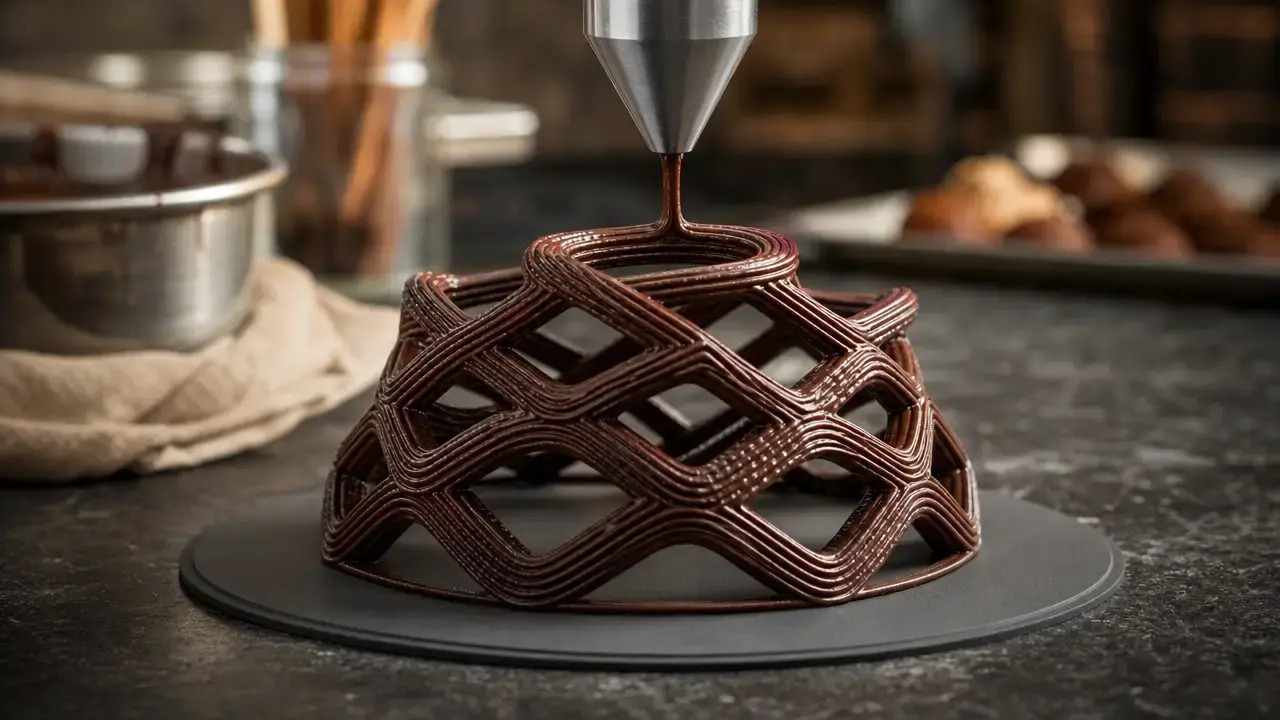
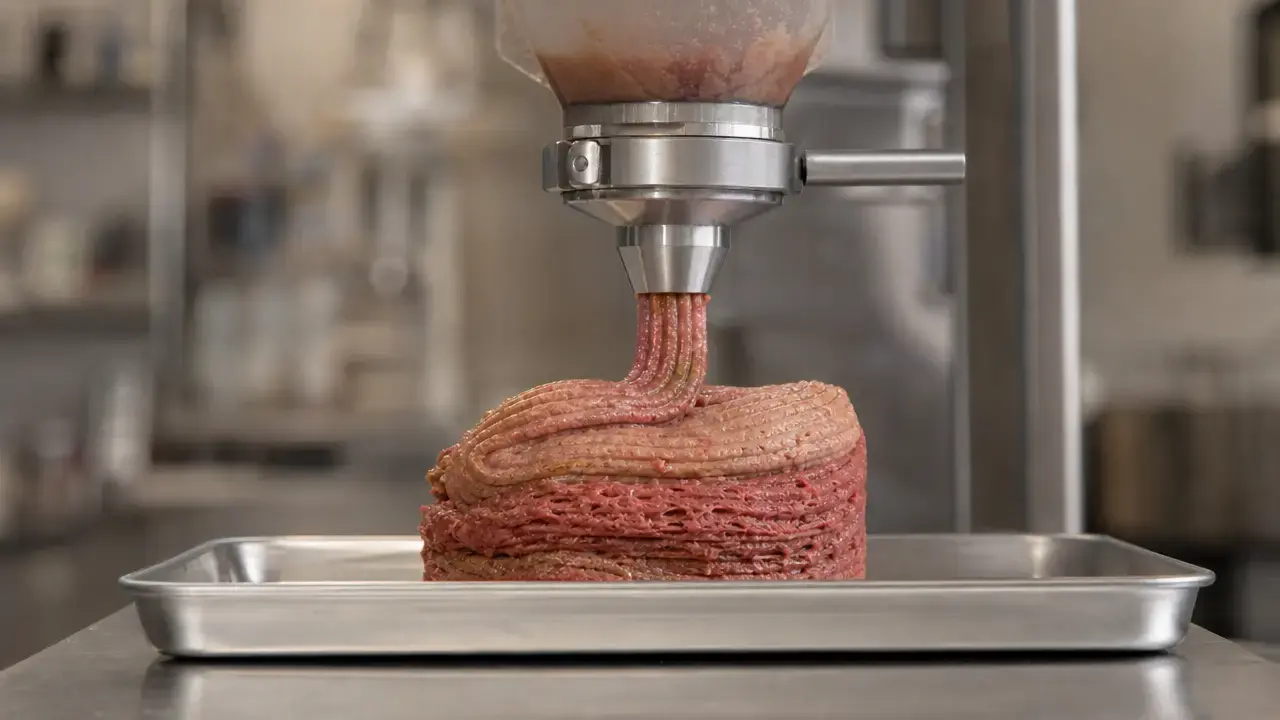
“Layer by layer” does not mean every printer moves or works the same way. A material-extrusion machine deposits toolpaths through a nozzle; a vat-photopolymerization system scans or exposes regions of liquid resin; and a powder process recoats a bed before selectively consolidating the next cross-section. The mechanism determines the feedstock, support logic, thermal history, and practical geometry limits. [2]
Five questions that determine the process
- What feedstock does the system use: filament, liquid resin, powder, droplets, wire, or sheet?
- How does it selectively consolidate that material into each layer?
- Does the part need support during the build, and how is that support removed?
- Which post-processing steps are mandatory before the part can be handled or used?
- Which final requirement matters most: geometry, surface condition, strength, density, heat resistance, or material choice?
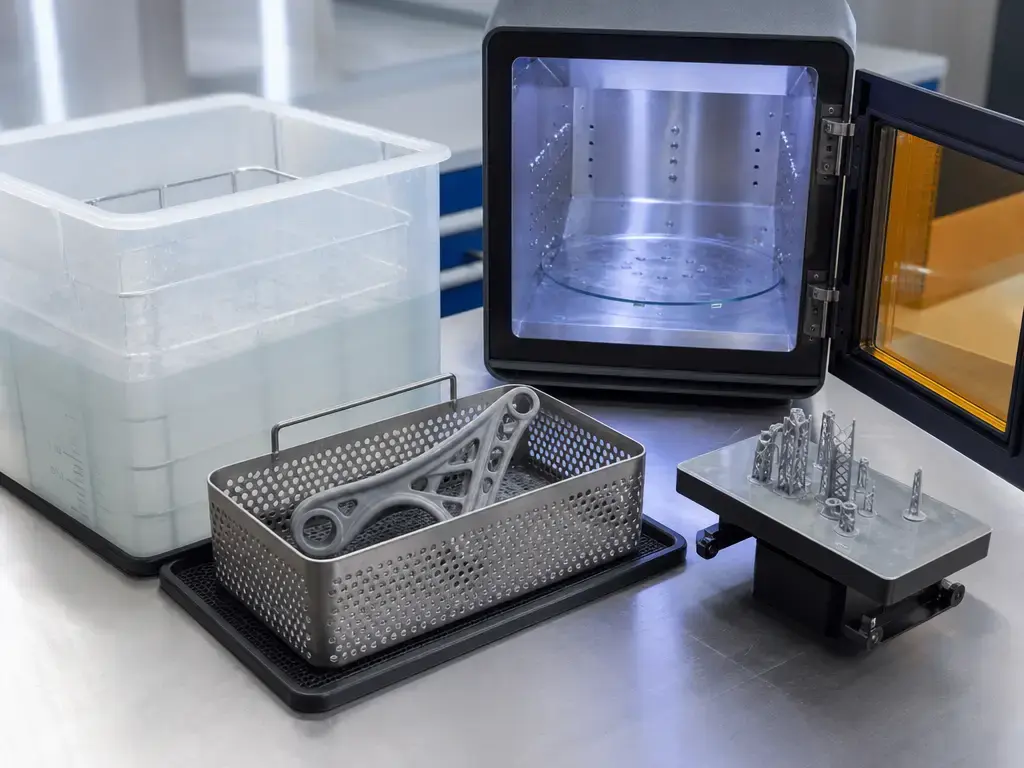
The visible layer-making action is not the whole manufacturing route. Depending on the process, supports may be removed, resin may be washed and post-cured, powder may be removed, or parts may require thermal treatment, machining, or inspection. Binder jetting is a clear example: a printed green part may require careful removal followed by debinding, sintering, infiltration, and optional finishing. [8] Comparing 3D printer technologies therefore means comparing the complete process chain, not just the deposition or exposure step. [9]
Different types of 3D printers: the seven standard process categories
The most durable answer to “what type of printer is this?” is its additive-manufacturing process category, not its enclosure, material brand, or sales label. ISO/ASTM 52900:2021, Edition 2, is the vocabulary baseline used here; ISO lists it as published in November 2021, 28 pages long, and confirmed in 2025. [1] NIST describes seven basic additive-manufacturing process categories, providing a common mechanism-based framework for comparing machines. [2]
These categories are not product specifications. Machines within one category can differ substantially in material qualification, automation, build preparation, environmental controls, and finishing requirements. Commercial names also do not always map neatly to a single reader-friendly label: a branded system may combine powder spreading, agent deposition, and thermal processing without becoming an eighth standard category. [2] [9]
| Standard category | Common names readers see | How it works | Typical role |
|---|---|---|---|
| Binder jetting | Binder jet, sand printer | A liquid bonding agent selectively joins powder particles in a powder bed. | Sand molds and cores; metal or ceramic parts that undergo downstream treatment. |
| Directed energy deposition | DED, laser cladding, wire arc AM | Focused thermal energy melts material as it is deposited. | Repair, feature addition, and deposition onto existing substrates. |
| Material extrusion | FDM/FFF, filament printer | Material is pushed through a nozzle and deposited in programmed paths. | Prototypes, fixtures, and thermoplastic parts. |
| Material jetting | PolyJet, inkjet 3D printing | Build-material droplets are deposited and solidified, often by UV curing in photopolymer systems. | Detailed polymer models and multi-material visual prototypes. |
| Powder bed fusion | SLS, LPBF, DMLS, SLM, EBM | A laser or electron beam selectively fuses regions of a powder bed. | Functional polymer parts and metal components. |
| Sheet lamination | Laminated object manufacturing, ultrasonic AM | Sheets are bonded into a three-dimensional object, then cut or shaped. | Laminated forms and selected metal assemblies. |
| Vat photopolymerization | SLA, DLP, MSLA/LCD | Light selectively cures liquid photopolymer in a vat. | Fine-detail models, patterns, and dental or medical workflows. |
Note: Powder bed fusion includes distinct polymer and metal subfamilies, with different thermal behavior, support logic, and finishing requirements. Branded powder systems can combine recoating, agent deposition, and thermal processing; MJF, discussed below, should not be mistaken for binder jetting. [2] [9]
The main consumer and professional 3D printer types
Filament printers: material extrusion (FDM/FFF)
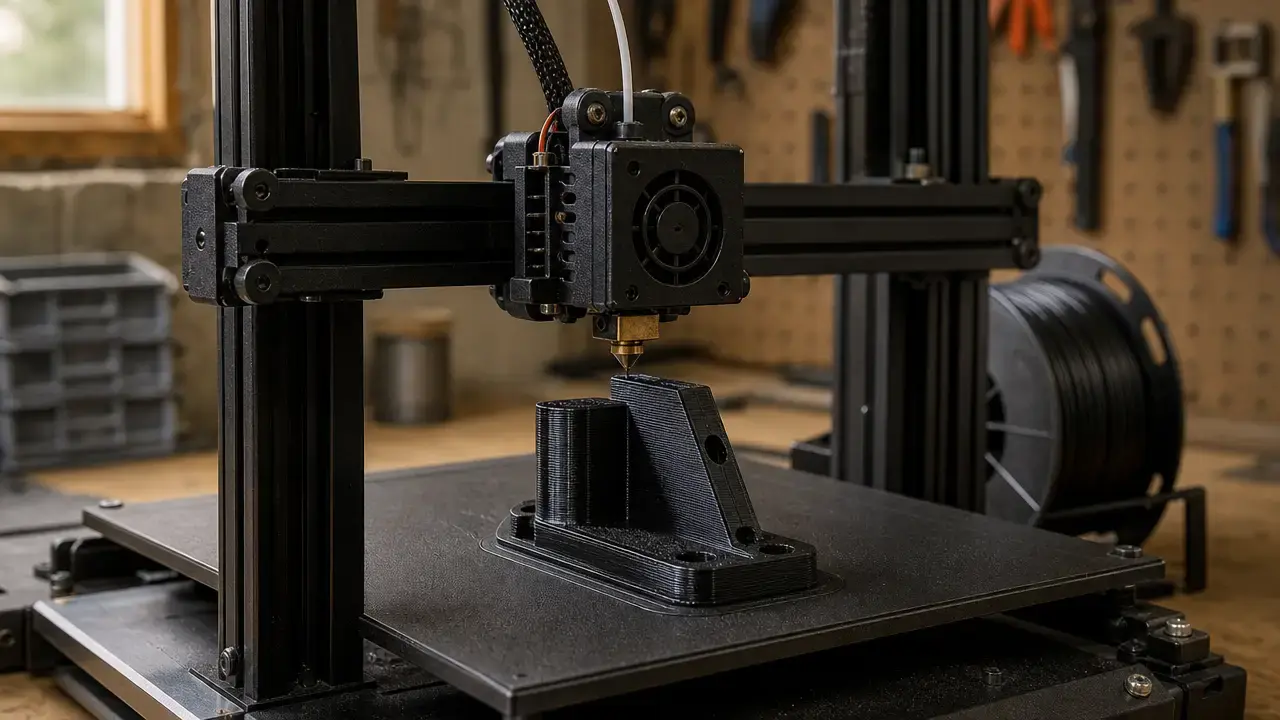
Filament printers are the most familiar material-extrusion machines. They typically push thermoplastic filament through a nozzle onto a platform that moves horizontally and vertically, depositing paths that form each layer. [2] The deposited material must cool and bond to adjacent paths and prior layers, so orientation affects surface appearance and can influence mechanical response. Overhangs often need generated support structures, although bridges and some shallow overhangs can be formed directly depending on geometry and process settings.
Material choice is broad, but successful printing depends on more than the material name. The feed path, nozzle and build temperatures, chamber conditions, moisture state, orientation, and support strategy can all affect the result. Because layers are joined during the build, parts can behave differently across layer boundaries than within a deposited road. Loading direction, wall layout, and orientation are therefore practical design decisions.
Terminology box: Material extrusion is the standard process-category term. FDM is a trademark of Stratasys, while FFF is a common generic descriptor for this style of filament-based printing. [5] [9] Everyday use of “FDM printer” is widespread, but it should not be confused with the name of the full standards category.
Resin printers: SLA vs DLP vs MSLA
Resin printers belong to vat photopolymerization: light selectively cures liquid photopolymer resin into solid layers. SLA commonly uses a laser that traces the layer, while DLP uses a projector to expose an image of the layer. MSLA uses masked light; an LCD panel is commonly used as the mask, though “MSLA” describes the broader masked-light approach rather than the panel alone. [7] These are differences in light delivery, not automatic rankings for speed, detail, dimensional outcome, or part quality.
Resin parts are normally connected to a build platform and may need supports for islands, overhangs, and slender features. The workflow commonly includes draining uncured resin, washing, support removal, and post-curing. Those stages affect handling, surface condition, and final material behavior, so a resin printer should be evaluated as a system rather than as a light engine alone. Resolution also has several contributors: optical behavior, light distribution, positioning, exposure, and vertical layer settings all matter. Pixel size or laser spot size alone does not establish final-part accuracy. [7]
Powder printing for polymers: SLS / polymer powder bed fusion
Polymer powder bed fusion, commonly associated with selective laser sintering, spreads a powder layer, selectively fuses the intended regions, then recoats the bed for the next layer. Powder bed fusion broadly uses thermal energy from a laser or electron beam to selectively fuse powder, although polymer SLS systems are typically laser-based. [2] In polymer systems, the part is supported by the surrounding bed of unfused particles rather than by printed sacrificial supports attached to the geometry. [9] This can suit complex forms and nested builds, but powder preparation, thermal control, cooling, depowdering, and powder management remain part of the workflow.
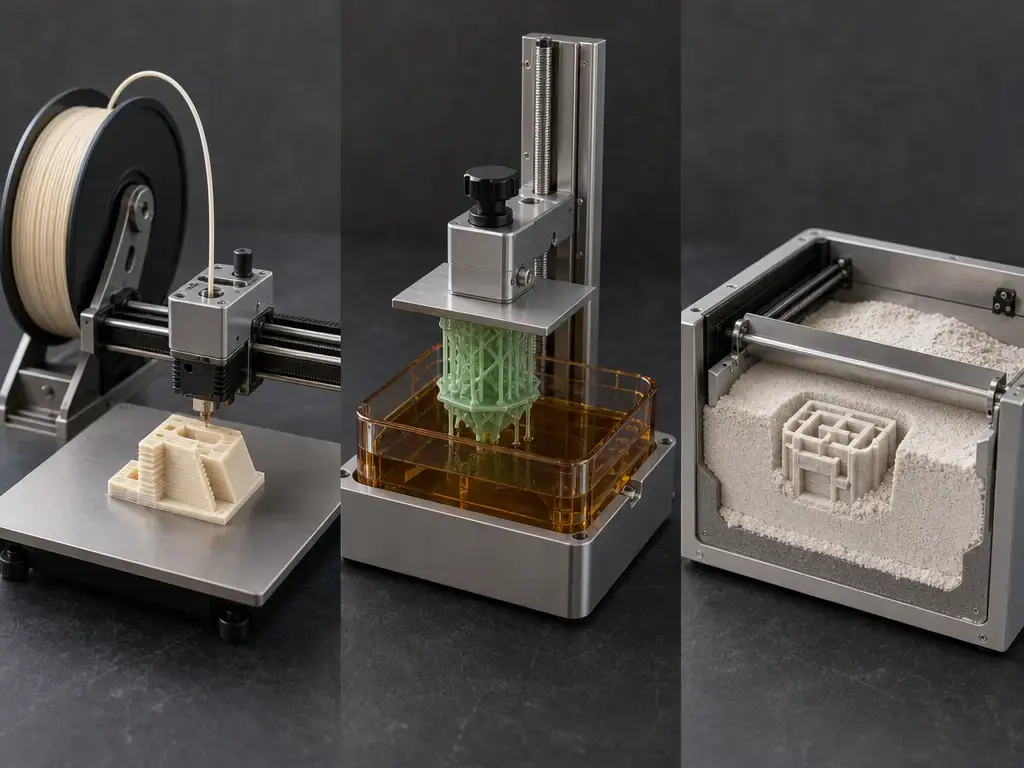
A practical FDM vs SLA vs SLS 3D printers comparison
A practical comparison of FDM vs SLA vs SLS 3D printers cannot be reduced to a single resolution or “accuracy” number. These routes use different feedstocks, support conditions, removal methods, and finishing steps. A useful 3D printer technologies comparison starts with the part, the available workflow capacity, and the property or geometry that matters most.
| Decision factor | FDM/FFF | SLA/DLP/MSLA | SLS (polymer PBF) |
|---|---|---|---|
| Feedstock form | Thermoplastic filament | Liquid photopolymer resin | Polymer powder |
| In-build support strategy | Generated supports for many overhangs | Generated supports connect features to the build platform | Surrounding unfused powder supports parts |
| Mandatory post-processing steps | Support removal where used; possible finishing | Washing, support removal, post-curing | Cooling, depowdering, powder handling |
| Surface/feature expectations | Deposited paths can remain visible on surfaces | Fine visual features and smooth-looking surfaces can be possible | Powder-related texture; complex unsupported forms are practical |
| Typical best-fit uses | Prototypes, fixtures, and thermoplastic parts | Detailed models, patterns, and resin-specific applications | Complex functional polymer parts and nested builds |
A meaningful dimensional claim needs a defined artefact or geometry, material, orientation, parameters, post-processing state, measurement method, and stated uncertainty or acceptance rule. ISO/ASTM 52902 frames geometric-capability assessment around defined test artefacts and measurement requirements, while NIST advises that quantitative statements should be associated with uncertainty rather than a standalone accuracy label. [6] [4]
Beyond the big three: MJF, material jetting, binder jetting, sheet lamination
MJF is not binder jetting. It is a commercial powder-processing architecture that uses powder feedstock, selectively deposits fusing and detailing agents with a printhead, and applies infrared heating to fuse designated regions while helping define edges. [9] The presence of jetted liquid does not make it binder jetting, because the agent’s role and the thermal consolidation step differ from depositing a liquid bonding agent to join powder into a green part. Commercial names can therefore obscure the underlying mechanism, which is why standards vocabulary remains useful. [2]
Material jetting deposits droplets of build material that are then solidified; it can be relevant for detailed polymer models, smooth surfaces, or multi-material visual work. Binder jetting instead deposits a liquid bonding agent into a powder bed. [2] The resulting green part may need removal from powder, debinding, sintering, infiltration, and optional finishing, depending on the material and intended result. [8] Sheet lamination is more specialized: it bonds sheets into a three-dimensional object, then cuts or shapes them into the required form. [2]
Industrial metal 3D printer types
Industrial metal 3D printer types include metal powder bed fusion, metal binder jetting, and directed energy deposition. In metal powder bed fusion, thermal energy from a laser or electron beam selectively fuses powder within a bed. [2] EBM refers to electron-beam powder bed fusion, distinguishing it from laser powder bed fusion by energy source. Terms such as SLM, DMLS, LPBF, and EBM appear in commercial and technical usage, but they should not be treated as strict interchangeable synonyms. A sound comparison identifies the stated process, energy source, feedstock, atmosphere, qualification evidence, and finishing route.
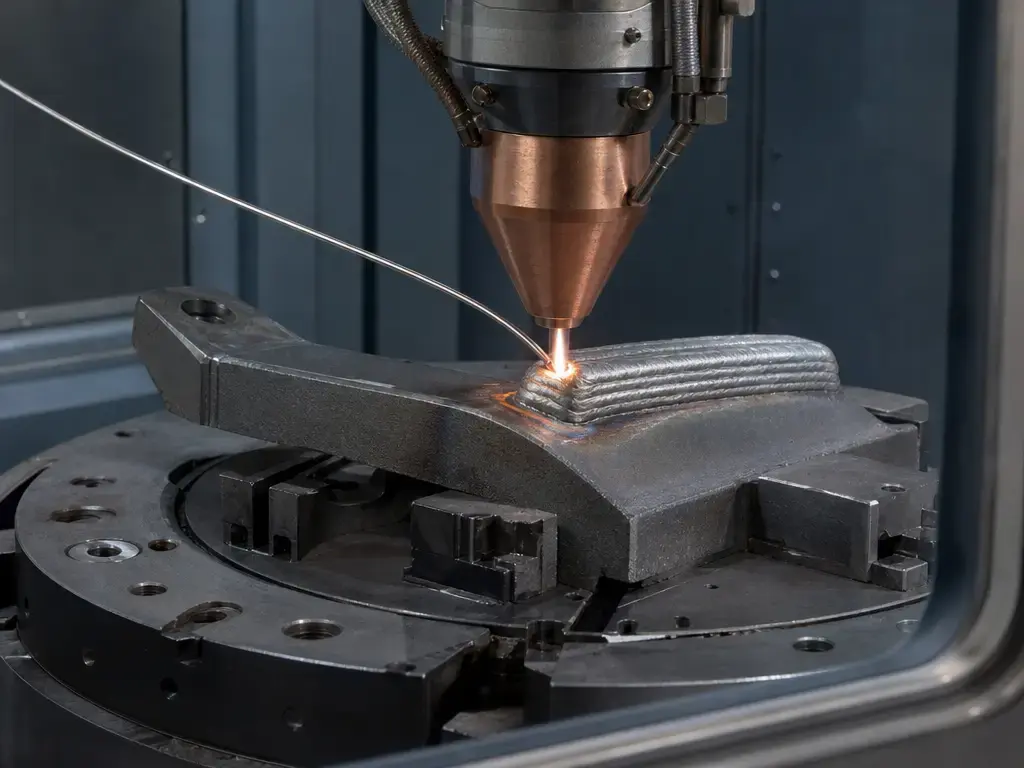
Metal binder jetting forms shape first by depositing binder into powder, producing a green part that is subsequently densified through material-dependent stages that can include debinding, sintering, infiltration, and finishing. [8] DED instead uses focused thermal energy to fuse material by melting it as it is deposited; ASTM identifies laser beam, electron beam, and arc plasma systems, with powder or wire as typical feedstocks. [3] DED can fit repair, feature-addition, or deposition-on-substrate workflows. Industrial metal additive manufacturing typically involves post-processing and inspection steps that materially affect final properties.
Performance metrics: what print quality actually means
“Print quality” combines several different measures. Layer height is the vertical increment used to build a part. XY addressability or resolution concerns how finely the system can address positions across a layer. Minimum feature size concerns the smallest geometry that can be formed reliably, while dimensional deviation is the difference between a produced feature and its intended geometry. Surface texture, mechanical performance, and throughput are separate considerations. None of these measures alone predicts all the others.
Accuracy is a qualitative concept; a quantitative claim should instead state the relevant conditions and associated measurement uncertainty. [4] Precision concerns the closeness of repeated results, while repeatability is precision assessed under the same procedure, observer or operator, instrument, location, and short time interval. [4] ISO/ASTM 52902 uses defined test artefacts and measurements to assess geometric capability and discusses measurement-uncertainty requirements, making it a better model for comparison than a headline resolution specification. [6]
Applications: match the process to the part
For hobby projects, education, and visual models, material extrusion can suit work where thermoplastic handling, rapid iteration, and visible deposited layers are acceptable. Vat photopolymerization can suit detailed display pieces, patterns, or small visual features when resin handling, washing, support removal, and post-curing fit the available workflow. The relevant choice is not “beginner” versus “professional,” but whether the process matches the geometry, finish expectations, material behavior, and finishing capacity.
For engineering prototypes, jigs, fixtures, and housings, extrusion offers a direct route to thermoplastic parts but requires attention to orientation, support removal, and behavior across deposited layers. Polymer powder-bed processes can suit complex geometries because surrounding powder supports the build and allows nested packing, although cooling and depowdering become production-planning tasks. [9]
Sand molds and cores are a notable binder-jet application because the printed form can support a casting workflow. Metal components may be produced through powder bed fusion, binder jetting, or DED depending on geometry, feedstock, and the downstream route. [8] [3] Application examples are not qualification; regulated or critical parts require machine-, material-, post-process-, and application-specific validation.
Limitations, trade-offs, and how to choose
Every additive-manufacturing route exchanges one set of constraints for another. Supports can consume material and leave removal marks; resin and powder require controlled handling; thermal cycles can influence distortion and residual stress; and post-processing capacity can become the limiting resource rather than the printer itself. Orientation affects surface condition, support placement, build duration, and often mechanical response. Repeatable results also depend on controlled preparation, material condition, machine state, and measurement practice, not only on using the same print file. [4]
Choosing among the different types of 3D printers starts with the part and its complete workflow, not a brand name or headline specification. Use standards vocabulary to identify the mechanism, then assess the specific machine, material, geometry, preparation, finishing, inspection, and acceptance requirement. Shared terminology helps prevent commercial labels from obscuring the actual process. [1] [2]
Selection mistakes to avoid
- Treating layer height alone as a complete indicator of detail, surface condition, or dimensional outcome.
- Calling all resin printing “SLA” despite distinct laser, projector, and masked-light architectures.
- Assuming powder-bed printing eliminates post-processing because unfused powder supports the build.
- Assuming a material name guarantees final properties without defined processing and post-processing conditions.
- Comparing desktop specifications directly with validated industrial results without equivalent artefacts, methods, and uncertainty.
FAQ
These answers summarize the different types of 3D printers through process mechanism and complete workflow rather than brand labels.
What are the main different types of 3D printers?
The seven standard additive-manufacturing categories are binder jetting, directed energy deposition, material extrusion, material jetting, powder bed fusion, sheet lamination, and vat photopolymerization. [2] Familiar labels such as filament printer, SLA, SLS, or metal printer refer to particular implementations, materials, or commercial naming conventions within that broader framework. The category identifies how material is selectively consolidated into a part.
What is the difference between FDM vs SLA vs SLS 3D printers?
FDM or FFF uses material extrusion, depositing thermoplastic filament through a nozzle. SLA cures liquid photopolymer resin with directed light, while SLS is a polymer powder-bed process that selectively fuses powder layers. [2] Their support conditions also differ: FDM and resin parts commonly use generated supports, whereas SLS parts are supported by surrounding unfused powder. [7] [9] Each has a different removal and finishing workflow.
Are FDM and FFF the same thing?
They usually refer to closely related filament-printing methods, but the terms have different status. FDM is a Stratasys trademark. [5] FFF, meaning fused filament fabrication, is a common generic descriptor. [9] Both are generally discussed within the material-extrusion category, where material is pushed through a nozzle and deposited in successive paths. [2]
Is a resin vs filament 3D printer better for detailed parts?
Neither is universally better, because “detail” includes feature geometry, surface condition, dimensional behavior, material, orientation, and post-processing. Resin systems can form fine visual features, but SLA, DLP, and MSLA use different light-delivery arrangements. Resolution depends on multiple optical and vertical-process factors, so pixel size is not a complete accuracy claim. [7] Filament systems have different limits and advantages tied to deposited paths, cooling, and support strategy.
What are industrial metal 3D printer types?
Industrial metal routes include laser- or electron-beam powder bed fusion, binder jetting, and directed energy deposition. Powder bed fusion selectively fuses metal powder, while binder jetting produces a green part that requires downstream operations such as debinding, sintering, infiltration, or finishing. [2] [8] DED uses focused thermal energy to melt powder or wire as it is deposited. [3] These routes should not be treated as interchangeable.
What should I compare besides 3D printer resolution?
Compare geometry, material, orientation, support strategy, post-processing, surface condition, mechanical requirements, throughput, and inspection method. Accuracy is qualitative, so quantitative dimensional claims need stated uncertainty and conditions. [4] Repeatability concerns results obtained under the same procedure, operator, instrument, location, and short time period. Defined test artefacts, calibration, and measurement methods make comparisons more meaningful. [6]
Sources
- ISO/ASTM 52900:2021 Additive manufacturing — General principles — Fundamentals and vocabulary — ISO
- NIST Special Publication 1176: Costs and Cost Effectiveness of Additive Manufacturing — NIST
- ASTM F3187-16 Standard Guide for Directed Energy Deposition of Metals — ASTM International
- NIST Technical Note 1297: Guidelines for Evaluating and Expressing the Uncertainty of NIST Measurement Results — NIST
- Stratasys Legal Information — Stratasys
- ISO/ASTM 52902:2023 Additive manufacturing — Test artefacts — Geometric capability assessment of additive manufacturing systems — ISO
- Guide to Resin 3D Printers: SLA vs. DLP vs. MSLA vs. LCD — Formlabs
- A laboratory-scale binder jet additive manufacturing testbed: Process and workflow context — PMC
- A review of recent advances in additive manufacturing with polymer materials — University of South-Eastern Norway
- US4575330A Apparatus for production of three-dimensional objects by stereolithography — Google Patents