
At-a-glance verdict
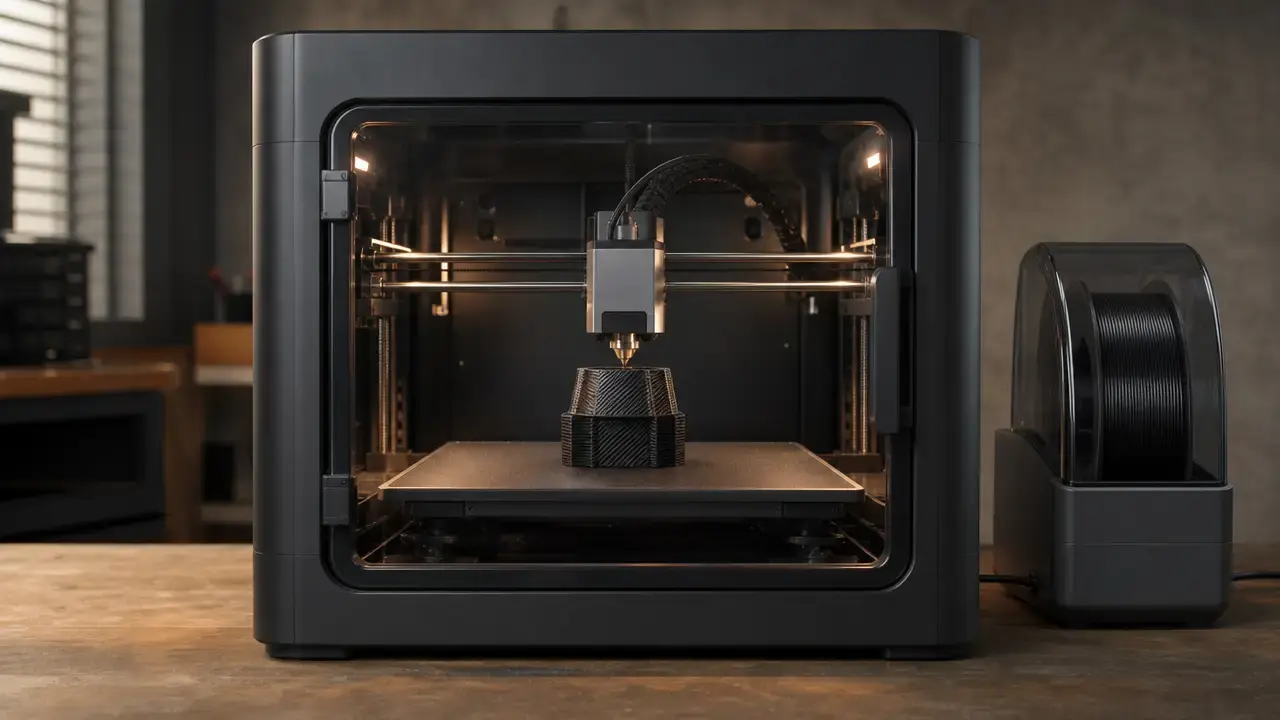
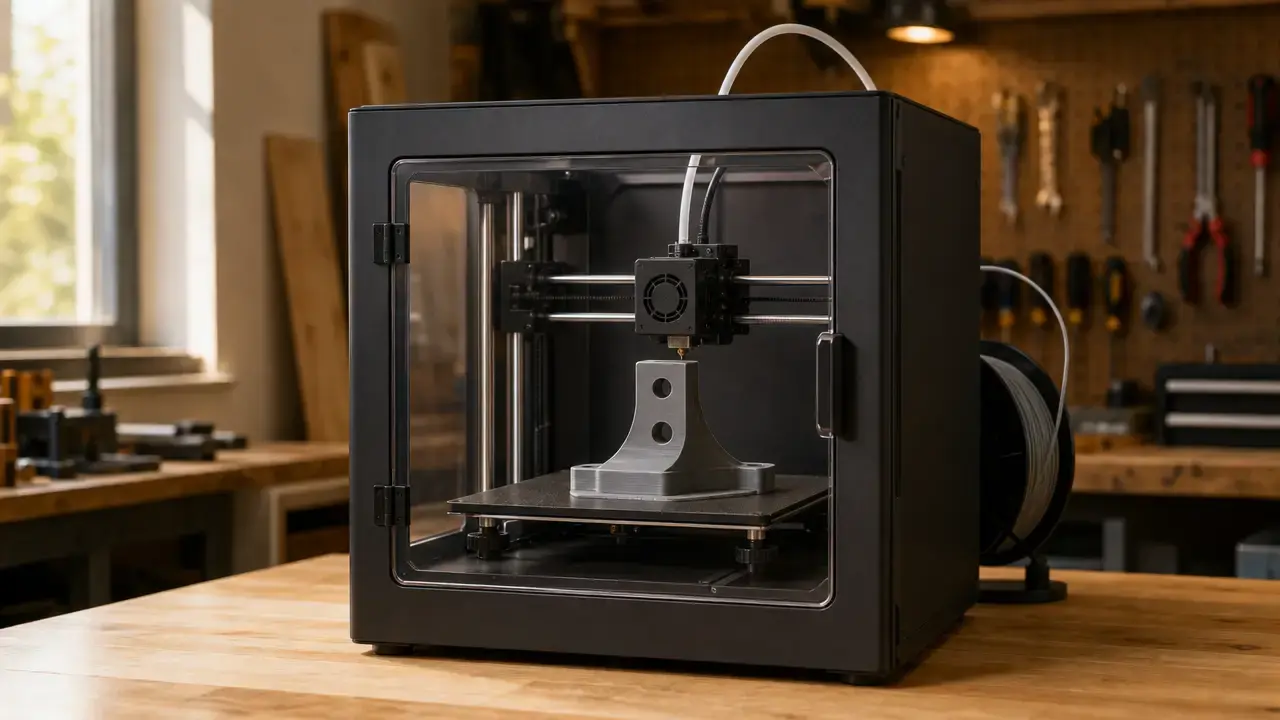
bambu lab p1s combo vs p2s combo is a conditional buying decision, not a simple print-quality contest. The P2S Combo suits buyers who need its higher heatbed limit, hardened wear components, or larger stated AMS expansion path. The P1S remains the value-focused choice when those differences do not address a real workflow constraint. Both have the same stated build volume and maximum nozzle temperature, and the P2S does not have active chamber heating. [S4] [S7] [S9]
- Choose P1S Combo if you want enclosed PLA/PETG multi-material printing and do not need stock hardware for abrasive filaments.
- Choose P1S Combo if its build size and nozzle-temperature limit already meet your needs.
- Choose P1S Combo if the P2S touchscreen, camera, heatbed headroom, and AMS scale would not remove a current limitation.
- Choose P2S Combo if its higher stated heatbed capability matters for your planned materials.
- Choose P2S Combo if you expect regular use of CF- or GF-filled filaments and want hardened stock nozzle and gear hardware.
- Choose P2S Combo if you are planning a larger AMS setup that can use its stated expansion topology.
Published specifications cannot establish a universal print-quality winner. Surface finish, dimensional deviation, repeatability, overhang performance, and failure rate also depend on filament, model geometry, nozzle size, settings, maintenance, and environment. The P2S is the capability-led option; the P1S is the rational choice when those capabilities are not requirements. [S4] [S7]
Before you compare: what “Combo” includes
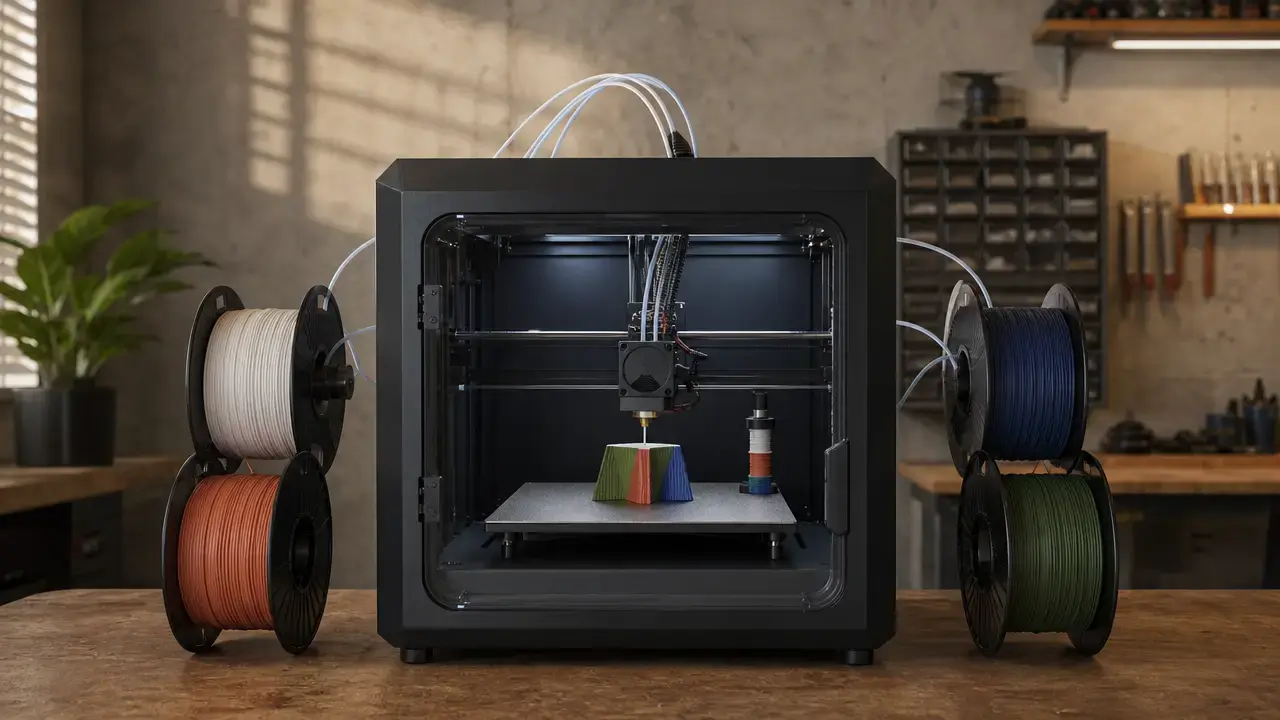
A Combo is a printer package sold with an Automatic Material System, or AMS. The exact AMS model and included routing hardware can vary by regional SKU. In the US store listing captured on November 16, 2026, Bambu Lab offered both a P1S AMS Combo with the original AMS and a P1S AMS 2 Pro Combo with AMS 2 Pro, a 4-pin bus cable, switching adapter, filament buffer, and PTFE tube coupler. [S17]
The captured US P2S Combo listing identifies an AMS 2 Pro and a filament buffer among the included items. [S18] For P1 and P1S-series machines, Bambu’s AMS 2 Pro documentation specifies a 6-pin connection, a 4-pin bus cable, and either a filament buffer or AMS Hub for automatic feeding. [S12] The listed upgrade-kit configurations include either a buffer or hub, plus a 4-pin cable, switching adapter, PTFE couplers, and PTFE tubes. [S13]
Questions to ask before buying a Combo
- Which region and official store is selling the package?
- What exact variant name appears at checkout?
- Which AMS model is included: AMS, AMS 2 Pro, or another model?
- Does the bundle include a filament buffer or an AMS Hub?
- Is a drying power adapter included where needed?
- Will you run one to two AMS devices or three or more?
- Do you expect to use abrasive CF- or GF-filled filaments?
- Do you plan to use TPU through an AMS?
What P1S and P2S share
Additive manufacturing builds physical three-dimensional objects through the successive addition of material. These printers use material extrusion, depositing softened filament through a nozzle in layers. [S1] Both are enclosed desktop material-extrusion machines with the same stated 256 × 256 × 256 mm build volume and 300 °C maximum nozzle temperature. [S4] [S7]
Those shared limits mean that neither a larger printable envelope nor a higher stated nozzle-temperature ceiling is, by itself, a reason to choose the P2S. An enclosure is an architectural and environmental-control feature, not a guarantee of success with every polymer. The practical differences are the P2S’s higher stated heatbed limit, hardened stock nozzle and gear, different interface and monitoring hardware, and stated AMS expansion path. [S4] [S7] [S9]
Specs and hardware differences that change capability
This is a manufacturer-specification comparison, not a measured print-quality ranking. “Combo” changes the supplied package, not the printer’s underlying stated technical limits. [S4] [S7]
| Metric | P1S (Combo) | P2S (Combo) | What it changes |
|---|---|---|---|
| Build volume | 256 × 256 × 256 mm. [S4] | 256 × 256 × 256 mm. [S7] | Neither has a stated size advantage. |
| Maximum nozzle temperature | 300 °C. [S4] | 300 °C. [S7] | The stated nozzle-temperature ceiling is the same. |
| Maximum heatbed temperature | 100 °C. [S4] | 110 °C. [S7] | P2S has greater stated heatbed-temperature headroom. |
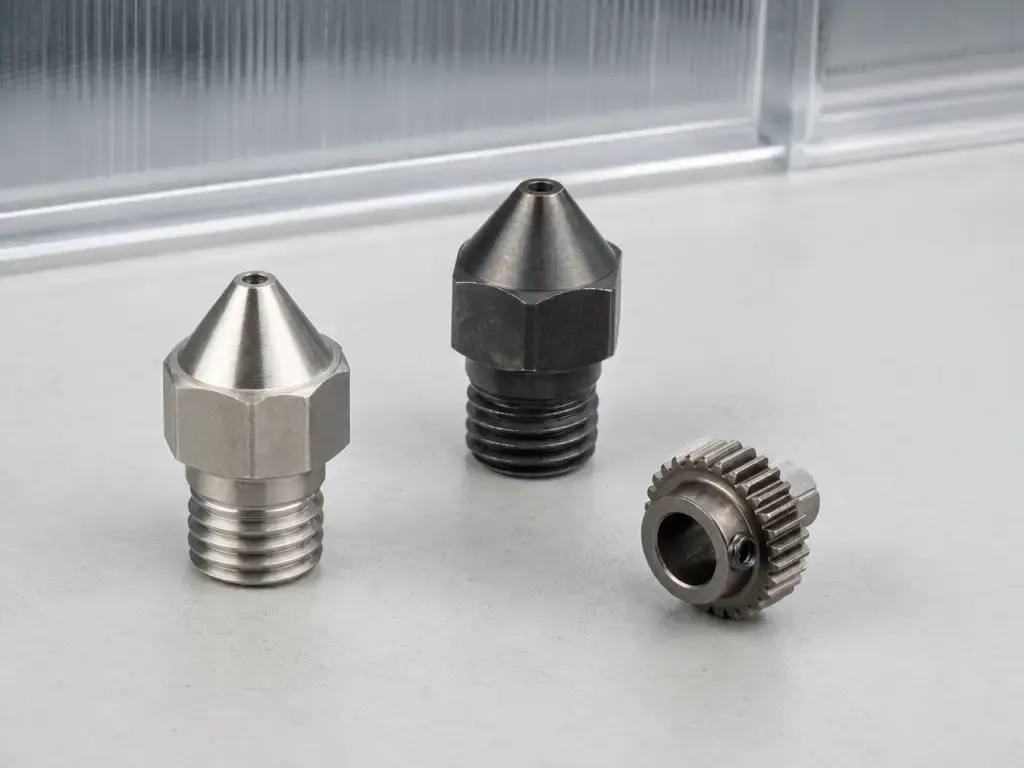
| Included nozzle material | Stainless steel. [S4] | Hardened steel. [S7] | P2S starts with a more wear-focused nozzle material. |
| Extruder gear | Steel. [S4] | Hardened steel. [S7] | P2S specifies a hardened filament-drive component. |
| Camera | 1280 × 720 at 0.5 fps; timelapse supported. [S4] | 1920 × 1080 at 30 fps. [S7] | P2S has a higher-resolution, faster camera specification. |
| Interface and processing | 2.7-inch, 192 × 64 screen; button, app, and PC control. [S4] | 5-inch, 854 × 480 touchscreen; mobile and PC control; 2-TOPS NPU. [S7] | P2S has a larger touch interface and listed onboard AI-compute hardware. |
| Maximum speed and acceleration | 500 mm/s; 20 m/s², equal to 20,000 mm/s². [S4] | 600 mm/s; 20,000 mm/s². [S7] | Acceleration is the same stated magnitude; the top-speed ceiling differs. |
| Maximum hotend flow | 32 mm³/s in a Bambu ABS test using a 150 × 150 mm single wall at 280 °C. [S4] | 40 mm³/s in a Bambu ABS test using a 250 mm round, single-outer-wall model at 280 °C with the Standard Flow Hotend. [S7] | The figures use different manufacturer test conditions. |
Maximum speed is not typical print speed. The acceleration values are the same magnitude after unit normalization, while the flow figures are conditional on different test geometry and setups. None of these specifications independently proves better surface finish, dimensional accuracy, repeatability, or failure rate. [S4] [S7]
The P1S includes a 0.4 mm nozzle and lists 0.2 mm, 0.6 mm, and 0.8 mm options. [S4] The P2S specification lists 0.2 mm, 0.4 mm, 0.6 mm, and 0.8 mm nozzle diameters. [S7] Workspace planning also differs: Bambu lists the P1S at 389 × 389 × 458 mm and 12.95 kg, while the P2S is listed at 392 × 406 × 478 mm and 14.9 kg. [S4] [S7]
The P2S is enclosed, but Bambu states that it has no active chamber-heating function. [S9] Its documented chamber-management approach uses an automatic flap to switch between internal and external air circulation. Bambu describes its Adaptive Airflow System as retaining heat and routing internal air through carbon filtration. [S9] [S16] These features are not a quantified chamber-temperature claim and should not be treated as active chamber heating. [S9]
AMS compatibility and expansion
AMS is Bambu Lab’s Automatic Material System, an accessory for feeding and switching among loaded filaments. One original AMS has four filament slots, and Bambu states that up to four AMS units can be connected in parallel for up to 16 colors when using an AMS Hub. [S11] AMS devices, filament slots, and colors used in a model are not interchangeable terms. More slots do not create simultaneous multi-nozzle printing, and jobs with more material changes can require more purge material and time.
For P1 and P1S-series machines, Bambu’s AMS 2 Pro documentation states that automatic feeding uses a 6-pin connection, a 4-pin bus cable, and either a filament buffer or AMS Hub. [S12] The listed upgrade-kit configurations include either a filament buffer or AMS Hub, plus a 4-pin cable, switching adapter, PTFE couplers, and PTFE tubes. [S13] Bambu also states that AMS 2 Pro drying requires an external power adapter in the P1/X1-series arrangement. [S12]
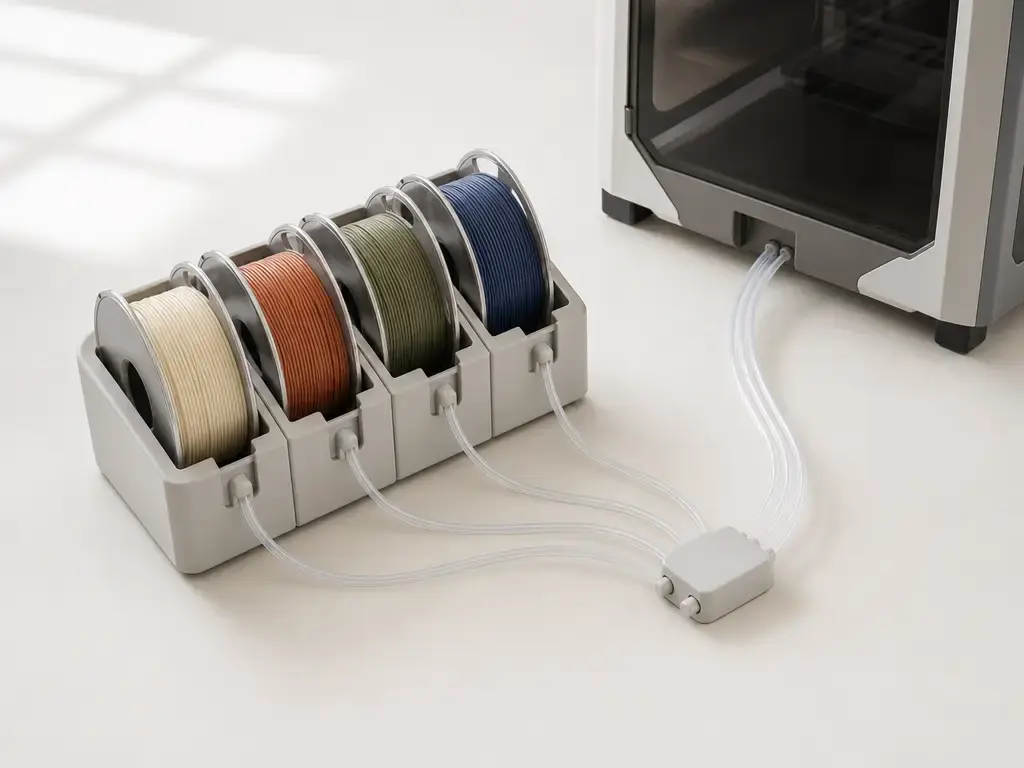
The P2S manual lists compatibility with the first-generation AMS, AMS 2 Pro, AMS HT, and AMS lite. [S8] Device compatibility does not mean that every spool or filament is suitable for every AMS configuration. For a standalone P2S, Bambu notes that the filament buffer is not included. [S9] Its guidance specifies SA011 for one to two AMS units and SA011 plus a 4-in-1 PTFE adapter for three or more AMS units. [S15] The P2S product page also lists CAB035 and a 4-in-1 arrangement for multi-AMS setups. [S9]
Bambu’s stated maximum P2S arrangement is four AMS 2 Pro units plus four AMS HT units: eight AMS devices and 20 slots. [S9] [S15] This is an expansion specification, not a promise that every model needs or benefits from 20 colors. The P2S touchscreen, mobile and PC control, camera monitoring, timelapse, and intelligent-detection feature can affect setup and observation, but they do not establish a detection-performance or failure-reduction figure. [S7] [S8]
Print quality: what specifications can and cannot show
Print quality is not a single measurement. It includes surface finish, overhang and bridging behavior, dimensional deviation, repeatability, and failure rate. A meaningful comparison requires the same test artifact, filament, nozzle diameter, layer profile, orientation, environment, maintenance state, and measurement procedure. ISO/ASTM guidance treats test artifacts and measurements as tools for evaluating machine capability and calibration. [S2]
Measurement method matters because differences in printed parts can arise from the printer, material, artifact design, or measurement process. [S2] A NIST-related data article provides methodology context for uncertainty quantification in additive-manufacturing dimensional measurement; it is not a P1S-versus-P2S result. [S3] No controlled, independent P1S-versus-P2S print-quality dataset is provided in the available source set.
The P2S’s camera, intelligent-detection feature, airflow system, and higher stated maximum hotend-flow figure may affect monitoring and workflow. [S7] [S8] [S16] They do not, by themselves, prove better surfaces, dimensional accuracy, repeatability, bridging, or failure rate. A higher maximum motion or flow specification likewise does not show how an individual model will print with a particular material and profile. [S4] [S7]
Materials and AMS constraints
Material selection involves three separate questions. Thermal capability concerns the nozzle, heatbed, and chamber conditions available to a job. Abrasion resistance concerns wear at the nozzle and filament-drive surfaces. AMS constraints concern whether a particular polymer and spool are suitable for automated feeding. A material appearing on a manufacturer list is a compatibility indication, not a blanket guarantee of low warp, low moisture sensitivity, or successful printing. [S4] [S7] [S8]
| Material family | P1S: what Bambu lists | P2S: what Bambu lists | AMS notes and caveats |
|---|---|---|---|
| PLA | Ideal. [S4] | Listed, including PLA-CF. [S7] | PLA-CF requires a hardened steel nozzle; the manual also recommends a high-flow nozzle. [S8] |
| PETG | Ideal. [S4] | Listed, including PETG-CF. [S7] | Fiber-filled PETG adds abrasion considerations. |
| ABS | Ideal. [S4] | Listed, including ABS-GF. [S7] | No model-specific official AMS guidance was found in the captured sources. |
| ASA | Ideal. [S4] | Listed, including ASA-CF. [S7] | No model-specific official AMS guidance was found in the captured sources. |
| PA/nylon | Capable. [S4] | PA6-CF, PA6-GF, and PAHT-CF are listed. [S7] | No model-specific official AMS guidance was found in the captured sources. |
| PC | Capable. [S4] | No model-specific official guidance was found in the captured sources. | No model-specific official AMS guidance was found in the captured sources. |
| TPU | Ideal. [S4] | No model-specific official guidance was found in the captured sources. | TPU 90A is listed as AMS HT-only. [S8] |
| CF/GF-filled | Not recommended. [S4] | PLA-CF, PETG-CF, ABS-GF, ASA-CF, PA6-CF/GF, PAHT-CF, PPA-CF, and PET-CF are listed. [S7] | Device compatibility and filament compatibility remain separate checks. [S8] |
The P2S’s hardened nozzle and hardened extruder gear make its stock hardware better aligned with abrasive fiber-filled filament plans. [S7] That abrasion advantage is separate from thermal capability: its higher stated heatbed limit may matter to a material profile, but it does not replace active chamber heating. [S7] [S9]
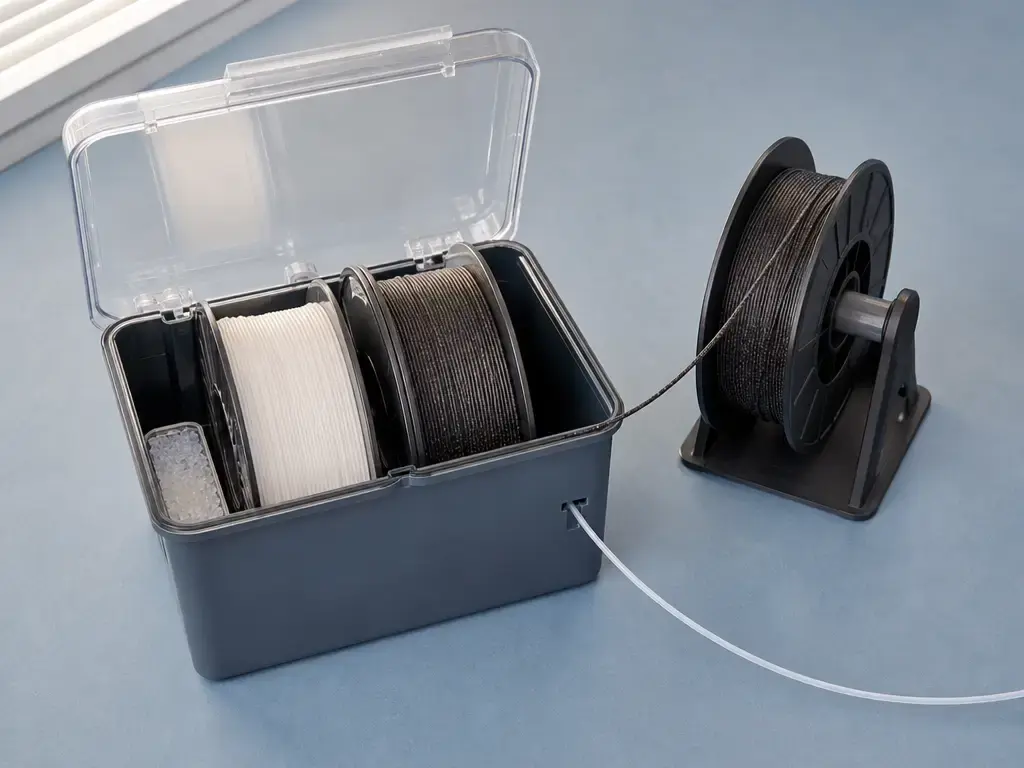
For TPU and other difficult-to-feed materials, assess the printer, spool, and specific AMS arrangement separately. The P2S manual’s TPU 90A limitation illustrates why a material may be printable from an external spool while remaining restricted in an automated feeder workflow. [S8]
Ownership trade-offs
Ownership costs extend beyond the bundle price. For multi-material work, check the slicer’s purge-material and time estimates for the actual number of color or material changes in your models. No source in this comparison establishes a universal waste or time figure for AMS printing.
Maintenance needs vary with filament choice, nozzle size, print volume, and use frequency. Abrasive-filled materials warrant closer attention because the P2S specifies hardened nozzle and extruder-gear components, while the P1S specification lists a stainless-steel nozzle and steel extruder gear. [S4] [S7] An enclosure does not automatically make a part suitable for engineering use, and camera monitoring does not guarantee that a failed print will be saved. [S7] [S8] Plan ventilation around the material and operating environment, and do not infer an electricity-cost comparison from these specification sheets. [S4] [S7]
Do not choose solely on…
- Advertised maximum speed.
- Camera resolution.
- AMS slot count.
- A temporary sale price.
- Any universal print-quality claim.
Upgrade guidance for current P1S owners
For a current P1S owner, an upgrade should be driven by a recurring bottleneck. The P2S case is strongest if you regularly use abrasive filament, need its additional heatbed-temperature headroom, want its touchscreen and monitoring workflow, or are building toward the larger stated AMS topology. [S4] [S7] [S9] A P1S with a stainless-steel stock nozzle and steel extruder gear has a clearer reason to move when abrasive-material wear is the limitation. [S4] [S7]
Keep the P1S if its current materials, build size, and AMS workflow already meet your needs, and the expected gain is only an assumed improvement in surface finish or reliability. No controlled comparative dataset in the supplied source set supports that expectation. The P2S is also not an upgrade path to active chamber heating, because Bambu explicitly states that it has no active chamber-heating function. [S9]
Which should you buy: P1S Combo or P2S Combo?
For a capability-driven buyer, the P2S Combo is the conditional winner because its hardened stock hardware, higher stated heatbed limit, updated interface, and larger stated AMS topology address specific workflow needs. [S7] [S9] For buyers who will not use those differences, the P1S Combo remains the more rational choice.
- Pick P1S Combo if you are starting with PLA/PETG multi-material printing and prioritize automated color or material changes over abrasive-filament hardware.
- Pick P2S Combo if you expect routine abrasive-filament use or are planning a larger AMS setup that can use the P2S’s stated expansion path. [S7] [S9]
- Keep or pick P1S Combo if you cannot identify a recurring limitation that the P2S’s heatbed, hardened components, interface, or AMS scale would solve.
In this bambu lab p1s combo vs p2s combo comparison, the shared stated build volume and maximum nozzle temperature are not independent upgrade reasons. [S4] [S7] Check the exact US or regional SKU before ordering: the US listing captured on November 16, 2026 identifies an AMS 2 Pro and filament buffer for the P2S Combo, while the P1S page offers separately named AMS and AMS 2 Pro Combo variants. [S17] [S18]
FAQ
These answers distinguish bundle contents from printer capability, and AMS-device compatibility from material and spool compatibility. Check the regional listing at purchase because included AMS models, buffers, hubs, cables, and adapters can vary by package. [S17] [S18]
What is the difference between Bambu Lab P1S Combo and P2S Combo?
Both printers have the same stated build volume and maximum nozzle temperature. [S4] [S7] The P2S specifies a higher maximum heatbed temperature, hardened nozzle and extruder gear, a touchscreen, and a larger stated AMS topology. [S7] [S9] The P1S specifies a stainless-steel nozzle, steel extruder gear, and button-operated display. [S4] In the US store listing captured on November 16, 2026, P1S AMS Combo and P1S AMS 2 Pro Combo are separate variants. [S17]
Does the P1S work with AMS 2 Pro, and what extra parts do I need?
Bambu’s AMS 2 Pro documentation for the P1/X1 series specifies a 6-pin connection, a 4-pin bus cable, and either a filament buffer or AMS Hub for automatic feeding. [S12] Its upgrade kits list a buffer or hub, 4-pin cable, switching adapter, PTFE couplers, and PTFE tubes. [S13] Bambu states that the AMS 2 Pro drying arrangement for the P1/X1 series requires an external power adapter. [S12]
Can I use my original first-generation AMS with the P2S, and what accessories are required?
The P2S manual lists first-generation AMS compatibility alongside AMS 2 Pro, AMS HT, and AMS lite. [S8] Bambu’s P2S guidance specifies SA011 for one to two AMS units and SA011 plus a 4-in-1 PTFE adapter for three or more AMS units. [S15] The P2S product page also references CAB035 and a 4-in-1 arrangement for multi-AMS configurations. [S9]
Is print quality better on Bambu Lab P2S than P1S?
No universal controlled P1S-versus-P2S print-quality figure was found in the supplied source set. Print quality includes surface finish, overhang and bridging behavior, dimensional deviation, repeatability, and failure rate, all of which require a disclosed artifact, material, profile, orientation, and measurement method. [S2] The P2S hardware and monitoring features may affect workflow, but they do not independently prove better results across every quality measure. [S7] [S8]
Does the P2S have active chamber heating? How does it manage chamber temperature?
No. Bambu states that the P2S has no active chamber-heating function. [S9] It describes an enclosed chamber with an automatic flap that switches between internal and external air circulation. Its Adaptive Airflow description includes heat retention and carbon-filter airflow. [S9] [S16]
Which is better for abrasive filaments: P1S or P2S?
The P2S has the clearer stock-hardware case for abrasive CF- and GF-filled filaments because it specifies a hardened steel nozzle and hardened steel extruder gear. [S7] The P1S specification lists a stainless-steel nozzle and steel extruder gear, while its material guidance does not recommend carbon- or glass-fiber-reinforced polymers. [S4] Abrasion resistance remains separate from thermal capability and AMS constraints, including the P2S manual’s TPU 90A AMS HT-only limitation. [S8]
Sources
- [S1] ISO — ISO/ASTM 52900:2021 (Fundamentals & vocabulary). https://www.iso.org/standard/74514.html
- [S2] ISO — ISO/ASTM 52902:2023 (Test artefacts / geometric capability assessment). https://www.iso.org/standard/79683.html
- [S3] ScienceDirect — NIST-related dimensional-measurement uncertainty dataset paper. https://www.sciencedirect.com/science/article/pii/S2352340921005709
- [S4] Bambu Lab — P1S Technical Specifications (PDF). https://store.bblcdn.com/s7/default/9e9c1948dd61491199a52c3f1497b9c7/bambu-lab-P1S-tech-specs.pdf
- [S7] Bambu Lab — P2S Spec Sheet (PDF). https://store.bblcdn.com/s7/default/2d1a01cd2dca425eb071ccc28c26c9fa/spec.pdf
- [S8] Bambu Lab — P2S 3D Printing User Manual V1.0 (2026.05) (PDF). https://csm.bblcdn.com/hub/9425242c00344b0e801b6179f9a243aa.pdf
- [S9] Bambu Lab Store (JP, business portal) — P2S product page. https://bambu-lab-jp.myshopify.com/products/p2s
- [S11] Bambu Lab US — AMS (first generation) product page. https://bambulab-us.myshopify.com/products/ams-multicolor-printing
- [S12] Bambu Lab EU — AMS 2 Pro product page. https://bambulab-eu.myshopify.com/products/ams-2-pro
- [S13] Bambu Lab EU — AMS 2 Pro Upgrade Kit page. https://bambulab-eu.myshopify.com/products/ams-2-pro-upgrade-kit