
Summary
ISO ASTM 52900 additive manufacturing vocabulary is the joint ISO/ASTM fundamentals-and-terminology standard for additive manufacturing. As of 2026-10-04, ISO lists ISO/ASTM 52900:2021 as Edition 2, published in 2021-11, with status Published and stage 90.93 (Confirmed), and states that it was last reviewed and confirmed in 2025. It matters because it gives engineers, buyers, writers, and researchers a shared naming system for AM processes and related terms. It does not set machine performance values, certify equipment, or replace process-specific qualification standards. [S1] [S3]
What ISO/ASTM 52900 is and is not
ISO/ASTM 52900 establishes and defines terms used in additive manufacturing technology and classifies those terms into fields of application. In practice, it serves as the baseline vocabulary for specifications, procurement language, technical writing, and cross-supplier communication. If you buy the joint document through ASTM, it is cataloged as ASTM ISO/ASTM52900-21 under ASTM designation F3177-21 and DOI 10.1520/F3177-21, while ISO lists it as ISO/ASTM 52900:2021. [S1] [S2] [S3]
Use it when writing:
- specifications
- RFQs
- QA documents
- research papers
- training materials
- supplier communication
- procurement documentation
Just as important, it is not a machine datasheet, a universal test-method standard, or a certification scheme. This article is not a substitute for the purchased standard text. The preview states that there are no normative references in the document, which helps clarify its role: it anchors vocabulary and fundamentals rather than prescribing acceptance values or performance targets. [S3]
Quick translation box: standards terms vs market language
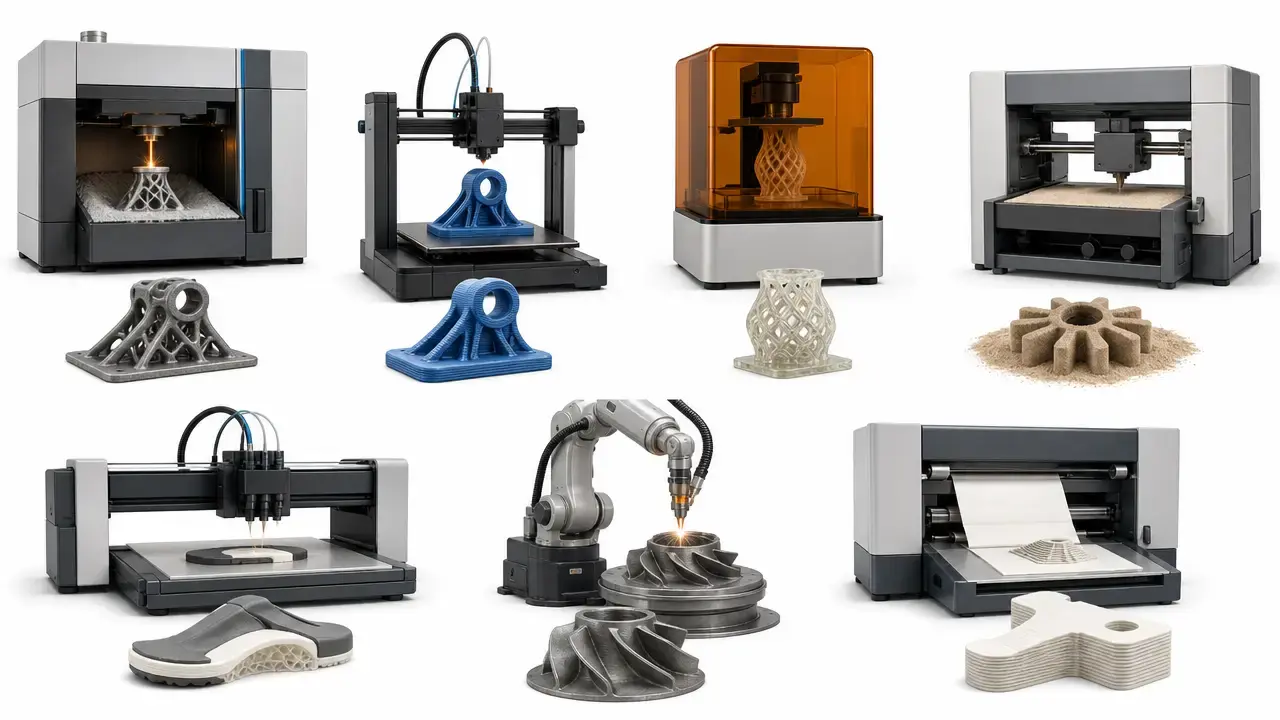
Readers often move between standards text, vendor brochures, lab reports, and shop-floor shorthand. The table below uses standards-category language on the left and common market wording on the right, which may be narrower, brand-linked, or loosely applied in practice. [S5] [S6]
| ISO/ASTM category term | What it does (plain language) | Common market terms you’ll see | Wording caution |
|---|---|---|---|
| Powder bed fusion | Uses thermal energy to fuse selected regions in a powder bed | SLS, SLM, DMLS, EBM | The family name is broader than the shorthand acronyms. [S13] |
| Material extrusion | Selectively dispenses material through a nozzle or orifice | FDM, FFF | FDM is a Stratasys trademark, not the ISO category name. [S7] [S13] |
| Vat photopolymerization | Cures liquid photopolymer resin with light | SLA, DLP, MSLA, LCD | Market labels often describe the exposure method, not the standards family. [S9] |
| Binder jetting | Selectively deposits a liquid bonding agent to join powder materials | Binder jetting, powder-based binder systems | Do not confuse it with material jetting; the build remains powder-bed based. [S5] [S13] |
| Material jetting | Selectively deposits droplets of build material | PolyJet, material jetting | Brand names are often more visible than the generic standards term. [S5] [S13] |
| Directed energy deposition | Fuses material by melting it as it is being deposited | DED, LENS, laser metal deposition, WAAM | Repair or cladding language can overlap with DED, but the terms are not automatic synonyms. [S14] |
| Sheet lamination | Bonds sheets of material to form an object | Laminated object manufacturing, ultrasonic additive manufacturing | Less common in consumer 3D-printing language. [S13] |
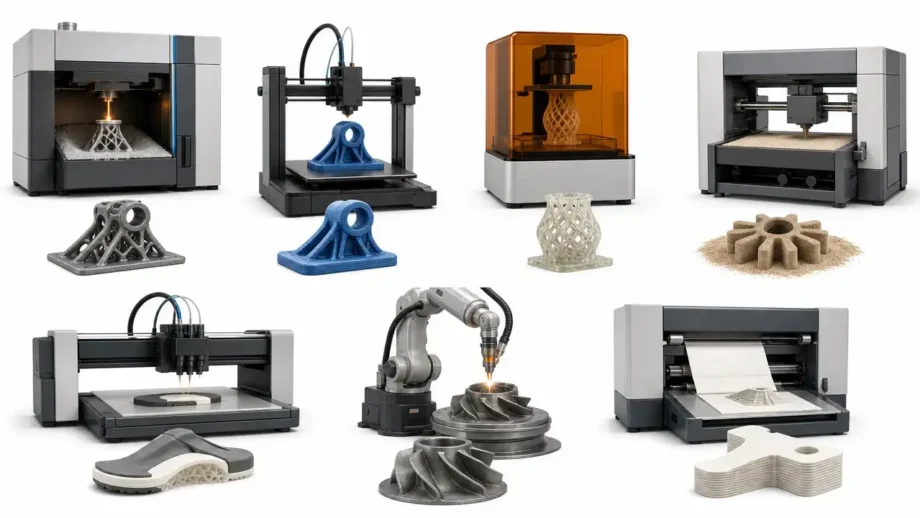
The seven categories are a top-level taxonomy. Hybrids, subtypes, and vendor labels still exist above or below that level, so the table is a translation aid rather than a complete map of the market. [S5] [S6]
Why this vocabulary exists
ISO lists ISO/ASTM 52900:2015 as withdrawn and replaced by ISO/ASTM 52900:2021. The 2021 edition is described as technically revised, with new and modified terms and definitions, added abbreviations for the seven process categories, and a new Annex A for specifying AM processes based on process categories and determining characteristics. Those changes matter because the abbreviations and category names now appear widely in adjacent standards and technical writing. [S1] [S3]
The committee history also explains why this vocabulary travels across organizations. The preview states that the document was prepared by ISO/TC 261 in cooperation with ASTM Committee F42 and in collaboration with CEN/TC 438 under the Vienna Agreement framework. The vocabulary was built for shared use across standards systems, not just one committee’s internal shorthand. [S3]
The seven ISO/ASTM process categories
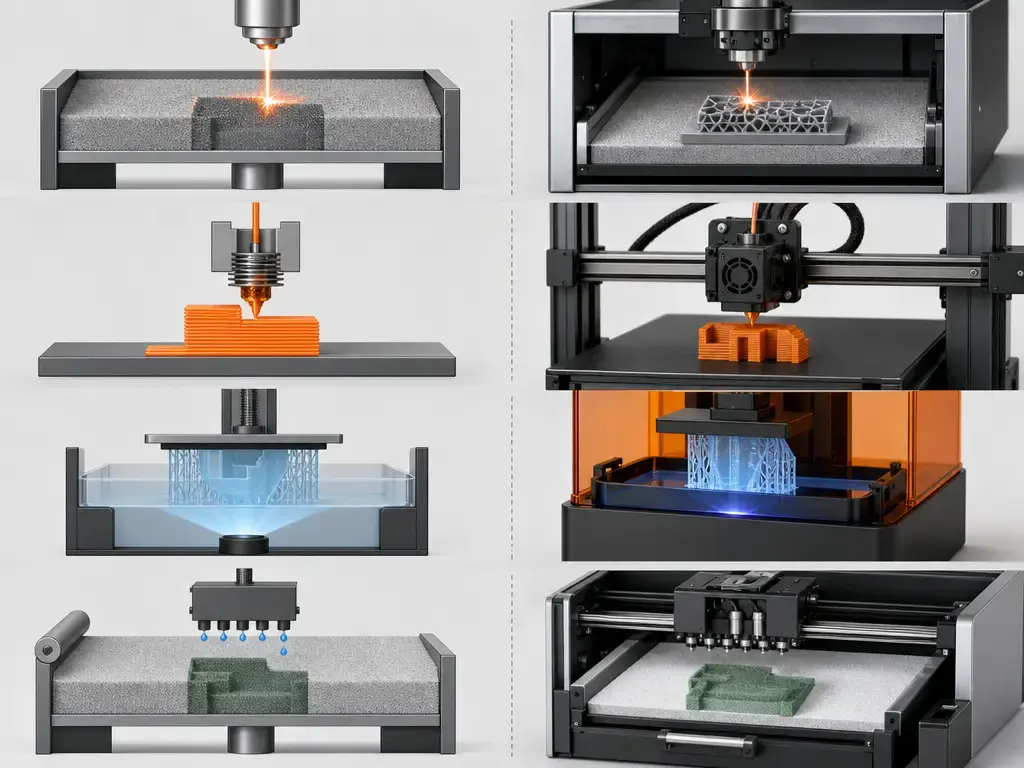
These categories are a standards taxonomy, not a ranking and not a complete catalog of every commercial machine label. They group AM processes by how material is added and joined, while market labels often focus on a brand, feedstock, beam type, or machine architecture. [S5] [S6]
Binder jetting
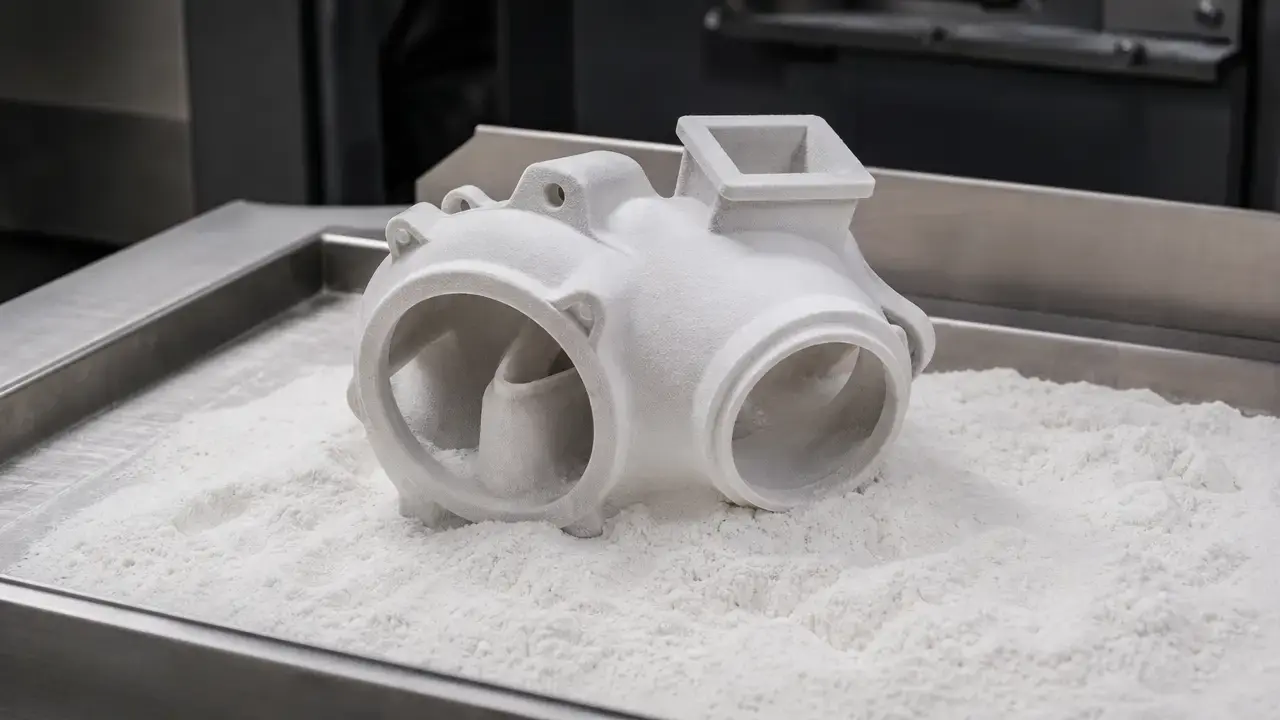
Binder jetting selectively deposits a liquid bonding agent to join powder materials. That makes it distinct from material jetting even though both names include “jetting”: in binder jetting, the printed body begins as a powder-based build. In practice, brochures may stay with the generic label or shift to material- or application-specific wording, especially in sand, ceramic, or metal contexts. [S5] [S13]
Directed energy deposition
Directed energy deposition fuses material by melting it as the material is being deposited. Public-facing descriptions often emphasize the energy source or feedstock, so readers will see terms such as laser metal deposition, LENS, or wire-arc naming. ASTM’s DED guide also draws an important boundary: DED systems can be used for repair or surface cladding, but that application language does not automatically become the standards category name. [S5] [S14]
Material extrusion
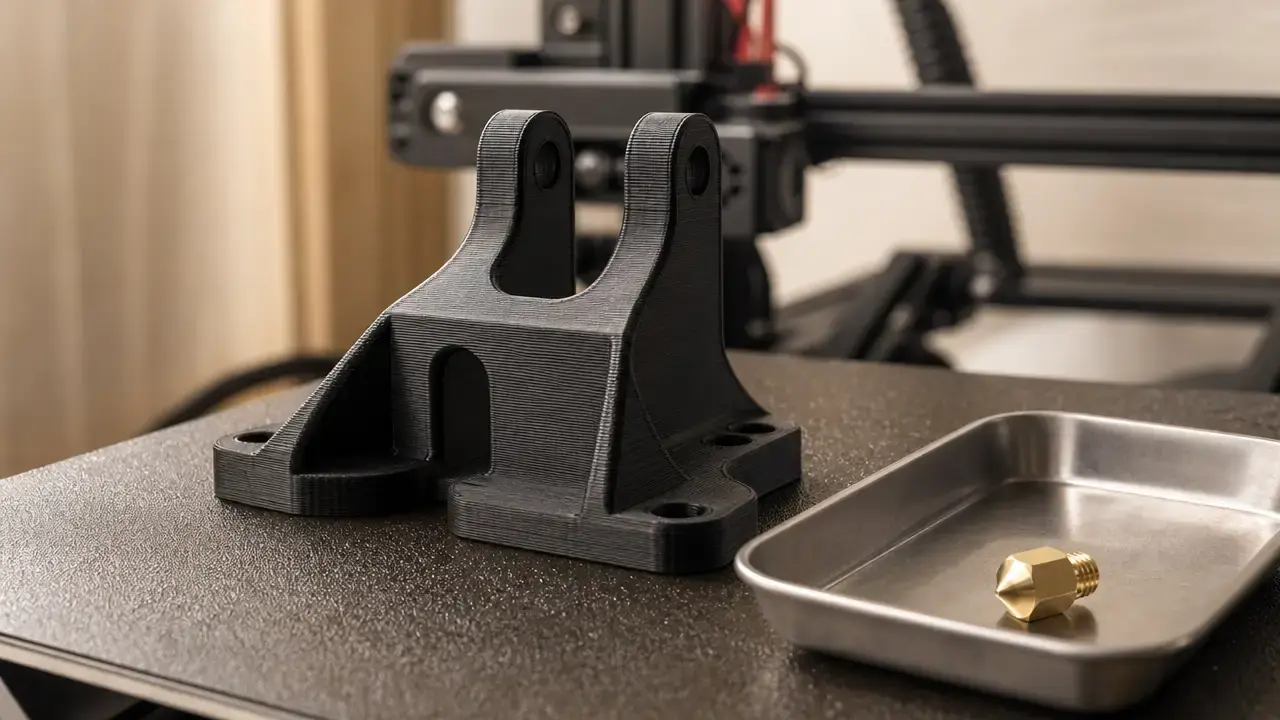
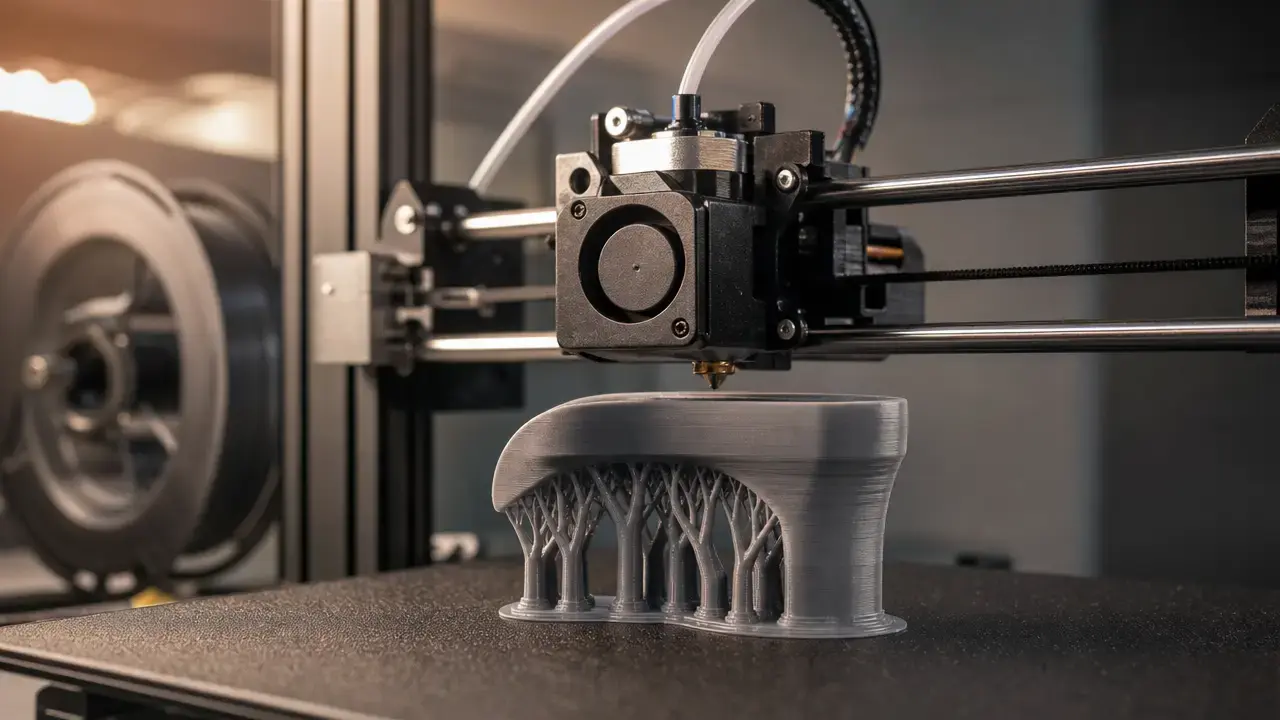
Material extrusion is the family in which material is selectively dispensed through a nozzle or orifice and built up layer by layer. In everyday use, many people call this FDM or FFF, especially for filament-based systems, but the standards category is broader than any one trademark or hobbyist term. In formal documents, the clearest approach is to use the category name first, then add a narrower market label only if it helps the reader identify the process. [S5] [S7] [S8] [S13]
Material jetting
Material jetting selectively deposits droplets of build material and then solidifies them into the part. Market language often leans on brand names, especially in polymer systems, so readers may recognize a commercial label faster than the generic term. The standards term keeps the document neutral rather than tying it to a specific printhead design, resin system, or vendor brand. [S5] [S13]
Powder bed fusion
Powder bed fusion uses thermal energy to fuse selected regions of a powder bed. In commercial and research writing, that broad family is often narrowed to labels such as SLS, SLM, DMLS, or EBM-style naming, but the standards term remains at the family level. In specifications, that matters because the family name alone does not tell you the exact beam source, material class, atmosphere, or post-processing route. [S5] [S13]
Sheet lamination
Sheet lamination forms an object by bonding sheets of material together. Compared with resin, powder, or extrusion systems, it appears less often in general 3D-printing discussions, which is one reason many readers overlook it. Market wording may point to a specific implementation, such as laminated object manufacturing or ultrasonic additive manufacturing, but the standards category remains the broader top-level family. [S6] [S13]
Vat photopolymerization
Vat photopolymerization forms parts by curing liquid photopolymer resin with light. Outside standards writing, readers are more likely to encounter SLA, DLP, MSLA, or LCD terminology, which usually describes the exposure method or optical setup rather than the family name itself. One category can cover those narrower distinctions without treating every hardware variation as a different top-level process. [S5] [S9]
Two high-friction naming cases
Much of the confusion in specifications and purchasing comes from treating market shorthand as if it were the standards term. These two naming problems cause the most friction because they appear constantly in vendor literature and casual AM conversation. [S7] [S9]
Material extrusion vs FDM vs FFF
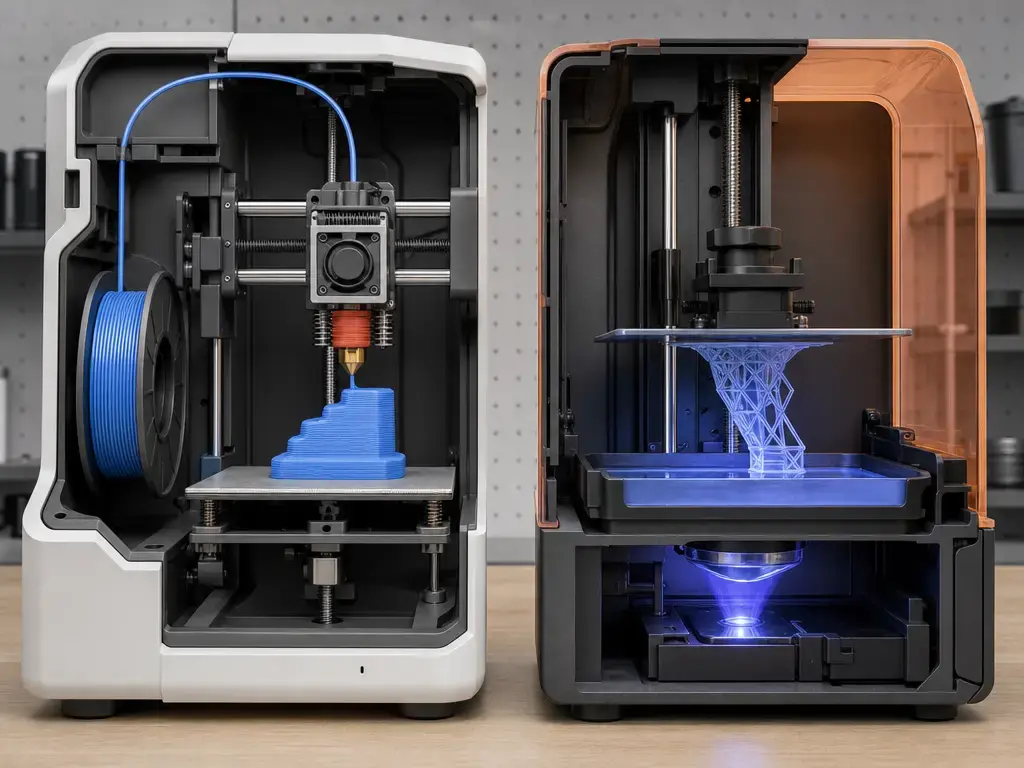
“Material extrusion” is the standards category. “FDM” is a Stratasys trademark, and Stratasys describes FDM as creating 3D objects by extruding melted thermoplastic filaments through a heated nozzle and depositing them layer by layer onto a build platform. That description matches what many people mean in practice when they say FDM, but it is still market language rather than the formal ISO/ASTM category name. [S7] [S8]
| Wording level | Example |
|---|---|
| Preferred spec wording | Material extrusion |
| Acceptable informal wording | FDM / FFF, if the audience already understands the market term |
| Avoid as blanket term | FDM used as if it were the official ISO/ASTM category |
For purchasing or requirements language, start with the standards term and add the market label only when needed for recognition or cross-reference to a supplier brochure. That keeps the document neutral and avoids turning a trademarked label into a supposedly universal category. [S7] [S8]
Vat photopolymerization vs SLA vs DLP vs MSLA/LCD
“Vat photopolymerization” is the standards family name. In market usage, SLA, DLP, and MSLA/LCD are usually separated by how the resin is exposed: laser tracing, projected light, or a masked-light setup. Formlabs explicitly describes laser-powered SLA, DLP, and MSLA/LCD systems as stereolithography processes because they all use light to cure liquid resin, and it notes that MSLA is often used interchangeably with LCD printing. [S9]
In formal specifications, name the ISO/ASTM category first, then the specific exposure method if relevant. A line such as “vat photopolymerization, DLP exposure” is clearer than treating DLP as if it were the whole standards family. [S9]
Core workflow vocabulary you can safely use without turning this into an AM primer
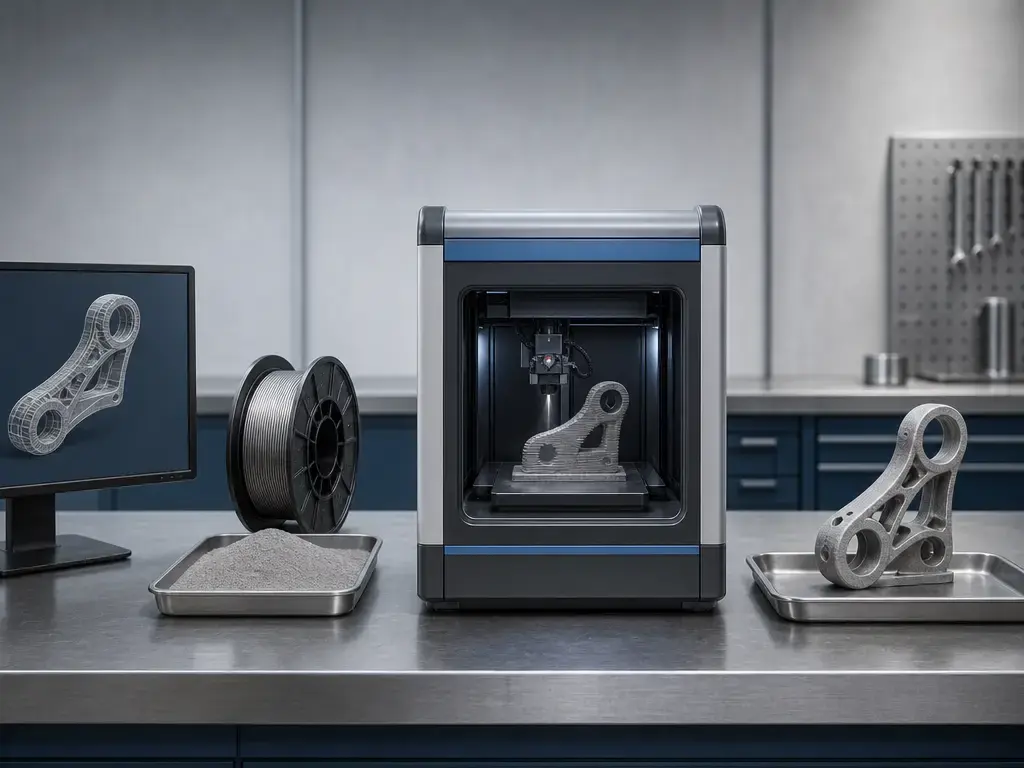
A safe minimum vocabulary begins with the standard’s core framing: additive manufacturing is the process of joining materials to make parts from 3D model data, usually layer upon layer, as opposed to subtractive and formative manufacturing methodologies. If your document only needs the process-level idea, that sentence does most of the work without pulling you into vendor branding or local shop slang. [S3]
The preview also supports broad scope terms such as additive system and AM machine. Those are useful when you need to describe equipment, software, and production setup at a general level without implying a specific machine architecture. A compact workflow vocabulary can look like this: [S3]
- Input → 3D model data
- System → additive system / AM machine
- Material → process material or feedstock used by the selected category
- Build → layer-by-layer part formation
- Output → part or parts
This is a minimum set, not a full AM process primer. It is most useful when the goal is to stay standards-aligned without overexplaining the technology. [S3]
What ISO/ASTM 52900 does not specify and where to look instead
ISO/ASTM 52900 is not where you should expect universal numbers for accuracy, resolution, tolerances, or build rate. Its role is to define terms, fundamentals, and category boundaries so later documents can use a shared vocabulary. That is also why it is a poor source for claims such as “this process always achieves X µm” or “ISO guarantees a certain printer output.” [S3]
When a document needs measurement or quality-characteristics language, the standards ecosystem branches out. ISO/ASTM 52927:2024 addresses main characteristics and corresponding test methods, including quality characteristics for feedstock and parts and the related test procedures. ISO/ASTM 52921 covers terminology for coordinate systems and testing methodologies, especially for machine orientation, location, and reporting of tested parts. ISO/ASTM 52920:2023 addresses qualification principles and requirements for industrial AM processes and production sites. [S10] [S11] [S12]
The practical rule is simple: use 52900 to say what a process family or AM term means, then cite the adjacent standard that governs testing, coordinates, or qualification when the document needs that extra layer of technical precision. [S10] [S11] [S12]
ISO/ASTM terms vs “3D printing” wording
In ordinary conversation, “3D printing” is often used as a broad synonym for additive manufacturing. An ISO dentistry draft makes that boundary explicit in a note stating that the term is often used in a non-technical context synonymously with additive manufacturing and is typically associated with non-industrial or personal-use machines. That is a useful reminder that standards writing usually prefers AM family terms because they are less ambiguous. [S4]
The ambiguity matters in specifications. A sentence that says only “3D printing” can leave open whether the real requirement is about the process family, the build material, the post-processing chain, or the acceptance criteria. In casual conversation that may be fine; in a purchase order or validation document it can blur differences that the standards vocabulary is designed to keep separate. [S4]
That does not mean other ISO documents are contradicting the taxonomy when they use or define “3D printing” for a domain context. It means the domain document is tailoring wording for its own use case, while the higher-level AM taxonomy still supplies the controlled vocabulary underneath. [S4]
Common misuses and how to avoid them
Most terminology errors come from mixing category names, trademarks, and subtype labels in the same sentence. The safest habit is to state the standards category first, then add narrower market wording only if it genuinely helps the reader. [S7] [S10]
- Using brand names as process categories
- Treating “3D printing” as always precise in a specification
- Mixing category names with energy-source or exposure-method subtypes without saying which level you mean
- Claiming “ISO says your printer will achieve X µm,” when the vocabulary standard does not assign universal performance numbers [S10]
Before: “The part shall be made by FDM and meet ISO output requirements.”
After: “The part shall be made by material extrusion, with machine-specific performance and test requirements defined in the applicable process, test, or qualification standard.” [S7] [S10]
Why shared terminology matters
The value of shared terminology shows up quickly in procurement and supplier communication. ISO says the terms are classified into fields of application, and the joint ISO/ASTM committee structure helps that language travel across borders and organizations. When an RFQ says “powder bed fusion” instead of a vague or brand-like label, a buyer is less likely to receive quotes for the wrong process family. [S1] [S3]
The same logic helps in research, QA, and training. Standards-aligned wording makes papers easier to compare, keeps internal procedures from drifting into local slang, and reduces the chance that a supplier onboarding packet means one thing while a test report means another. The benefit is not elegance for its own sake; it is lower ambiguity when different teams need to describe the same AM process in consistent terms. [S1] [S3]
Conclusion
For technical readers, the main takeaway is straightforward: ISO ASTM 52900 additive manufacturing vocabulary is the place to start when you need precise, shared language for AM processes and fundamentals. It helps separate top-level process families from brand names, market shorthand, and application-specific labels. When a document needs test methods, coordinate terminology, or qualification requirements, move to the adjacent standards instead of forcing those jobs onto a vocabulary document. Used that way, 52900 is less a marketing glossary than a foundation for clearer technical communication. [S3] [S10] [S11] [S12]
FAQ
What is ISO ASTM 52900?
ISO/ASTM 52900 is the joint ISO/ASTM vocabulary and fundamentals standard for additive manufacturing. Its role is to establish and define AM terms and organize them into fields of application so that engineers, writers, buyers, and researchers can use the same basic language across documents. It is a terminology standard, not a universal performance or certification document. [S1] [S3]
Is ISO/ASTM 52900:2021 still current?
As of 2026-10-04, ISO lists ISO/ASTM 52900:2021 as Published, Edition 2, stage 90.93 (Confirmed), and says it was last reviewed and confirmed in 2025. That supports treating the 2021 edition as current on that date. If you are publishing or releasing a technical document, recheck the ISO listing on the publication day because standards status pages can change. [S1]
What are the seven AM process categories in ISO/ASTM 52900?
The seven top-level categories are binder jetting, directed energy deposition, material extrusion, material jetting, powder bed fusion, sheet lamination, and vat photopolymerization. They are a taxonomy of process families, not a complete inventory of every brand, hybrid workflow, or subtype used in the market. That is why a vendor label may be more specific than the category name without replacing it. [S6]
ISO/ASTM 52900 vs 3D printing: what’s the difference in terminology?
“3D printing” is often used broadly and non-technically, while ISO/ASTM 52900 favors controlled AM terminology that is more precise in specifications and formal documentation. An ISO domain draft notes that “3D printing” is often used synonymously with additive manufacturing in non-technical contexts and is commonly associated with non-industrial or personal-use machines. The difference is mostly about precision and ambiguity, not about banning everyday language. [S4]
Is FDM the same as material extrusion?
Not exactly. Material extrusion is the standards category, while FDM is a Stratasys trademark. In practice, many people use FDM as shorthand for thermoplastic filament systems that extrude melted material through a heated nozzle onto a build platform, and that market usage overlaps with part of the material-extrusion family. For formal specifications, start with “material extrusion” and only add FDM or FFF if the extra market wording helps recognition. [S7] [S8]
Are SLA, DLP, and MSLA/LCD all vat photopolymerization?
They are commonly discussed as narrower resin-printing distinctions within the broader vat photopolymerization family. Formlabs describes laser-powered SLA, DLP, and MSLA/LCD machines as stereolithography processes because they all use light to cure liquid resin, while noting that MSLA is often used interchangeably with LCD printing. In formal documents, the safest pattern is to name the family first and the exposure method second. [S9]
Does ISO/ASTM 52900 specify printer accuracy or resolution?
No. ISO/ASTM 52900 is the vocabulary and fundamentals anchor, not a source of universal machine-performance numbers. For testing and quality characteristics, look to ISO/ASTM 52927:2024. For coordinate systems and testing-methodology terminology, look to ISO/ASTM 52921. For qualification principles covering industrial AM processes and production sites, look to ISO/ASTM 52920:2023. [S10] [S11] [S12]
Sources
- S1 — ISO standard listing for ISO/ASTM 52900:2021. https://www.iso.org/standard/74514.html?browse=tc
- S2 — ASTM store listing for ASTM ISO/ASTM52900-21 / F3177-21. https://store.astm.org/f3177-21.html
- S3 — Official preview PDF for ISO/ASTM 52900:2021 excerpts. https://webstore.ansi.org/preview-pages/BSI/preview_30448424.pdf
- S4 — ISO OBP dentistry draft page with standards-linked “3D printing” usage note. https://www.iso.org/obp/uiescapedfragment_=iso%3Astd%3Aiso%3A20795%3A-1%3Adis%3Aed-3%3Av1%3Aen
- S5 — NIST additive manufacturing technologies explainer. https://www.nist.gov/additive-manufacturing/research-areas/technologies
- S6 — Peer-reviewed paper summarizing ISO/ASTM 52900 seven categories. https://doi.org/10.1590/0366-69132020663802918
- S7 — Stratasys legal information page. https://www.stratasys.com/en/legal/legal-information/
- S8 — Stratasys FDM technology explainer. https://www.stratasys.com/en/guide-to-3d-printing/technologies-and-materials/fdm-technology/
- S9 — Formlabs resin 3D printing comparison. https://formlabs.com/blog/sla-dlp-msla-lcd-resin-3d-printer-comparison/
- S10 — ISO/ASTM 52927:2024 listing. https://www.iso.org/standard/81802.html
- S11 — ASTM store listing for ISO/ASTM52921 / F2921-13. https://store.astm.org/f2921-13.html
- S12 — ISO/ASTM 52920:2023 listing. https://www.iso.org/standard/76911.html?browse=tc
- S13 — NIST-hosted PDF, “Additive Manufacturing: Standards & Other International Trends.” https://www.nist.gov/system/files/documents/el/isd/Plenary_Stucker.pdf
- S14 — ASTM F3187-16R23, Standard Guide for Directed Energy Deposition of Metals. https://store.astm.org/f3187-16r23.html