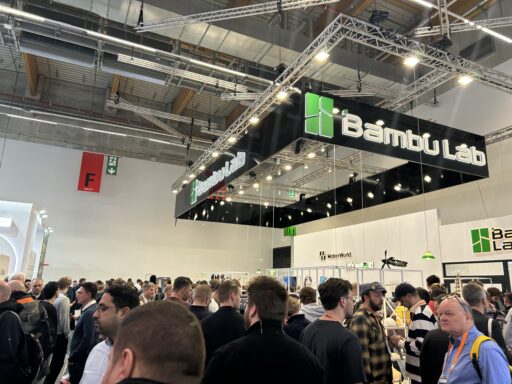


Generative AI developers made some big claims at Formnext 2026. The likes of Hyper3D, Tripo AI, and Meshy all arrived in Frankfurt marketing tools that generate print-ready 3D models in seconds using photos, videos, or text prompts. On a show floor built around precision manufacturing, those claims deserve a closer look.
Tripo AI previewed its next-generation H3.5 model and launched Polipop, an AI agent that takes a model all the way to the printer. Hyper3D brought its Rodin Gen-2.5 generator and a suite of print-preparation tools to Hall 12.1, while Meshy-generated models came off a multi-color printer live on the show floor.
But there are numerous potential issues here. AI working from a single image never sees the back of an object, so it invents what’s missing. There’s no real-world scale either. So, let’s take a closer look at the latest AI 3D model generators on the show floor.
1. Hyper3D brings Rodin Gen-2.5 print preparation
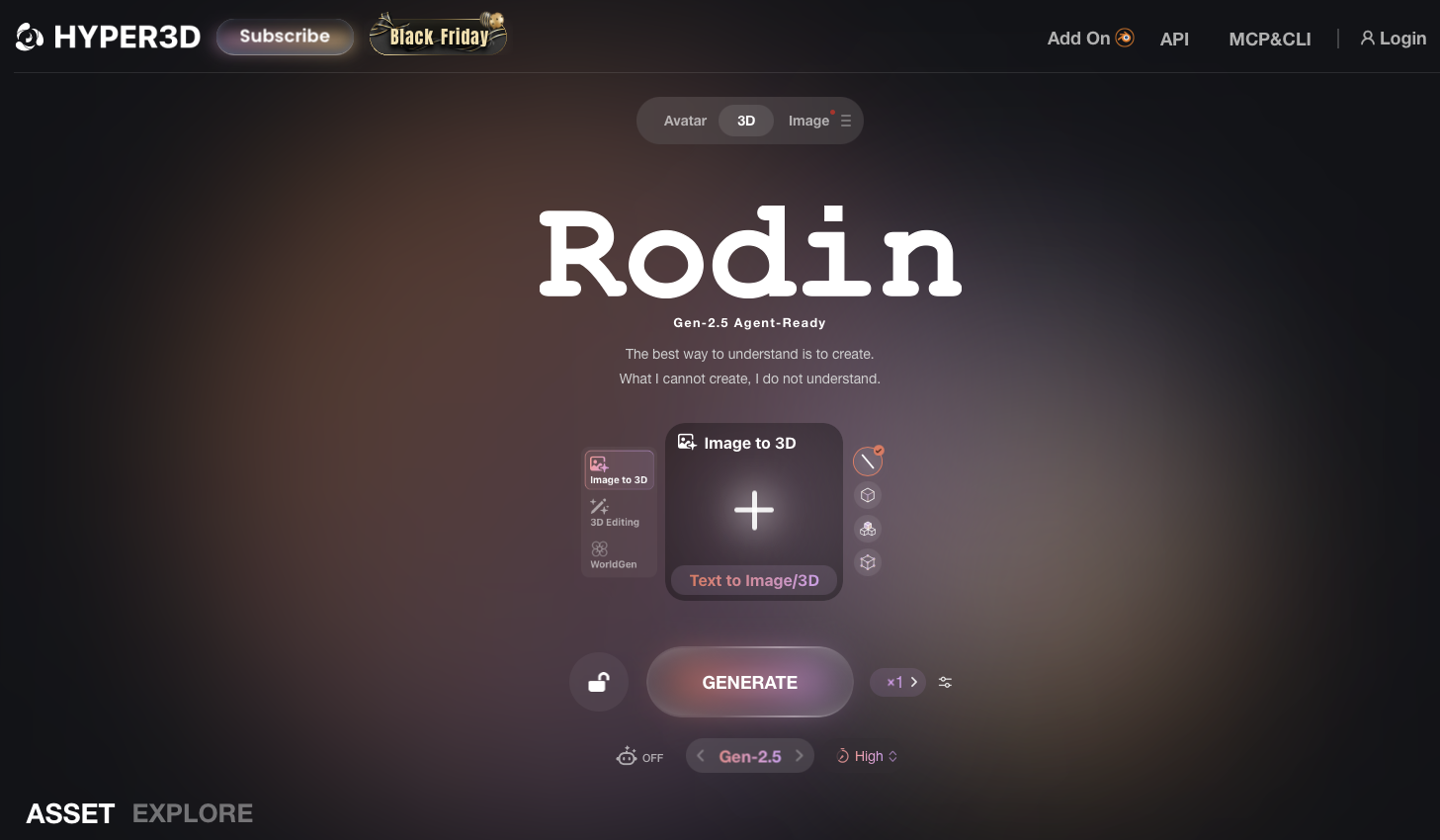
Inputs: Text prompt, one or more images
Detail: Up to 10 million faces at the Extreme-High setting
Generation time: Around four seconds at the lowest effort setting
Price: Free plan (pay per download); Creators from US$30/month
Hyper3D, the generative 3D platform developed by Deemos, used its Formnext booth to make the case for AI handling print preparation as well as modeling. Rodin Gen-2.5 offers five effort levels, ranging from four-second drafts for rapid ideation to dense meshes for detailed sculptures, collectibles, and high-resolution resin prints.
Print tools set Hyper3D apart. Its BANG feature splits complex models into separate closed parts that fit on a print bed, color separation exports multi-color 3MF files, and prompt-based editing reworks one region without regenerating the whole model. Game studios, e-commerce, and collectible makers are the natural audience.
2. Tripo AI previews H3.5 and launches Polipop
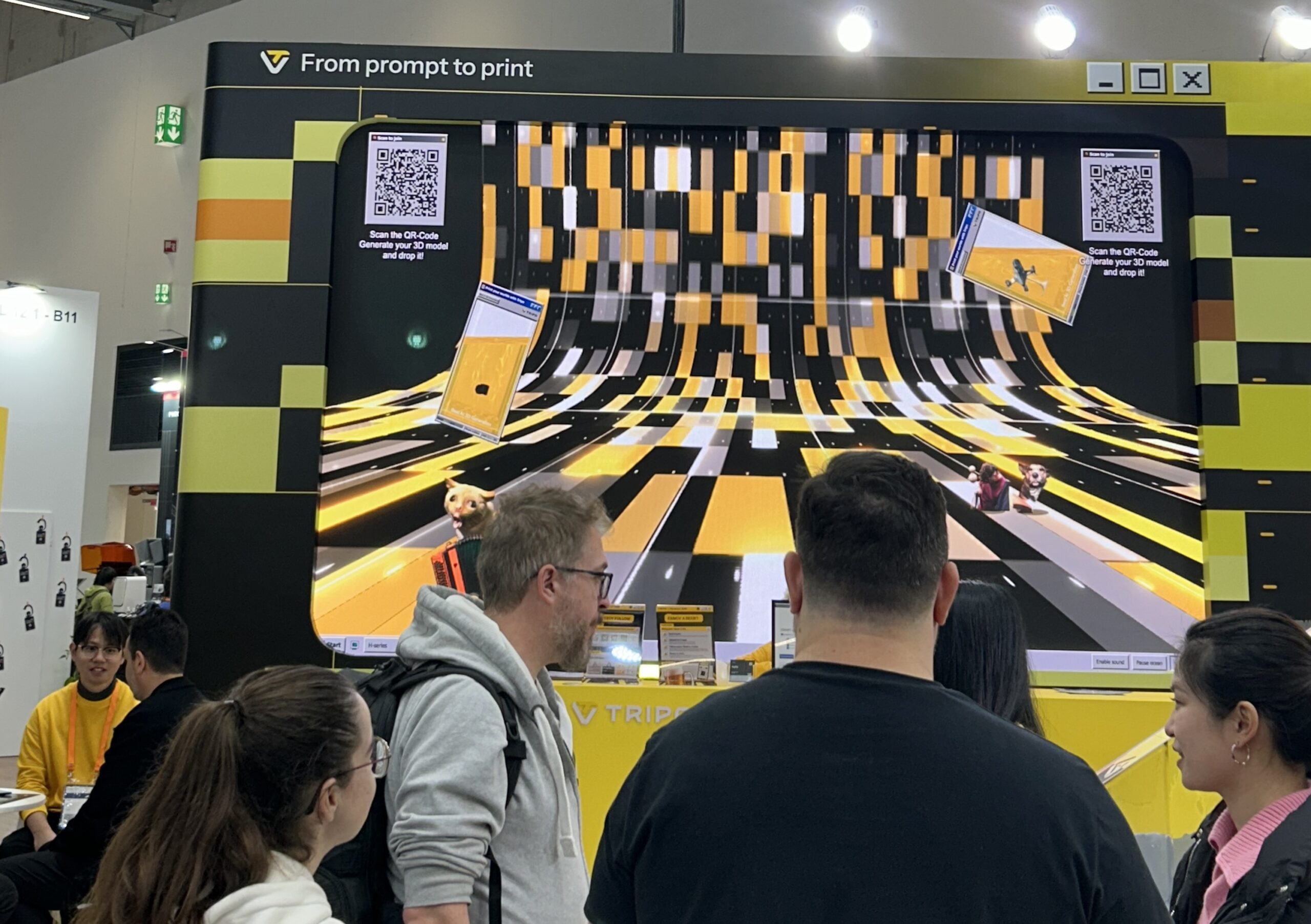
Model: H3.5, previewed at the show with release expected soon
Workflow: Polipop AI agent covers modeling, print preparation, and printer handoff
Inputs: Text prompt or images
Price: Free plan (300 credits/month); Pro from US$19.90/month
Tripo AI opened the show with a first look at H3.5, the next 3D-native foundation model in its H series. At a press conference on day one, the company displayed intricate printed pieces it says were generated with the new model, which promises print-ready output that needs minimal editing.
Polipop could prove the bigger shift. The agent guides an idea from 3D model through to print preparation, with Research Lead Yuan-Chen Guo describing the goal as “making 3D printing more accessible and easier to navigate.” Tripo has yet to publish specifications for H3.5 or a list of printers that Polipop supports.
3. Meshy models printed live in multi-color
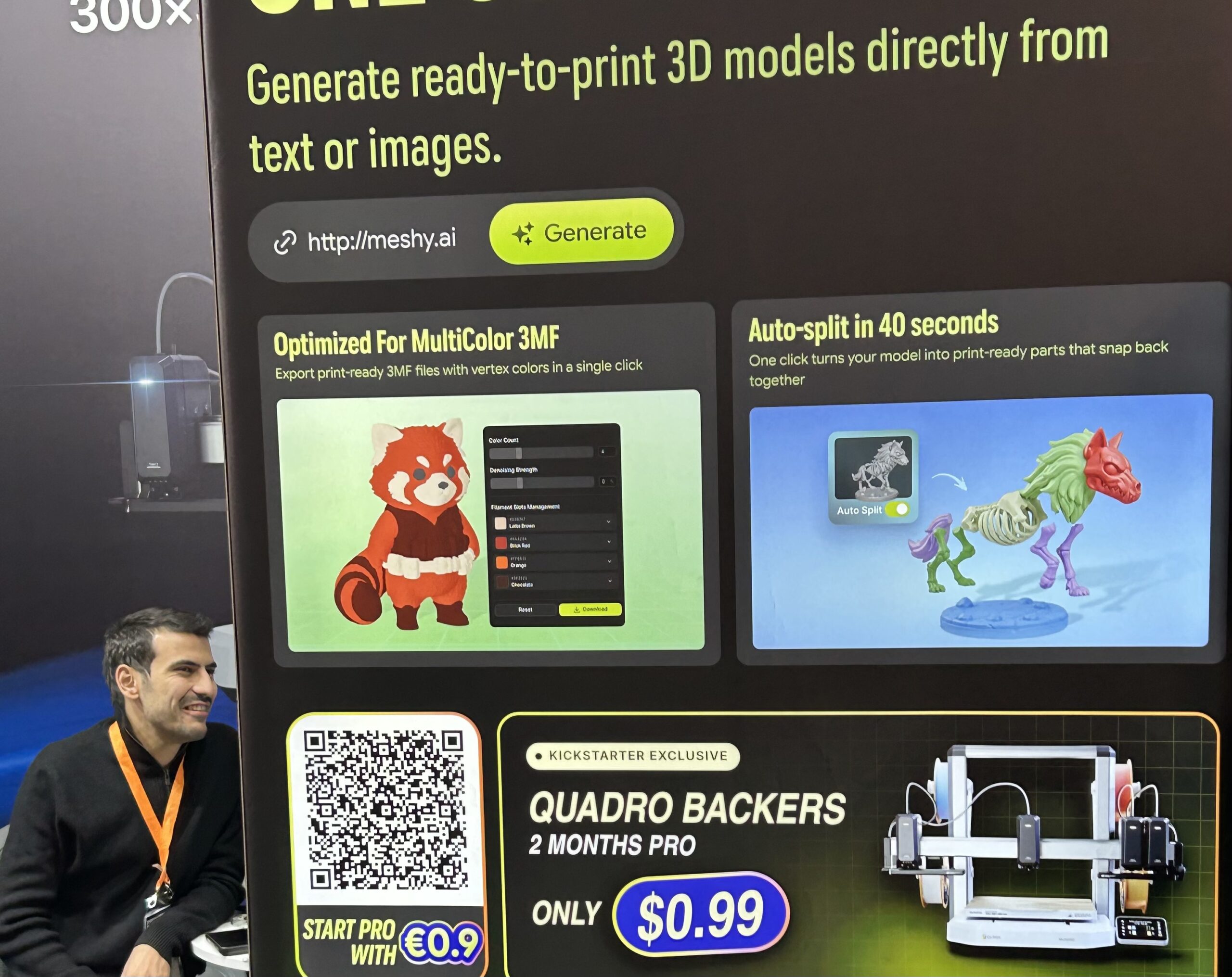
Geometry: Up to 4096³ voxel resolution in Meshy 7.1’s Ultra 4K mode
Print tools: Printability check, Auto Repair, Auto Split, and multi-color 3MF export
Default export size: 50 mm tall, with no real-world scale
Price: Free plan (100 credits/month, public models); Pro from US$20/month
Meshy’s latest model went to work at Co Print’s booth in Hall 12.1, where the multi-color Quadro printer produced Meshy-generated models live during the show. Meshy 7 was tuned to match input images more faithfully, and the 7.1 update added an Ultra 4K mode for the platform’s finest surface detail yet.
Built-in tools check and repair meshes, split models into parts, and map colors to regions a printer can handle. Independent tests show the limits, however. Exports default to 50 mm tall with no real dimensions, and any surface the camera never saw is invented. For mascots, toys, and display models, that’s no obstacle.
Professional 3D scanning for engineering results
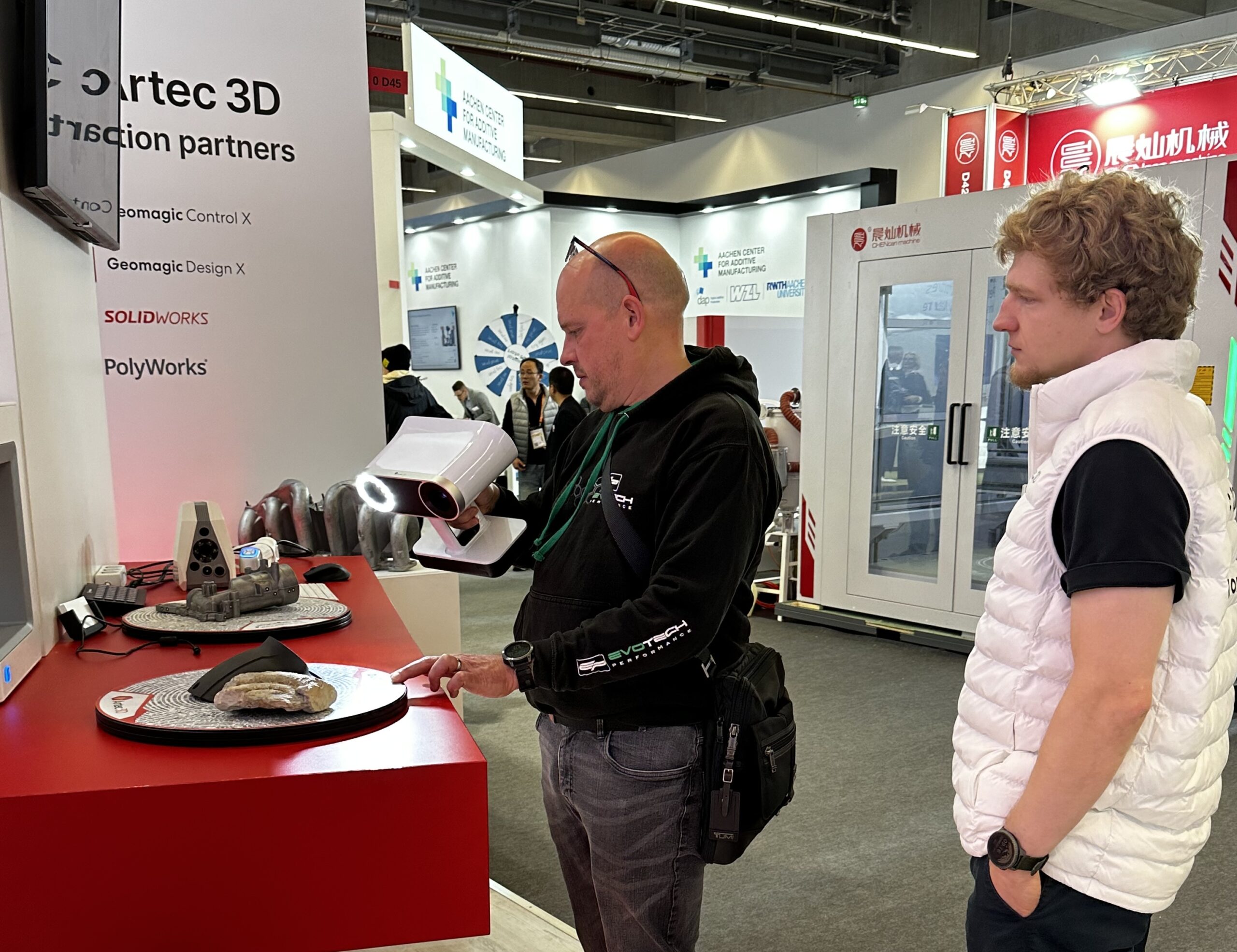
AI generators are built to produce models that look convincing. Engineering needs models that match real parts captured at true scale, on every surface. When a bracket, housing, or worn casting has to be reproduced or redesigned, guesswork costs time, material, and failed fits.
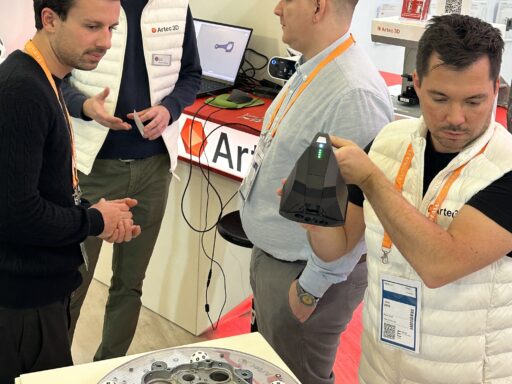
Professional 3D scanners capture measured geometry directly. Artec Neo reaches 0.025 mm accuracy on critical features, and every unit ships with its own accuracy certificate. Artec Studio then turns scans into editable CAD with built-in reverse engineering tools, and checks printed parts against designs with deviation analysis.
Artec’s software covers the visual side too. Artec Studio includes AI photogrammetry for building 3D models from photos and video, while Artec Twins, released in October, generates photorealistic Gaussian Splats from Artec Jet LiDAR data, photos, or video, alongside measurable point clouds and meshes. Teams can switch between precision and photorealism using the same dataset.
Read more about the launch of Artec Twins or contact sales@artec3d.com to explore the technology further.