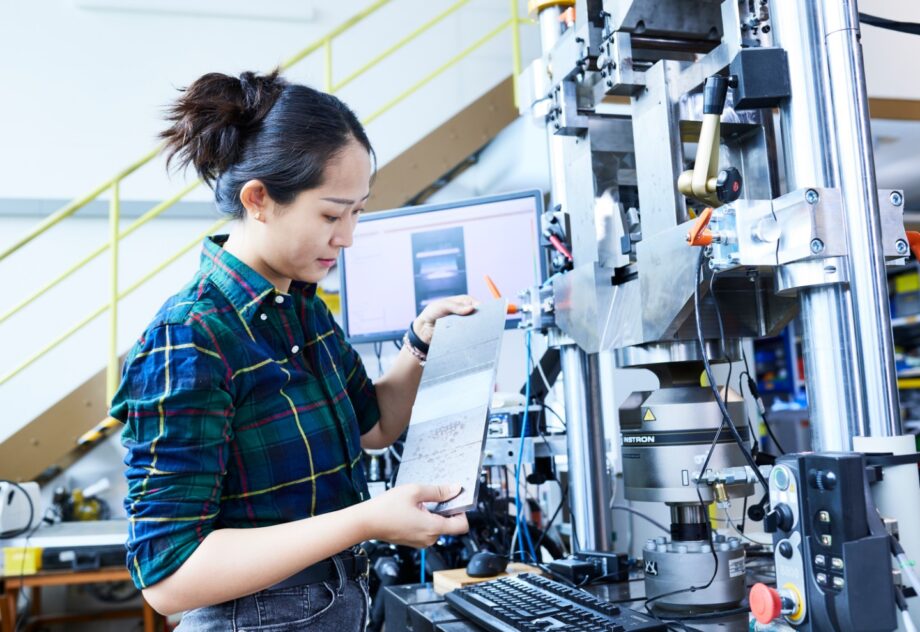

The Fraunhofer IWM research institute has announced a new project with the potential to save thousands of tons of steel using a combination of 3D scanning and AI.
Offshore wind towers, cranes and excavator arms are often built heavier than necessary because the quality of their welds is never objectively measured. As part of the ORka3D project, funded by Germany’s Federal Ministry for Economic Affairs and Energy (BMWE), a new approach is being developed for assessing weld seams, predicting fatigue, and reducing material used.
How this new method works
The problem lies in the notch that forms where welds meet the base, a point where most fatigue cracks begin. Shape varies with the welding process, torch guidance and even the welder’s performance on the day.
Design rules therefore assume the worst permissible geometry and rate joints using conservative notch classes, known as FAT classes. A better-than-average weld doesn’t gain any extra credit here, so resulting components effectively carry surplus steel.
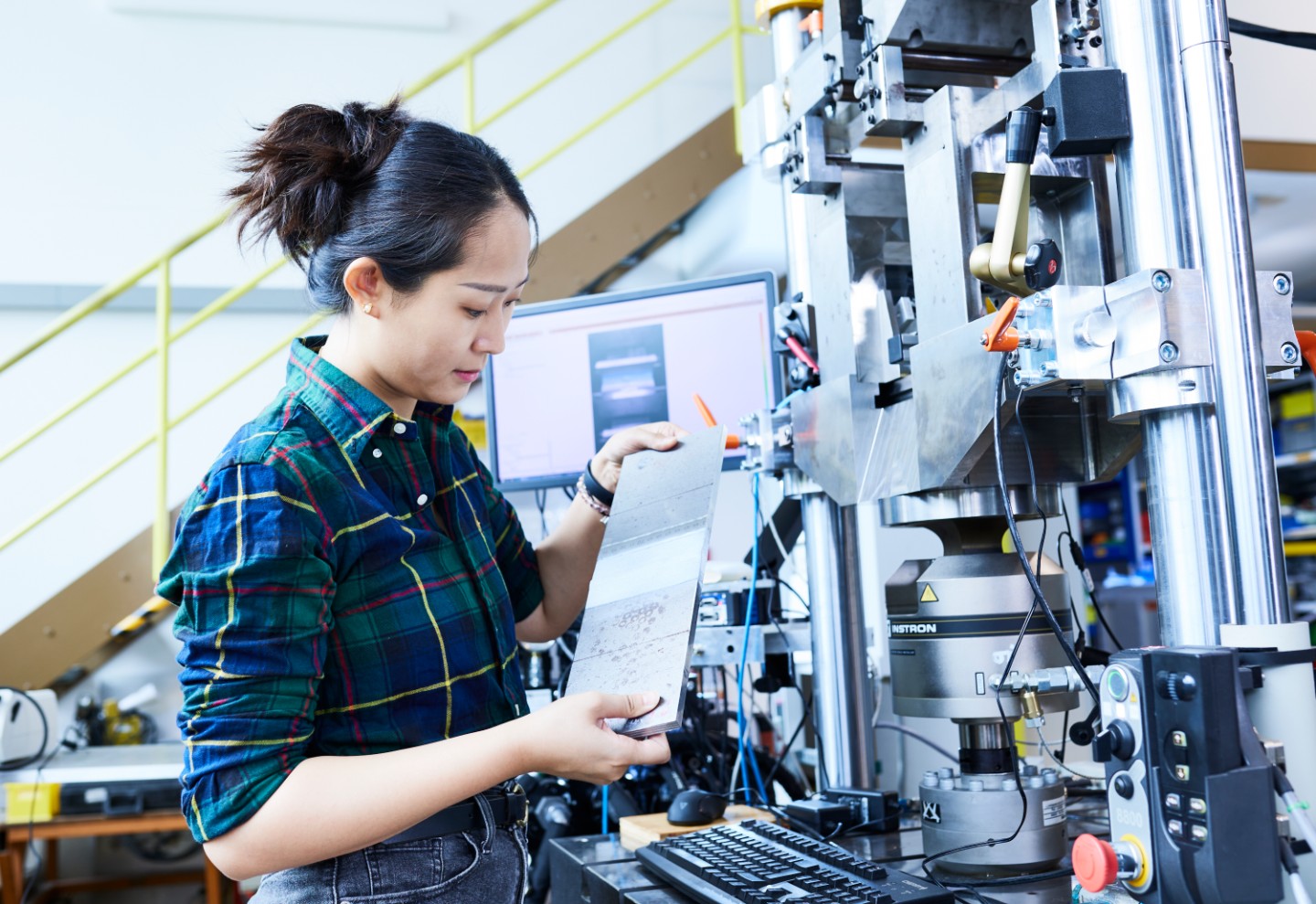
To address this issue, a consortium led by the Fraunhofer IWM has developed a process that sees weld surfaces measured digitally using 3D scanners capable of measuring with a pixel distance of up to 5 microns.
An algorithm then extracts key geometric parameters, most importantly the weld toe radius, which current standards don’t cover. A neural network uses this data to determine the joint’s individual notch factor and predict fatigue life. Already, the team’s approach has been validated on around 400 specimens and on real structures, including crane booms and excavator arms.
“The geometric notch at the seam crossing has been known for decades as a weak point, but has so far remained unresolved because each seam is geometrically unique,” explains project manager Dr. Jan Schubnell of Fraunhofer IWM. “With high-resolution 3D scans and neural networks, we can objectively capture and evaluate this individuality for the first time – the design of welded structures could thus be much more material-saving.”
Savings in wind energy & heavy industry
According to the researchers, better weld assessment could remove around 180 tons of steel from the 600-ton tower of a 10-megawatt offshore wind turbine.
Across the 30 gigawatts of offshore capacity planned in Germany by 2030, that adds up to 360,000 tons of steel and millions of tons of CO2. Bridge building and construction machinery stand to benefit too. The method is still at the demonstrator stage, and partners including Liebherr and Volvo Construction Equipment are working to bring it into the regulations.
The role of portable 3D scanners
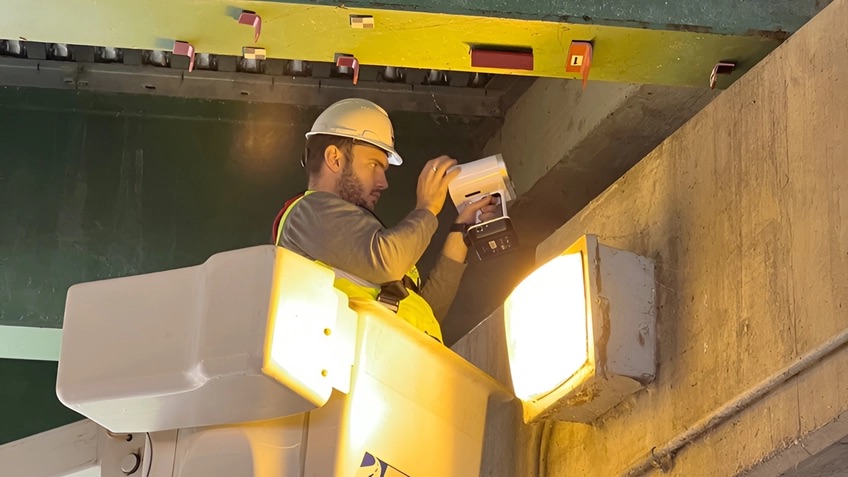
The project used laser line and structured-light scanning, both available in handheld form – and there are plenty of options on the market for realizing this kind of project.
The laser-based Artec Point II suits metrology-grade measurement on shiny and dark metal, while the structured-light Artec Spider II captures fine detail on small features such as weld toes and bead profiles. For large assemblies, the wireless Artec Leo lets inspectors capture a seam along its length. Artec Neo also supports hybrid works for targeted & target-free 3D scanning.
Scans can then be analyzed in Artec Studio or Geomagic Control X within a quality inspection workflow, like those used for industrial gearboxes and railway inspection and repairs. As AI analysis of scan data matures, as in a recent project that used 3D scanning and AI to turbocharge a Renault Twingo, scans are likely to shape how welded structures are designed as well as how they are checked.