The Western Cape Department of Health and Wellness in South Africa has introduced a new service for customizing spinal braces with 3D scanning and 3D printing at its Orthotic and Prosthetic Centre (OPC).
Replacing traditional plaster casting, the department says this new digital process can deliver a brace in just 48 hours, at less than half the cost of a plaster equivalent. In April alone, the province invested around R5.5 million in equipment, and so far six patients have been fitted with custom-made, more comfortable fitting orthoses.
“For many patients living with scoliosis, spinal injuries and other conditions, a spinal brace can make a meaningful difference to their quality of life,” said Western Cape Minister of Health and Wellness Mireille Wenger. “For children with scoliosis, getting a brace early can help prevent the curve in their spine from getting worse as they grow.”
How the new process works
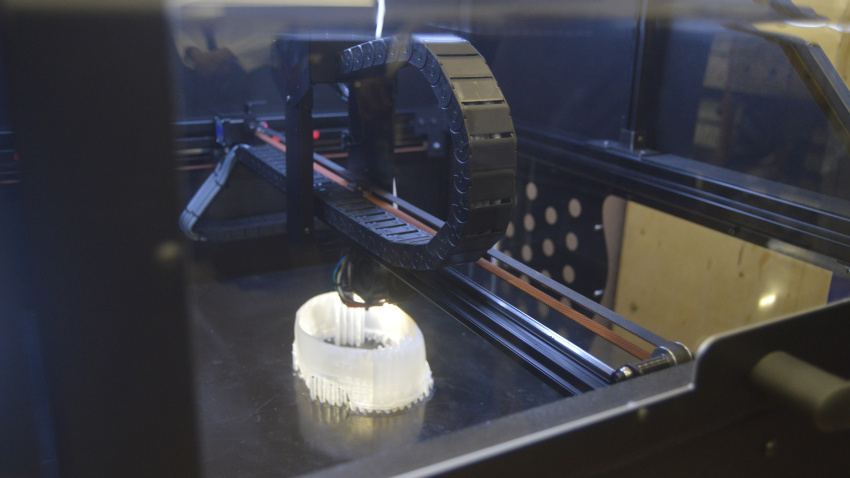
Patients are 3D scanned while standing up in light clothing, which takes only a few minutes. Clinicians then correct the digital model before braces are printed, reducing waiting times for patients that previously stretched to around two weeks.
The resulting braces are lighter and fit more closely than plaster ones. Alongside scoliosis, the service treats pigeon chest, spinal tuberculosis, compression fractures and spondylosis.
The introduction of this new process coincides with International Prosthetics and Orthotics Day on November 5. The OPC is the only public O&P facility in the province and currently runs 112 outreach services at satellite sites.
Facility manager Bongani Mlambo said: “We are not just launching a [3D] printer, we are launching a new way of working. We are the first state facility to do this. It is a first on the African Continent, and we will not be the last.”
A gamechanger for young patients
Children and adolescents with scoliosis are expected to benefit most, along with patients recovering from spinal surgery or trauma. Braces only work if patients actually wear them, so improved comfort should help ensure that a higher number stick with their treatment.
Fourteen-year-old Nashita Stellenboom, for example, spent four years in plaster braces before receiving a 3D printed one. “This is much lighter,” she said. “Wearing a brace has given me confidence. It has helped my posture and pain in my back and I can now do so much more. I can even play sport.”
She will receive adjusted braces until she turns 18. Ongoing 3D scanning and 3D printing will help these orthotics keep pace, so she continues to benefit as she grows up.
Shifting towards medical 3D scanning
Growing adoption in South Africa reflects a wider trend in healthcare, as clinics replace plaster casting and tape measuring with 3D scanning for orthoses, prostheses and other patient-specific devices. Body scanning is demanding, though. Patients breathe and shift their weight, so their torsos must be captured quickly and accurately.
Professional handheld scanners such as Artec Leo are built for this kind of work. Leo is wireless and processes data onboard, showing the scan live on its built-in screen, so a clinician can walk around a standing patient without being tethered to a laptop.
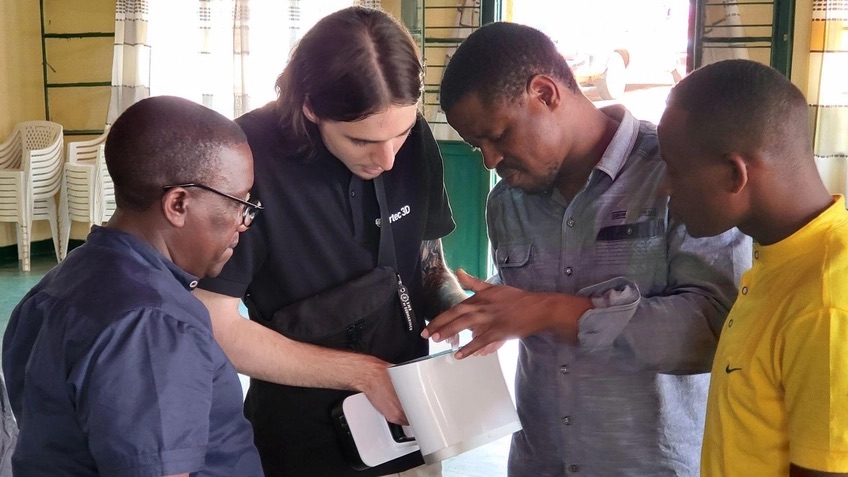
Handicap International uses Leo in Rwanda to scan residual limbs and 3D print prosthetic sockets, fitting patients in a single day, while French O&P company Orten uses Artec scanners to replace plaster casting for back braces. Further examples are available via Artec 3D’s healthcare solutions page.
For more, see 3D Mag’s guide to 3D scanning the human body, our look at Artec Spider II for prosthetics and orthotics, and our latest reporting on a Dyson Award-winning prosthetic designed with 3D scanning.