
Summary
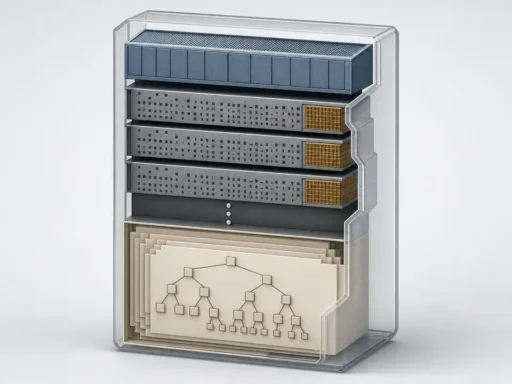
Recycled filament for 3D printing can be a good choice, but only when feedstock source, drying, extrusion control, contamination control, and quality assurance are documented. In standards terms, this is a material extrusion, or MEX, feedstock question, not a promise that recycled content alone will print well. [1] [2]
The more useful buying question is not “how recycled is it?” but “how well specified is it?” A spool with traceable source information, realistic print guidance, and method-labeled test data is easier to trust than one that only advertises sustainability. “Eco filament” is a marketing bucket, not a technical material class, and recycled-content percentage is not a proxy for diameter stability, strength, or part reliability. End-of-life claims also need caution: common desktop filament resins are not typically accepted by municipal recycling programs, and compostability standards such as ASTM D6400 and ISO 17088 address industrial composting conditions rather than general recyclability. [4] [6] [7] [9] [10] [23] [24]
What Recycled Filament Means
Recycled filament is filament made from polymer that has already had a prior processing life, then been re-extruded into a new printable feedstock. That prior life may be clean production scrap, in-house print waste such as failed parts, or a broader recovered plastic stream. For a printer operator, the important distinction is not simply recycled versus virgin, but whether the material was sorted, dried, cleaned, and measured well enough to behave like a controlled MEX input rather than an unknown plastic blend. That is why the most useful product pages separate recycled-content wording from print settings, tolerance, and technical data. [2] [4] [5] [6] [9] [17] [19] [20]
Post-industrial vs post-consumer recycled filament
Post-industrial material comes from manufacturing scrap such as trim, purge, off-spec runs, or extrusion waste. Post-consumer material comes from previously used products and usually carries more uncertainty in color, additives, contamination, and prior thermal history. In-house waste such as failed prints is often cleaner than mixed outside waste, but it still needs sorting, contamination control, and drying before reuse. [9] [17] [19] [20]
rPET, rPETG, and recycled PETG are not always the same label
Source class, polymer family, and marketing label are different things. A product sold as recycled PET may come from a recovered PET stream, while a product sold as recycled PETG may come from PETG production scrap, and a brand may shorten either one to rPET or rPETG in ways that are commercially convenient rather than chemically strict. Bottle-derived PET, recycled PETG, and rPET-style branding are therefore not automatically interchangeable, even when two spools both claim 100% recycled content. That figure says nothing by itself about additives, prior melt history, color variation, or contamination risk. [6] [7] [8] [9]
| Product example | Brand wording | Claimed polymer family or source type | Why it matters |
|---|---|---|---|
| Prusament PLA Recycled | “100% recycled Prusament PLA material” | Recycled PLA | Shows a recycled PLA product with explicit recycled wording and published diameter/tolerance data. [4] [5] |
| Prusament PETG Recycled | “100% recycled Prusament PETG material” | Recycled PETG | Shows a recycled PETG product with published print guidance and ±0.05 mm manufacturing tolerance. [6] |
| Filamentive rPETg | “rPETg” | Recycled PETG-type filament | Useful example of a brand label paired with a method-labeled technical data sheet. [7] |
| BigRep rPETG | “rPETG” | Recycled PETG-type filament | Useful comparison point for how another manufacturer presents mechanical and thermal data. [8] |
| FormFutura ReForm rPET | “ReForm rPET” | Recycled post-industrial PETG content sold under an rPET label | A clear example of why branding and exact polymer/source wording should be read separately. [9] |
Standards and Terminology
MEX is the standards umbrella term, while FDM and FFF are the familiar desktop terms. ISO/ASTM 52900 defines material extrusion as an additive manufacturing process in which material is selectively dispensed through a nozzle or orifice, while ISO/ASTM 52903-1 treats filament as a feedstock form characterized by extreme length relative to a uniform cross section. That framing matters because recycled filament is first a feedstock-quality issue. [1] [2]
ASTM F3529-21 is relevant as design guidance for polymer material extrusion parts, but it is not a recycled-material qualification standard and not a substitute for a product data sheet or part-level validation. [3]
Why Recycling Changes Polymer Behavior
Recycling changes polymer behavior because the material is not reset to a virgin state between lives. Each thermal pass adds history: heat and oxygen can age the polymer, moisture during heating can trigger hydrolytic degradation, and chain scission lowers molecular weight, changing melt behavior and often reducing ductility. Contamination is a separate problem, not just a subset of degradation. Dust, labels, glue, mixed plastics, pigments, and residue can create weak zones, visible defects, or nozzle clogs even when the base polymer name stays the same. Additive uncertainty matters as well, because recycled material may carry stabilizers, colorants, fillers, or modifiers from its earlier life that are not disclosed in a new spool listing. Crystallinity can shift too; some recycled PLA studies report a combination of reduced intrinsic viscosity with crystallinity changes, which helps explain why stiffness can stay similar while failure behavior still moves. [11] [13] [17]
The outcome is not automatically worse in every direction. In one controlled recycled-PLA study, 100% recycled PLA printed specimens outperformed a commercial PLA comparison in ultimate tensile strength while losing ductility. Another real-waste PLA study reported tensile-strength increases as recycled content rose within that study’s own blend window. Those results do not mean recycled PLA is stronger than virgin PLA as a rule. They show that blend ratio, waste quality, extrusion history, and print setup can improve one metric while hurting another. Researchers also use compatibilization or chain-extension chemistry in some systems to recover processability, but that is a process choice, not a universal property of recycled filament on the shelf. Moisture control matters throughout, yet no single drying schedule applies to every recycled PLA or recycled PETG product. [11] [12] [13] [16]
Workflow: Making Recycled Filament
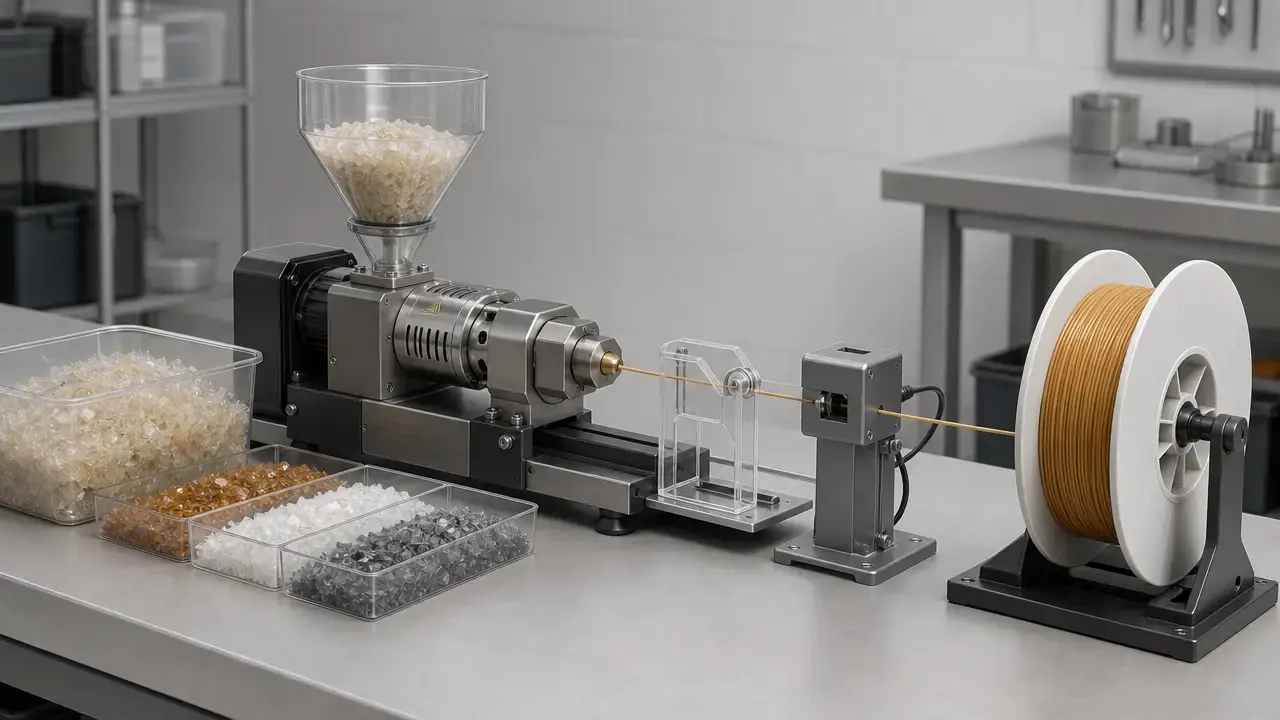
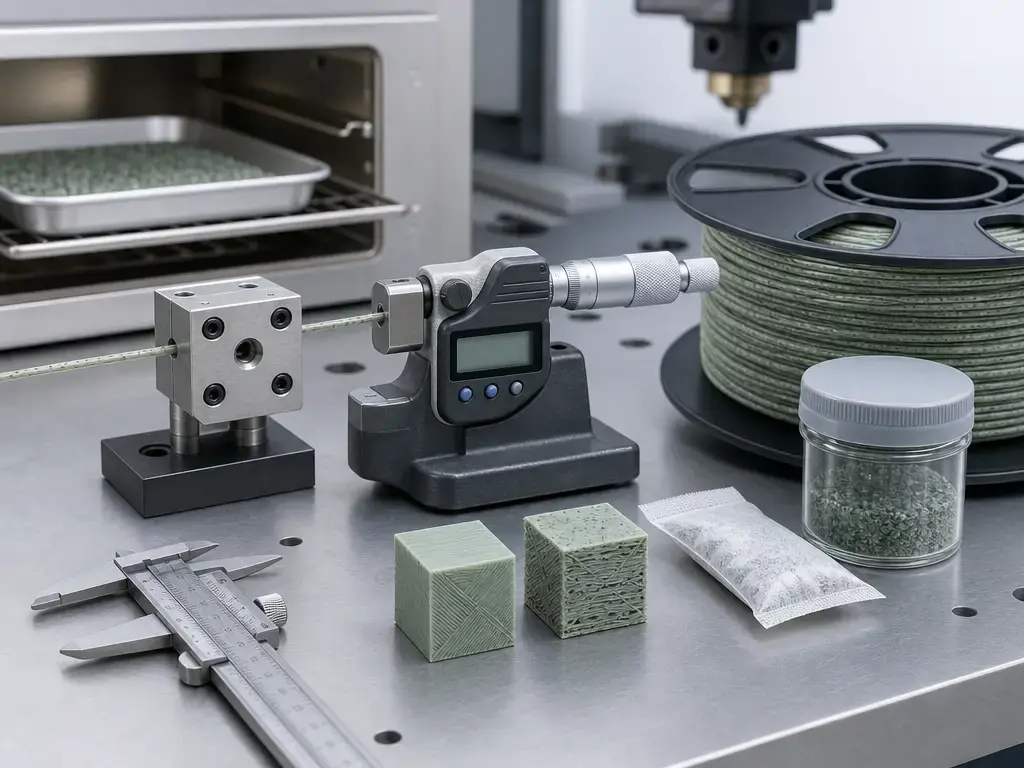
Making recycled filament is a multi-step materials process, not a one-machine shortcut. A recycled filament extruder handles only one part of the chain; the harder problems are usually feed preparation, contamination control, drying, winding stability, and QC. Desktop systems make making recycled filament accessible, but not simple. 3devo recommends feed material no larger than 4 mm in diameter, and Felfil Evo’s published throughput of about 100–150 g/hour shows the modest scale of most desktop extrusion setups. [17] [19]
- Sort by polymer and color.
- Remove glue, dust, metal, labels, and mixed plastics.
- Shred or grind to controlled particle size.
- Dry feedstock.
- Blend recycled and virgin material if needed.
- Extrude, cool, pull, measure diameter, spool.
- Test print and record settings.
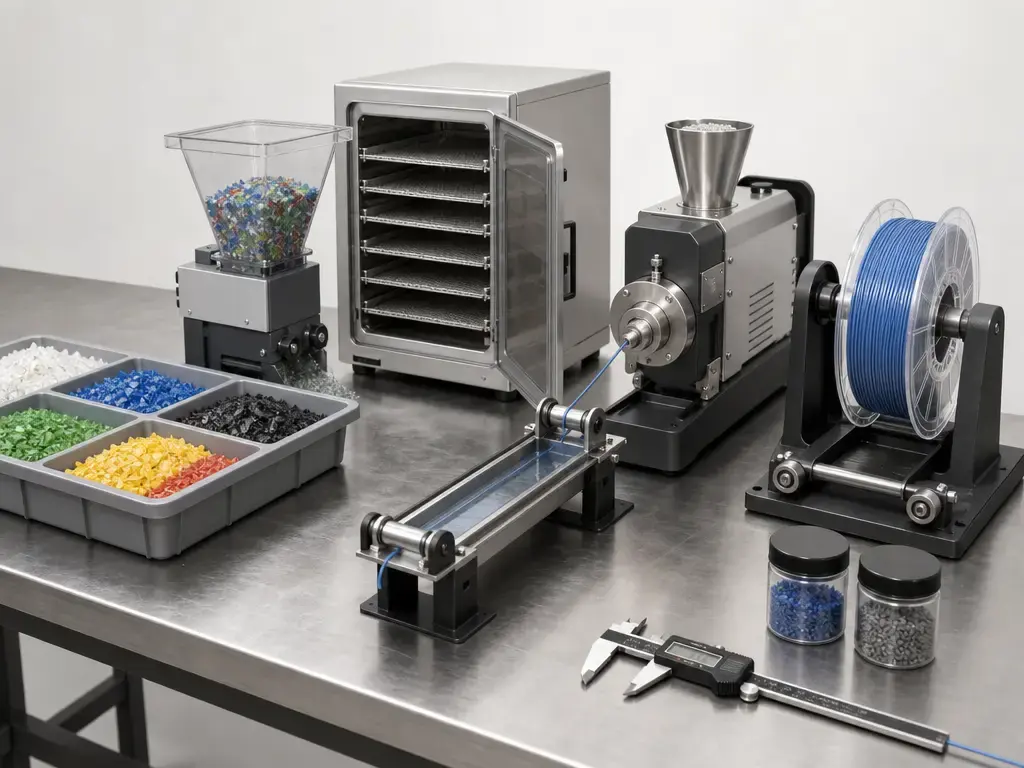
In practice, each step is a control point. Sorting and cleaning determine whether the melt is chemically consistent enough to extrude. Particle size affects flow into the extruder; 3devo’s guidance to stay at or below 4 mm is about preventing unstable feeding and clogging, not just convenience. Diameter control only happens after stable flow, cooling, and pulling are established. 3devo’s PLA QC procedure says that with filament thickness set to 1.75 mm and pulling stabilized, the default PLA presets should achieve about ±50 microns tolerance, a useful benchmark for what “working properly” looks like on a small machine. Felfil Evo publishes 1.75 mm and 2.85 mm output options, plus maximum temperature variants of 250 °C or 300 °C, but those hardware specs should be read as capacity limits rather than proof that any scrap stream will run cleanly. [17] [18] [19]
One-off hobby recycling and repeatable small-scale production are different activities. Hobby-scale recycling often means accepting trial and error, color variation, and inconsistent batches. QC-controlled production adds drying discipline, winding consistency, batch records, diameter logging, and test prints before a spool is treated as usable inventory. Creality’s Filastudio page, for example, presents a recommended 50/50 mix of recycled scrap and virgin PLA in a marketing context. That is a useful reminder that blending is often used to manage variability, but it is not validation of final part performance by itself. [18] [19] [20]
Types of Recycled and Eco Filament for FDM Printing
For desktop MEX in the familiar FDM/FFF context, recycled offerings most often appear as recycled PLA, recycled PETG-type products, recovered PET products sold under rPET-style branding, or blends that mix recycled and virgin content. “Eco filament” is broader than any of those. It can describe recycled content, reduced packaging, cardboard spools, or general sustainability positioning, but it is not a polymer family and should not be read as a substitute for actual material identification. [4] [6] [9] [10]
| Type | Typical source | Strengths | Watch-outs |
|---|---|---|---|
| Recycled PLA | Production scrap or controlled in-house PLA waste | Usually easy to print and well suited to models, prototypes, and classroom work. [4] [5] | Heat resistance stays limited, and repeated processing can shift brittleness and interlayer behavior. [5] [11] |
| rPETG / recycled PETG | PETG production scrap or recycled PETG-type feedstock | Better toughness and heat resistance than typical PLA in many desktop use cases. [6] [7] | Moisture control and print tuning matter, and different brands may report different test forms. [7] [8] |
| rPET / recovered PET products | Recovered PET streams sold under rPET-style branding | Can be a useful recycled polyester route when the supplier clearly identifies the feedstock and print window. [9] | PET and PETG are not automatically the same material just because the branding looks similar. [8] [9] |
| Blended recycled filament | Recycled stock mixed with virgin polymer | Blending can improve process stability and batch consistency. [12] [20] | The blend ratio still does not prove print quality without tolerance, method, and lot data. [12] [20] |
rPETG Filament Properties and Print Settings
Do not compare filament, film, molded specimen, printed coupon, and FGF data as if they were the same thing. Label each number by its specimen form and source. Filamentive’s rPETg sheet spans ASTM D1505, D792, D882, D256, ISO 178, and ASTM D648. Prusament’s PLA Recycled TDS is useful because it separates filament values from printed-specimen values. Academic recycled-polyester studies may use printed coupons or pellet-fed fused granular fabrication rather than standard 1.75 mm filament. [5] [7] [14] [15]
For manufacturer datasheet-style rPETG filament properties, Filamentive’s rPETg sheet is one of the clearer examples: specific gravity 1.23 g/cm³, moisture absorption below 0.2%, tensile strength at yield 52 MPa, tensile strength at break 59 MPa, elongation at yield 4%, elongation at break 400%, flexural strength 68 MPa, flexural modulus 2000 MPa, notched Izod impact 101 J/m at 23 °C, and HDT 70 °C. BigRep’s rPETG product page reports density 1.23 g/cm³, tensile strength 54 MPa, tensile modulus 1800 MPa, flexural strength 68 MPa, flexural modulus 2000 MPa, notched impact 10 kJ/m², HDT A 63 °C, HDT B 70 °C, Vicat 78 °C, Tg 85 °C, nozzle 220–250 °C, bed 70–90 °C, and drying at 60 °C for 4–6 hours. FormFutura’s ReForm rPET page is more explicit about naming and source than many comparable listings: it states that the filament is made entirely from recycled post-industrial PETG content, recommends 230–255 °C at the nozzle and 60–80 °C at the bed, lists density at 1.27 g/cc, gives about 327 m for a 1 kg spool at 1.75 mm, and notes that only two to three homogeneous compound runs are made per year. Prusament PETG Recycled publishes a simpler desktop-facing set: 100% recycled PETG wording, ±0.05 mm manufacturing tolerance, 68 °C temperature resistance, 250 ± 10 °C extruder, 80 ± 10 °C bed, and 50% fan. [6] [7] [8] [9]
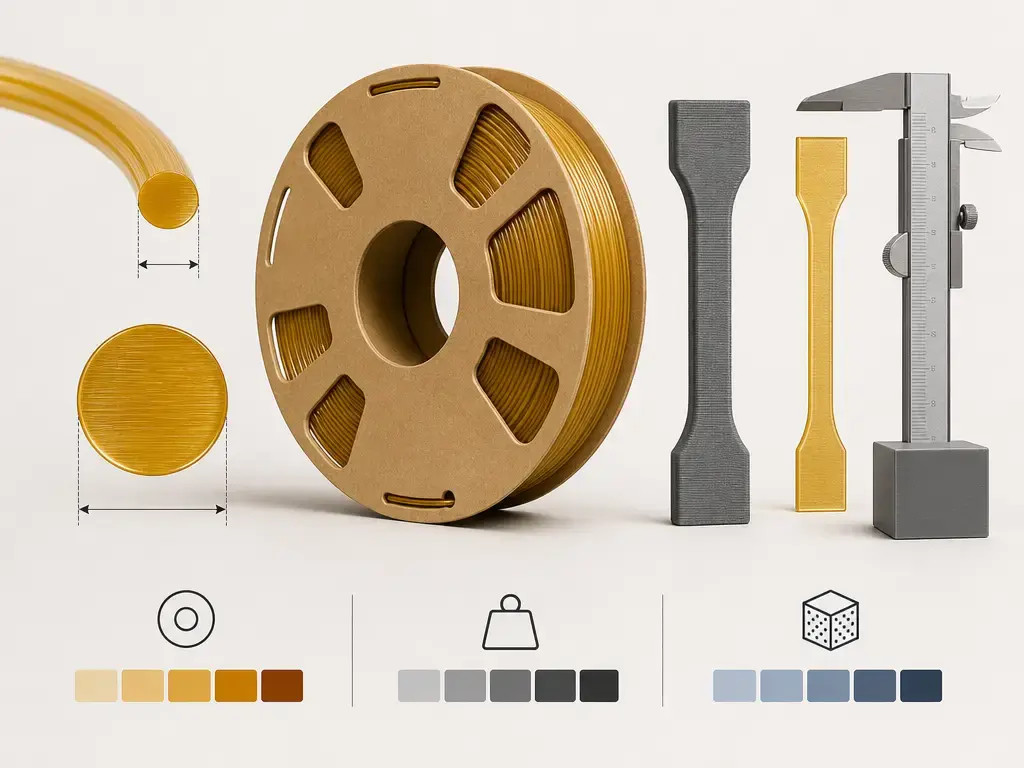
HDT, a product-page temperature-resistance figure, Tg, softening behavior, and real service temperature are related but not interchangeable. HDT is a test result under a defined load and method. Tg describes a thermal transition. Service temperature depends on geometry, load, creep, orientation, and print quality. Manufacturer values should therefore be read as product-specific reference points, not universal constants for rPETG as a category. [6] [7] [8] [9]
Performance Metrics: Print Quality, Dimensional Accuracy, and Strength
For recycled filament, print quality starts with feed consistency before the material reaches the nozzle. Nominal diameter is the advertised size, such as 1.75 mm. Tolerance is the allowed deviation from that nominal size, while ovality describes how round the strand actually is. A spool can meet an average diameter target and still feed poorly if it is not truly round. Prusament PLA Recycled lists 1.75 ± 0.05 mm and ±0.05 mm manufacturing tolerance, and Prusament PETG Recycled also lists ±0.05 mm manufacturing tolerance, but those figures alone do not guarantee reliable extrusion on every machine. Moisture is a separate variable. A material property such as Filamentive’s moisture absorption below 0.2% or Prusament PLA Recycled’s 0.3% moisture absorption under stated conditions is not the same thing as a universal drying instruction. If a recycled polyester spool has absorbed moisture, users may see bubbling, stringing, rough surfaces, or weaker interlayer bonding. If the feedstock also carries contamination, the symptoms expand to nozzle deposits, random jams, and surface defects. PETG-type materials are also more prone to stringing than PLA even when dry, so the recycled label should not be blamed for every ooze-related issue without first checking the base polymer behavior. [4] [5] [6] [7] [8] [9]
Strength numbers need equally careful reading. Filament tensile strength is not the same thing as layer adhesion, and neither is the same as the final strength of a printed part. In the Prusament PLA Recycled TDS, filament tensile yield strength is 54 ± 1 MPa, interlayer adhesion is 21 ± 2 MPa, and printed tensile yield strength is reported separately as 49.0 ± 4.0 MPa for horizontal specimens and 55.0 ± 2.0 MPa for vertical xz specimens. Those are different measurements on different forms. Modulus describes stiffness, tensile strength describes the stress level reached before failure or yielding under that method, and elongation describes how much stretch occurs before failure. Printed-part anisotropy means orientation matters even when the polymer is identical. Independent recycled-polyester work reinforces the point: in one rPET study, ultimate tensile strength varied from 31 MPa to 43 MPa across different infill and layer-height combinations, so the print recipe becomes part of the property statement. Recycled-content percentage alone therefore does not prove reliability. [5] [12] [15]
Test-method incompatibility warning. ASTM D882 film tensile data, ASTM D638 or ISO 527 tensile data, printed coupons, and interlayer-adhesion tests are not directly comparable because they use different specimen geometries, loading states, and preparation routes. A number copied from one method into another context can look authoritative while meaning something different. That is why manufacturer datasheets and academic recycled-filament studies should always be read with the method attached. [5] [7] [12] [15]
Metrics to ask a supplier for
- nominal diameter
- tolerance
- ovality if available
- moisture/storage guidance
- recycled-content percentage
- feedstock source class
- lot traceability
- test-method disclosure
- printed-specimen disclosure
Applications: When Recycled Filament Is a Good Fit
Recycled filament is well suited to prototypes, visual models, design iterations, jigs, fixtures, brackets, enclosures, educational labs, art pieces, and larger non-critical prototypes where documented consistency matters more than certification. Recycled PLA is usually the easier entry point when simple printing and surface quality matter most, while recycled PETG-type products make more sense when the part needs higher toughness or slightly better temperature resistance. In both cases, success usually depends on conservative design, dry storage, and a supplier that publishes realistic print guidance. None of that makes the part “green” by default at end of life, and it does not turn recycled filament into a blanket recommendation for certified structural, food-contact, medical, or aerospace work. [4] [6] [10] [12]
Limitations and Failure Modes
The main limitation is variability. Moisture, color variation between batches, ductility loss after repeated processing, mixed-material contamination, and uncertain additives can all change how the filament melts and how the part fails. On the printer side, that can show up as stringing, rough surfaces, inconsistent extrusion pressure, poor bridging, layer-bond weakness, or sudden jams when contamination reaches the nozzle. A sustainability claim does not remove those failure modes. Vague eco claims can make them harder to diagnose because the product is being sold on image rather than feedstock control. [10] [11] [12] [17]
Do not use without qualification for:
- safety-critical load-bearing parts
- regulated food-contact uses
- medical uses
- aerospace uses. [2] [11] [12]
End-of-life language is another common failure point. Recycled does not mean recyclable everywhere, and it does not mean compostable. HP’s guidance is blunt that common 3D printing filaments such as ABS, PLA, PETG, nylon, and polycarbonate are not typically recycled by municipal programs, with many falling into Type 7 or “Other,” so local acceptance has to be checked instead of assumed. Compostability standards do not solve that. ASTM D6400 and ISO 17088 are industrial-compostability frameworks, not general recycling standards and not proof of home compostability. Home or curbside recycling is therefore usually not the assumed end-of-life path unless the local facility explicitly accepts the resin and the printed format. [10] [23] [24]
Current Research and Market Context
The research picture is mixed in a useful way. Repeated reprocessing of PLA can measurably reduce performance: one PLA comparison study reported film tensile strength at 46.3 ± 5.9 MPa in its initial PLA-C condition and about a 26% total reduction by the fifth reprocessing cycle, while Young’s modulus stayed in roughly the same range for that film series. At the same time, controlled recycled-PLA studies can show competitive or even better tensile results under their own test windows. Aly and co-authors reported 20.31 MPa UTS for 100% recycled PLA printed specimens versus 13.69 MPa for a commercial PLA comparison, while also reporting a substantial ductility penalty. A real-waste PLA blend study likewise reported tensile strength rising from 44.20 ± 2.18 MPa for primary PLA to 52.61 ± 2.28 MPa for the blend with the highest secondary PLA content tested. The right synthesis is not that recycling improves PLA or ruins it, but that recycled PLA performance is strongly process- and formulation-dependent. [11] [12] [13]
Recycled polyester work shows the same dependence on setup. In an rPET filament study, printed UTS changed markedly with infill and layer height, reaching 43 MPa at one tested setting and 31 MPa at another. FGF evidence should be kept separate from standard filament claims: in a fused granular fabrication study, rPET reached 26.4 MPa at 1.1 mm layer thickness, 70% infill, and 3 contours, while rPETG reached 44.8 MPa at 1.2 mm layer thickness, 100% infill, and 2 contours, but that is a pellet-fed process rather than a direct proxy for 1.75 mm spool performance. Commercial recycled filament lines and desktop extrusion systems clearly exist, yet vendor material pages and crowdfunding guidance are still not validation on their own. Felfil’s published 100–150 g/hour throughput and Creality’s 50/50 scrap-plus-virgin PLA recommendation are useful workflow context, not proof that a homemade or branded recycled spool will behave predictably without QC. [14] [15] [16] [19] [20]
How to Decide if Recycled Filament for 3D Printing Fits Your Use Case
To decide whether recycled filament for 3D printing fits your job, check the basics in order. First, source transparency: does the supplier say what kind of recycled stream is being used? Second, data-sheet transparency: are properties tied to named methods and specimen forms? Third, tolerance and QC: is nominal diameter backed by a stated tolerance, and does the maker say anything about process control? Fourth, drying and storage guidance: does the seller provide realistic handling information for that exact material? Fifth, run your own test prints on your own machine, because MEX performance is both feedstock-specific and printer-specific. Sixth, judge part risk honestly; a classroom bracket and a safety-critical mechanism do not deserve the same confidence threshold. Seventh, look for lot traceability if the part will be reprinted later. Eighth, think about the end-of-life plan with local reality in mind rather than generic eco language. The best recycled filament is usually the one with the best documentation and the best fit for the part, not the one with the biggest recycled-content number. [1] [2] [4] [6] [7] [10] [17] [18]
FAQ
A few common questions come up when recycled filament moves from a sustainability idea to a real print decision. The short answers below keep the focus on feedstock control, test methods, and use-case risk. [1] [2]
What is recycled filament for 3D printing?
It is filament made from polymer that has already had a prior processing life and then been re-extruded into a new MEX feedstock. If you are looking for the best recycled filament, start with source transparency, tolerance data, and method-labeled properties rather than recycled-content percentage alone. [1] [2] [4] [6]
Is recycled filament good for functional parts?
Yes, for many non-critical functional parts such as brackets, fixtures, housings, and prototypes, provided the supplier documents the feedstock and you validate the print on your own machine. It should not be treated as pre-qualified for safety-critical applications without application-specific testing. [6] [12]
What are rPETG filament properties?
There is no single universal rPETG property set. Manufacturer examples include values around 1.23 g/cm³ density, tensile strength in the low-50-MPa range, flexural modulus around 2000 MPa, and HDT values around 70 °C, but those numbers depend on the exact brand, test method, and specimen form. [7] [8] [9]
Is recycled filament PLA weaker than normal PLA?
Not automatically. Repeated reprocessing can reduce strength and ductility, but some controlled studies found recycled PLA or recycled/virgin blends matching or exceeding a comparison PLA in tensile strength under specific print conditions. The safer conclusion is that recycled PLA is variable, not automatically weaker. [11] [12] [13]
How do you make recycled filament?
The practical sequence is sort, clean, size-reduce, dry, optionally blend with virgin material, extrude, cool, pull, measure diameter, spool, and then test print. Desktop systems make this possible, but throughput, contamination control, and QC still dominate the result. [17] [18] [19] [20]
What test methods make recycled-filament strength data non-comparable?
Film tensile methods such as ASTM D882, molded or printed tensile methods such as ASTM D638 or ISO 527, and interlayer-adhesion tests all measure different specimen forms and stress states. If the method or specimen form is different, the number should not be treated as directly interchangeable. [5] [7] [15]
Is eco filament for FDM printing the same as compostable filament?
No. “Eco filament” is a loose marketing label, while compostability is tied to specific standards and conditions. ASTM D6400 and ISO 17088 deal with industrial-compostability criteria, and common filament resins are not typically accepted by municipal recycling programs just because they are marketed as sustainable. [10] [23] [24]
Related on 3D Mag
Sources
- ISO/ASTM 52900:2021 sample PDF
- ISO/ASTM 52903-1:2020 sample PDF
- ASTM F3529-21
- Prusament PLA Recycled product page
- Prusament PLA Recycled TDS
- Prusament PETG Recycled product page
- Filamentive rPETg TDS
- BigRep rPETG page
- FormFutura ReForm rPET page
- HP 3D printer plastics recycling explainer
- MDPI Polymers 2023: repeated extrusion of PLA
- Aly et al. 2024 recycled PLA blends
- PLA filaments recycled from real waste
- Nguyen et al. 2024 Polymer Testing
- O’Driscoll et al. 2024 Heliyon
- Galațanu et al. 2024 Procedia Structural Integrity
- 3devo material input guidance
- 3devo filament maker QC guidance
- Felfil Evo filament extruder page
- Creality Filastudio crowdfunding page
- All3DP filament types guide
- All3DP recycled plastic explainer
- ASTM D6400
- ISO 17088:2021