
Manufacturing complex, layered microparticles for targeted drug delivery has been a long-standing challenge in biotechnology. Conventional production of the specialized electronic nozzles involved spending days inside a high-tech semiconductor cleanroom. With a breakthrough from researchers at MIT, this can change by leveraging the rapid prototyping power of advanced 3D printing.
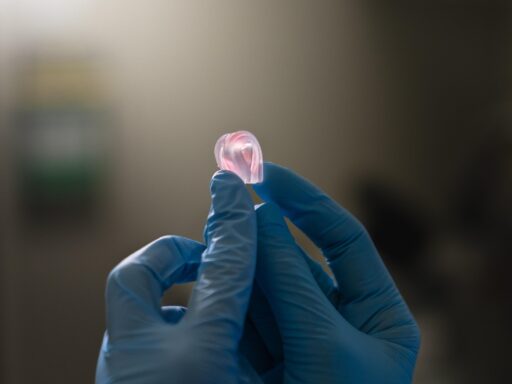
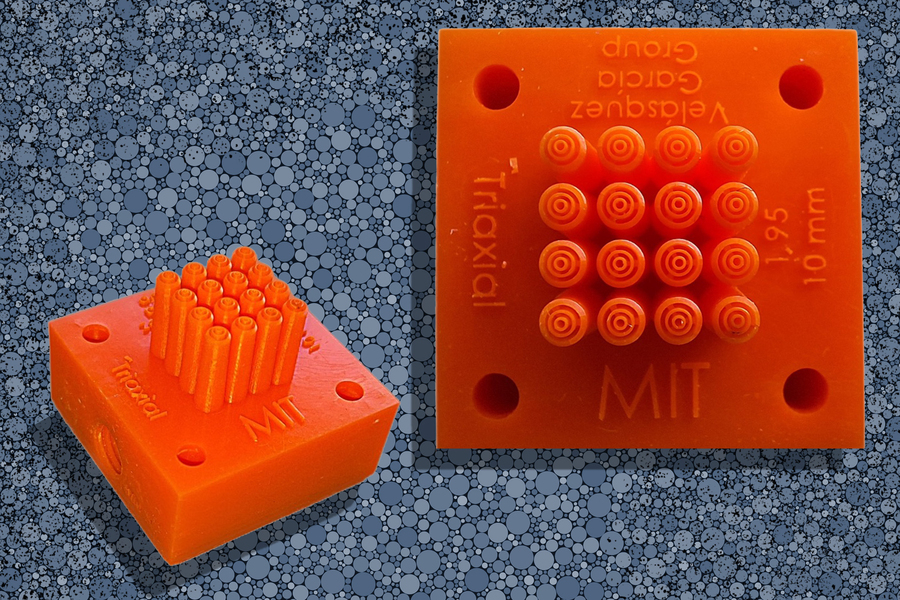
MIT News reports that scientists have successfully designed and produced low-cost triaxial electrospray emitters that can efficiently manufacture three-layered particles at scale. These miniature devices, measuring just slightly larger than a U.S. penny, feature 16 micro-nozzles in a single square centimeter. Each nozzle uses electricity to precisely dispense three distinct, non-mixable liquids simultaneously, forming perfectly nested droplets that solidify into time-release medicine or self-healing materials.
What makes this achievement remarkable is that it entirely bypasses standard microfabrication. The team relied on a high-precision 3D printing technique called vat photopolymerization, building the device layer-by-layer at a resolution of just 25 micrometers. This allowed them to construct a complex, internal network of coiled helical microchannels that distribute fluids evenly without clogging.
“We couldn’t make a device like this in a semiconductor cleanroom. This is only possible because they are 3D-printed,” said Luis Fernando Velásquez-García, a principal research scientist at MIT’s Microsystems Technology Laboratories.
With adjusted flow rates and electric voltage, scientists can tailor the thickness of each microdroplet layer. In medical applications, an outer layer could shield the medicine from harsh stomach acids, while a secondary layer controls the core medicine’s release into the intestines.
Beyond scaling up production, the rapid turnaround of 3D printing allowed the team to aggressively iterate on their designs. Ultimately, the researchers hope this shift in manufacturing expands access to advanced biotechnology. According to Velásquez-García, the next step is to “democratize this technology so the benefits can touch many more people.”