
Summary
CE marking for 3D printers is a legal route for placing covered products on the EU market, not a general quality seal. The sequence is conditional: classify the product, identify the applicable EU acts, perform the required conformity assessment, compile technical documentation, issue the required declaration of conformity, and only then affix the CE marking. The mark may be used only where specific EU harmonisation legislation provides for it. On 2026-06-04, Directive 2006/42/EC still governs machinery placed on the market, even though some provisions of Regulation (EU) 2023/1230 already apply ahead of its main application date of 2027-01-14. [1] [2] [3] [9] [10]
What CE Marking Means for a 3D Printer
CE marking for a 3D printer is an EU conformity mark tied to specific product legislation. People often search for “European certification,” but CE marking is the legal concept. It means the responsible economic operator claims that the product complies with all applicable EU harmonisation requirements that provide for the mark. It is not available by default for every machine, accessory, kit, module, or consumable; EU law says CE marking may be affixed only to products for which specific harmonisation legislation provides for it. [1]
Responsibility stays with the manufacturer, or with an authorised representative where legislation permits that role. By affixing CE marking, that party indicates responsibility for conformity, and the mark may be affixed only by the manufacturer or authorised representative. A declaration of conformity supports that claim, but the mark is not a quality badge and it is not proof that an authority has tested every unit. Official EU consumer guidance also warns that CE marking is not a 100% guarantee that a product is safe. [1] [11]
Which Law Applies in 2026 vs From 14 January 2027
Current regime in 2026
On 2026-06-04, the machinery framework still applying to machinery placed on the market is Directive 2006/42/EC. That matters for many powered 3D printers because the Directive defines machinery as an assembly with linked parts or components, at least one of which moves, fitted with or intended to be fitted with a drive system other than directly applied human or animal effort, and joined for a specific application. Under this regime, partly completed machinery is not CE-marked as a finished machine; it is accompanied instead by a declaration of incorporation and assembly instructions. The Directive also uses the term EC declaration of conformity for finished machinery. [2]
The Directive also sets the document-retention baseline precisely. The original EC declaration of conformity must be kept for at least 10 years from the last date of manufacture, while the technical file must be made available for at least 10 years following the date of manufacture or, in series production, the last unit produced. Those timing rules are linked to manufacture dates, not to a universal post-sale clock. [2]
Incoming machinery regime from 14 January 2027
Regulation (EU) 2023/1230 repeals Directive 2006/42/EC with effect from 2027-01-14 and applies from that same date. Some provisions already apply earlier, so the transition is not a single overnight switch. For machinery placed on the market in 2026, however, the main conformity framework is still the Directive. From 2027-01-14 onward, manufacturers should work from the Regulation’s terminology, categories, and conformity-assessment routes. The Regulation uses EU declaration of conformity and EU declaration of incorporation, and it requires CE marking to be affixed visibly, legibly, and indelibly before the machinery or related product is placed on the market or put into service. [3]
Dated transition note: On 2026-06-04, use Directive 2006/42/EC for machinery placed on the market. From 2027-01-14, use Regulation (EU) 2023/1230 as the machinery framework, with document terminology shifting from the Directive’s EC declaration wording to the Regulation’s EU declaration wording. [2] [3]
How 3D-Printer Products Are Classified for CE Purposes
CE marking for 3D printers starts with classification, because not every product in the printer ecosystem follows the same legal route. Under Directive 2006/42/EC, machinery includes an assembly fitted with or intended to be fitted with a drive system other than directly applied human or animal effort, consisting of linked parts or components, at least one of which moves, joined together for a specific application. That definition often captures complete motion-system printers, but the legal category still depends on what is supplied, what it can do on its own, and how it is placed on the market. [2]
| Product type | Likely legal bucket | Why it matters | Likely CE route / document set |
|---|---|---|---|
| Finished desktop printer, resin printer, or enclosed industrial system | Finished machinery, often with other applicable EU acts. [2] | Supplied as a complete powered product with intended printing use. | Machinery assessment, technical documentation, declaration of conformity, CE marking. [2] |
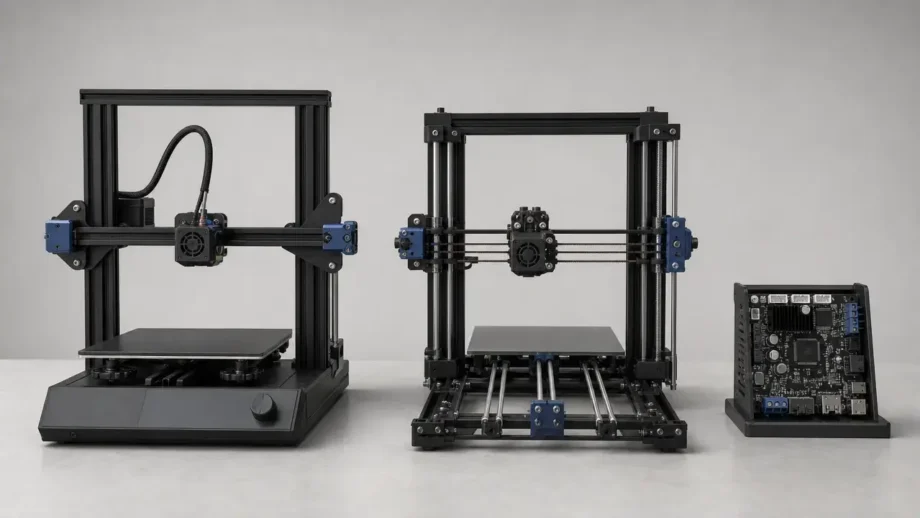
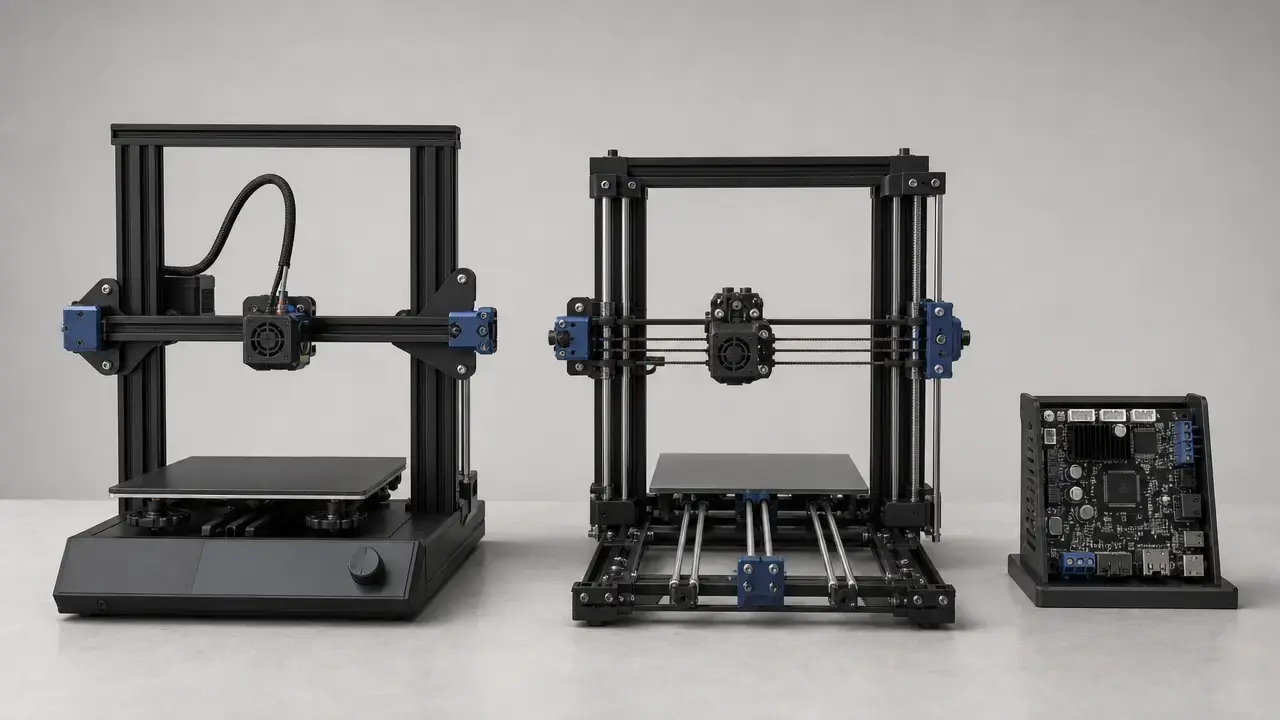
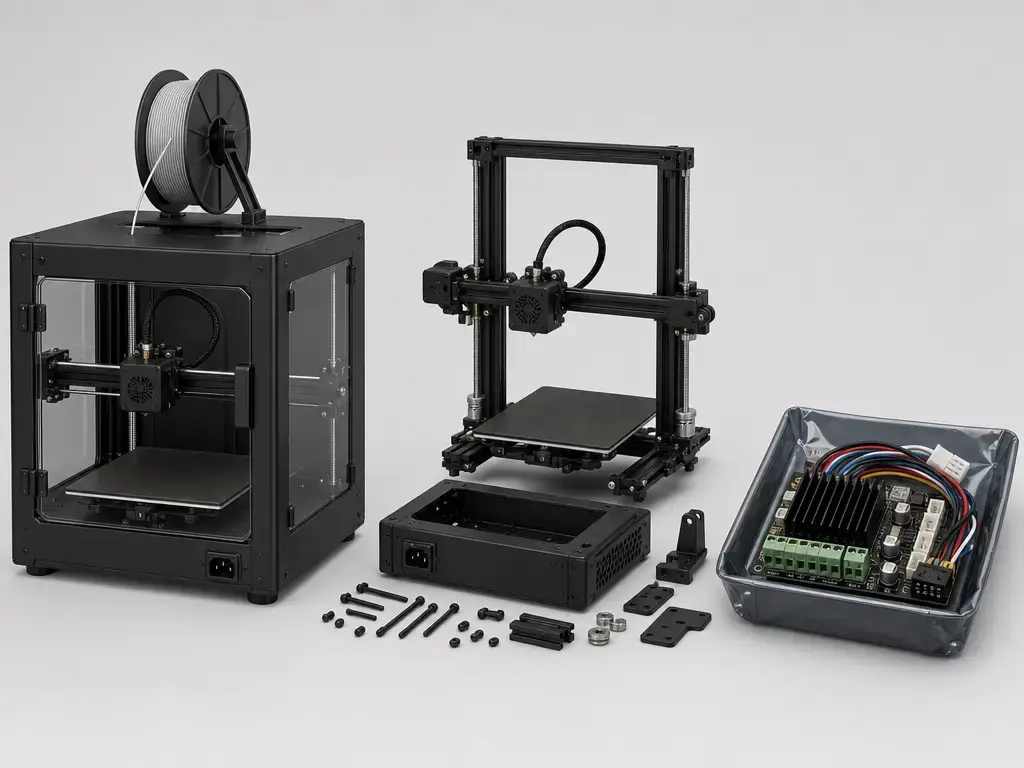
| Kit or integration subassembly | Finished machinery if sold as a complete printer kit; partly completed machinery if it cannot in itself perform the final application. [2] | A build-it-yourself kit is not automatically the same legal product as an integration module. | Finished-machine route, or declaration of incorporation plus assembly instructions for partly completed machinery. [2] |
| Modules, accessories, and replacement boards | Component, safety component, separate electrical product, or spare part, depending on function. [2] | A controller board, curing unit, or laser head can change hazards without being a complete printer. | Product-specific assessment and integration instructions where needed. |
| Rebranded or substantially modified units | Manufacturer-role shift or new-product analysis may apply. [12] [13] | Own-brand marketing or major modification can change who carries conformity responsibility. | Updated assessment, documentation, and declaration by the responsible economic operator. [12] [13] |
Finished desktop printer
A finished fused-filament printer, resin printer, or enclosed industrial additive-manufacturing system is usually assessed as a complete product. The practical question is not whether the machine is described as “consumer” or “industrial,” but whether the supplied assembly is a powered, functionally complete printing machine with its own intended use. [2]
Kit / partly completed machinery
Kits need careful reading of what is actually supplied. If the package is a complete printer that the customer assembles, the finished-machine route may still apply. If what is supplied cannot in itself perform the specific application and is intended only for incorporation into other machinery, the Directive treats it as partly completed machinery, with a declaration of incorporation and assembly instructions instead of CE marking as a finished machine. [2]
Modules, accessories, and replacement boards
Modules and accessories do not all fall into one category. A passive bracket is not the same legal or technical case as a heated enclosure, UV curing unit, radio-enabled controller, or laser attachment. Classification follows function, hazards, and market presentation, not just the seller’s label. [2]
Rebranded or substantially modified units
Rebranding and modification can shift responsibility. Commission guidance says that a product marketed under another person’s name or trademark makes that person the manufacturer, and the Blue Guide 2022 explains that a substantial modification can require the modifier to reassess conformity as if dealing with a new product. The Blue Guide is non-binding guidance, but it remains an important interpretive reference for these role-shift questions. [12] [13]
Which EU Acts Usually Matter for a 3D Printer
For European certification for 3D printers, the more precise question is which EU acts apply to the exact product architecture. Some rules often matter because many printers combine powered motion, electronics, heaters, and control systems. Others are feature-triggered. A wired printer is not assessed the same way as a Wi‑Fi-enabled model, and a separate accessory module is not always treated like the finished machine it connects to. Applicability depends on design, ratings, intended use, and what is actually supplied. [2] [4] [16]
| Legal act | What it covers | Why it may apply to a 3D printer | Evidence and CE relevance |
|---|---|---|---|
| Machinery law | Machine safety for powered assemblies with moving parts. [2] | Motion axes, interlocks, guards, heated moving assemblies, and control functions can create machinery hazards. | Risk assessment, technical documentation, instructions, declaration of conformity, and CE marking for the finished machine. [2] |
| Electromagnetic Compatibility Directive 2014/30/EU | Electromagnetic compatibility of equipment. [4] | Drivers, switch-mode power supplies, sensors, displays, and cabling can emit or suffer electromagnetic disturbance. | Formal non-compliance can include an absent CE mark, missing declaration of conformity, or incomplete technical documentation. [4] |
| RoHS Directive 2011/65/EU | Restriction of certain hazardous substances in electrical and electronic equipment. [6] | Printer electronics, displays, cables, boards, and supplied electrical accessories commonly raise RoHS questions. | RoHS uses the CE-marking framework to indicate conformity with the applicable restrictions. [6] |
| Low Voltage Directive 2014/35/EU | Electrical equipment designed for 50 to 1000 V AC and 75 to 1500 V DC. [5] | The voltage range matters for standalone electrical products in the printer ecosystem, but for a finished product that is machinery, electrical-hazard conformity assessment is governed by machinery law rather than a separate LVD route. [2] [5] | Electrical safety evidence still matters, but the legal route depends on whether the product is machinery or a separate electrical product. [2] [5] |
| Radio Equipment Directive 2014/53/EU | Radio equipment. [16] | Built-in Wi‑Fi, Bluetooth, cellular, or other intentional radio functions can trigger RED. | RED can replace separate LVD coverage for the radio equipment aspect, while still bringing in safety objectives based on the LVD without voltage limits. [16] |
| General Product Safety Regulation 2023/988 | General consumer-product safety backstop. [7] | Useful only where a risk or aspect is not already covered by more specific Union law. | GPSR is not the main CE route here; it applies only to risks or aspects not covered by specific Union requirements. [7] |
Machinery law and EMC often sit at the centre of a finished 3D-printer assessment. Machinery law addresses mechanical, thermal, and control-related hazards. EMC addresses whether equipment can operate in its electromagnetic environment without causing unacceptable disturbance. Those are different questions, so satisfying one does not automatically satisfy the other. [2] [4]
RoHS and LVD need a more product-specific reading. RoHS follows the electrical and electronic nature of the product. LVD is tied to voltage range, but a finished printer that is machinery does not normally take a separate LVD conformity route for electrical hazards under the 2006 Machinery Directive; those hazards are handled under machinery law. That is why “LVD where voltage architecture fits” should be read carefully, not as an automatic extra box for every printer. [2] [5] [6]
GPSR is best treated as a gap-filler, not as a shortcut CE regime. RED is different again: it is triggered by radio functionality. If a printer has Wi‑Fi or Bluetooth, the radio function can move the product into RED analysis, and a wired-only version should not be assumed to share the same conformity file. [7] [16]
What the Manufacturer Must Document Before Market Placement
Before a 3D printer is placed on the market, the manufacturer should move from legislation mapping to conformity assessment in a controlled sequence. First identify which acts apply to the exact configuration: motion system, power architecture, heaters, enclosure, UV source, radio module, and supplied accessories. Then apply the conformity-assessment route required by those acts and assemble the documentation showing how the applicable requirements were met. Commission guidance says manufacturers are responsible for carrying out conformity assessment, setting up technical documentation, issuing the declaration of conformity, and affixing CE marking. The mark comes after the required assessment, not before it. [9] [10]
| Document | Who prepares it | What it proves | Notes for 3D printers |
|---|---|---|---|
| Legislation and standards map | Manufacturer or authorised technical lead | Which EU acts and harmonised standards were considered | It should match the exact model, options, voltage architecture, radio features, and intended use. |
| Technical documentation / technical file | Manufacturer | That design, testing, and production controls support conformity | Keep version control for firmware, electronics, heaters, guards, and supplied accessories. [9] |
| Instructions and safety information | Manufacturer | That intended use, residual risks, installation, maintenance, and disposal information were provided | Include hot surfaces, resin handling, UV exposure, pinch points, fumes, and cleaning steps where relevant. |
| Declaration of conformity | Manufacturer or authorised representative, where permitted | The formal conformity statement for the product placed on the market | For machinery under Directive 2006/42/EC, the Directive uses the term EC declaration of conformity. The 2023 Machinery Regulation uses EU declaration of conformity. [2] [3] |
| Labels and markings | Manufacturer | Traceability, ratings, warnings, and required product marking | Check durability near heat, solvents, and resin exposure. |
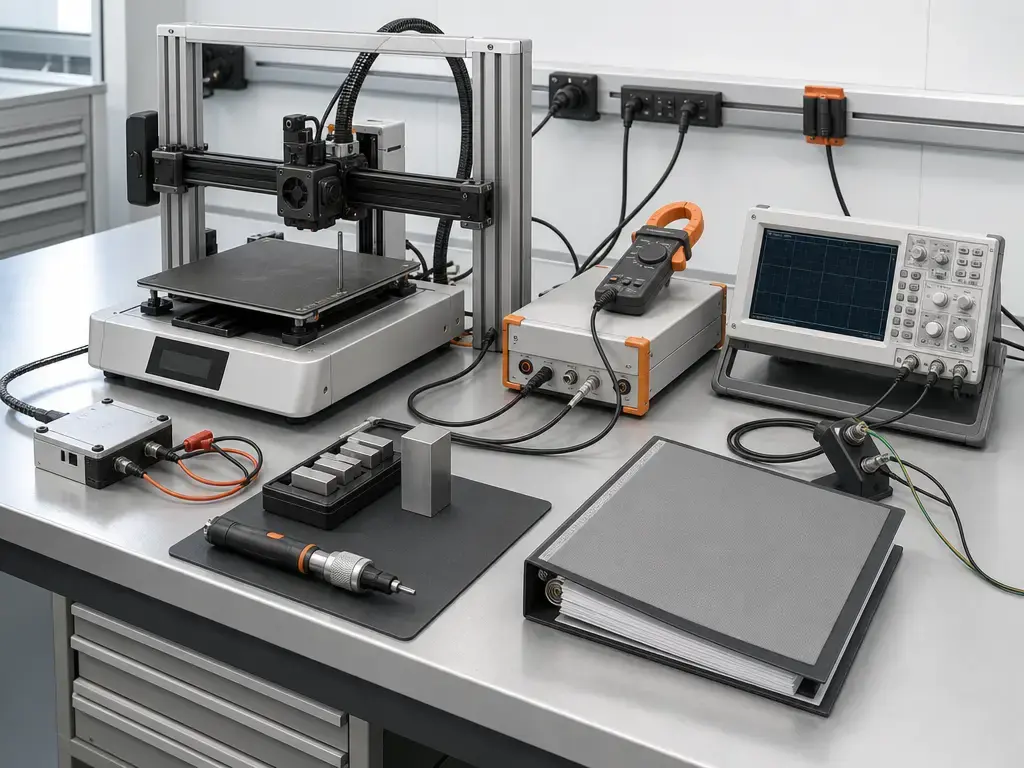
The evidence stack should include risk assessment, test reports, design calculations, BOM or material declarations, instructions, labels and markings, and the declaration of conformity. Harmonised standards can support the conformity case, but they are not the CE mark itself. For machinery risk assessment, EN ISO 12100:2010 has an Official Journal reference. For electrical equipment of machines, EN 60204-1:2018 also has an Official Journal reference. [14] [15]
The final documents still need to describe the shipped product accurately. A declaration that names the wrong model, misses an applicable act, or does not match the actual feature set weakens the file even if testing exists. Under Directive 2006/42/EC, the original EC declaration of conformity must be kept for at least 10 years from the last date of manufacture, and the technical file must be available for at least 10 years following manufacture or the last unit produced in a series. Under Regulation (EU) 2023/1230, the main 10-year retention rule is generally tied to placing on the market or putting into service. [2] [3]
Importers, Resellers, and Substantial Modification
Rebranding and private label sales
An importer or reseller is not always a passive link in the chain. If a 3D printer is marketed under a new name or trademark, that operator can take over the manufacturer’s responsibilities. The Blue Guide also explains that a person who assembles, packs, processes, or labels ready-made products and places them on the market under their own name or trademark can be treated as the manufacturer. In practice, that means working back through the manufacturer checklist above, not just checking whether a CE symbol is printed on the frame. [12] [13]
| Scenario | Risk | Likely obligation shift | Editorial caveat |
|---|---|---|---|
| Private-label printer | The original conformity documents may no longer match the market presentation. | The private-label seller may need manufacturer-level control of documentation and declarations. [12] [13] | SKU-specific analysis is still required. |
| Printer plus third-party laser head | New hazards and additional legislation may enter the picture. | The party selling the package may need to assess the combined product as sold. | Do not assume the accessory’s separate paperwork covers the combined system. |
| Retrofitted enclosure, heater, or safety-bypass firmware | Safety performance and intended use may change materially. | The modifier may need reassessment as if dealing with a new or newly affected product. [13] [3] | The answer depends on the actual technical change. |
| Cross-border sale with new instructions | Instructions may not meet destination-market language expectations. | Importer or distributor may need corrective action before sale. [3] | No universal EU-wide language number applies; no reliable figure found. |
Bundling and accessory kits
Bundling matters because a “printer package” can become a different compliance problem from the base machine. If a reseller adds a curing unit, filtration enclosure, radio module, laser head, or non-original power component, the evidence for each separate item may not prove conformity of the package as sold. The responsible operator must be able to support the conformity of the product actually placed on the market. [12] [13]
Substantial modification / retrofit
The Blue Guide 2022 is a non-binding instrument explaining EU product rules, conformity assessment, CE marking, and market surveillance. It also states that if a substantial modification leads to a modified product being treated as a new product, the modifier has to meet manufacturer-type duties such as technical documentation, declaration, and CE marking. From 2027-01-14, Regulation (EU) 2023/1230 makes this point explicit for machinery and related products by treating a substantial modifier as a manufacturer. [13] [3]
Instructions and language for destination markets
For machinery and related products under the 2023 Regulation, user-facing instructions and information must be in a language that can be easily understood by users, as determined by the Member State concerned. That does not convert into one universal EU language-number rule for every 3D-printer scenario. No reliable figure found. [3]
Safety Context: Heat, Emissions, Enclosures, and Why They Matter
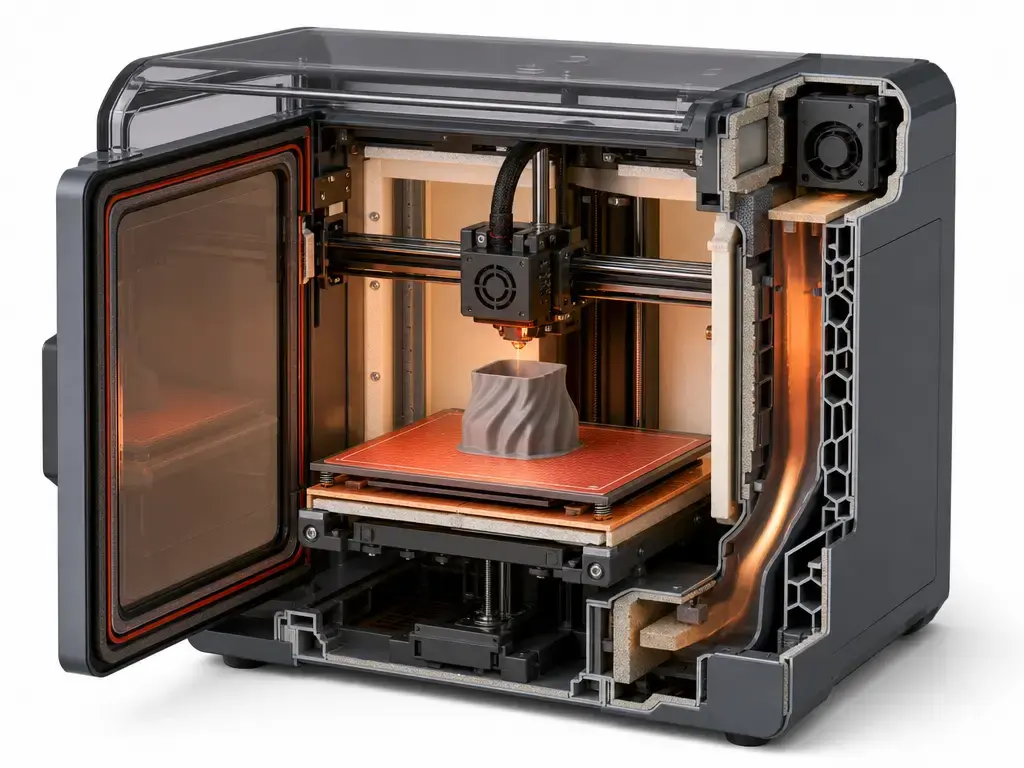
For machine safety, a 3D printer is not judged only by whether the axes move correctly. Hot ends, heated beds, resin vats, UV sources, pinch points, enclosure interlocks, and emission pathways all matter to the risk assessment. EU-OSHA notes that desktop 3D printers can emit large numbers of ultrafine particles under 100 nm and some volatile organic compounds during printing. That context matters for design and instructions, but it does not create a standalone CE route by itself, and CE marking is not a 100% guarantee that a product is safe. [17] [11]
Performance and Evidence: What Good Conformity Support Looks Like
Good conformity support is evidence-led. The declaration, reports, drawings, risk analysis, standards list, labels, and instructions should all describe the same product configuration that is actually sold. Conformity assessment must come before CE marking, and the manufacturer remains responsible for the documented route. Administrative failures are still compliance failures; under the EMC framework, formal non-compliance can include a missing CE mark, missing declaration of conformity, or incomplete technical documentation. [4] [9] [10]
There is no universal CE package, one-size-fits-all route, or universal cost figure for all 3D printers. A small wired filament printer, a Wi‑Fi resin printer, a heated-chamber industrial system, and an integration kit can require different evidence sets. CE marking exists only where the applicable Union harmonisation legislation provides for it, so the first step is identifying the right legal framework before anyone starts copying declarations across unrelated variants. [1]
Practical Guidance for Manufacturers and Buyers
For manufacturers, treat the CE-marking question as a feature-by-feature decision path. Identify the product form, intended use, motion system, electrical architecture, radios, UV sources, heated elements, enclosure functions, firmware-controlled safety logic, and supplied accessories before assuming the legal route. Commission guidance expects manufacturers to identify the applicable legislation, build the technical documentation, issue the declaration of conformity, and then affix the mark. [9]
For buyers, importers, and distributors, due diligence should go beyond spotting a logo on the nameplate. Ask for the declaration of conformity, check that the model and feature set match the unit being sold, and request enough documentation to understand the conformity route. Importers and distributors have their own obligations and can take on more responsibility depending on their role. CE marking alone is not a total safety guarantee, so instructions, warnings, traceability, and configuration mismatches still matter. [12] [11]
Summary: What CE Marking Means for 3D Printers
CE marking for 3D printers is a structured conformity claim, not a shortcut label. It exists only where applicable EU harmonisation law provides for it. The practical order is still: classify the product, identify the applicable acts, complete the conformity assessment, prepare the documentation, issue the declaration of conformity, and only then mark. On 2026-06-04, Directive 2006/42/EC remains the machinery baseline for machinery placed on the market, with the main machinery-law changeover to Regulation (EU) 2023/1230 on 2027-01-14. [1] [2] [3] [9] [10]
FAQ
What is CE marking for a 3D printer?
It is the EU conformity mark used where applicable Union harmonisation legislation provides for it. For a 3D printer, it is not a quality grade or a generic approval certificate. It means the responsible operator is claiming conformity with the EU rules that apply to that product configuration. [1]
Is CE marking required for 3D printers in the EU?
Often yes in practice, but the legal answer is conditional. A finished powered 3D printer commonly raises machinery, EMC, and RoHS questions, and a wireless version may also trigger RED. On 2026-06-04, machinery placed on the market is still assessed under Directive 2006/42/EC, with Regulation (EU) 2023/1230 applying from 2027-01-14. [2] [3] [4] [6] [16]
Is “European certification” the same as CE marking?
No. “European certification” is a common search phrase, but CE marking is the legal concept. Depending on the legislation, conformity may rely on manufacturer responsibility, a declaration of conformity, and technical documentation rather than automatic third-party certification. Commission guidance also warns not to confuse voluntary certificates with the EU conformity-assessment system. [1] [10]
Does a Wi‑Fi-enabled 3D printer change the CE marking route?
Yes, it can. Built-in Wi‑Fi or Bluetooth can bring the Radio Equipment Directive into scope. RED covers radio equipment, and radio equipment falling within RED is not subject to a separate Low Voltage Directive route except that RED imports LVD-style safety objectives through Article 3(1)(a), without applying the LVD voltage limits. That is why a wireless printer should not be treated as just a wired printer with one more checkbox. [16]
Can a kit or partly completed machine be sold with CE marking?
Not automatically. If the product is truly partly completed machinery under Directive 2006/42/EC, it is supplied with a declaration of incorporation and assembly instructions, not CE marking as a finished machine. A complete kit sold as a full printer can be different, so the key question is whether the supplied product can in itself perform the intended application. [2]
Can a modified or rebranded printer keep the original CE marking?
Not automatically. If a reseller markets the printer under its own name or trademark, that operator can take over manufacturer responsibilities. If a product is substantially modified, the conformity assessment may have to be redone for the modified product. The Blue Guide explains that principle, and from 2027-01-14 the Machinery Regulation states it explicitly for substantial modifiers of machinery and related products. [12] [13] [3]
Sources
The article uses numeric citations in the form [number]. The source base below prioritises EU legislation, European Commission guidance, Official Journal references, and official occupational-safety context.
- Regulation (EC) No 765/2008 — general principles of CE marking
- Directive 2006/42/EC — Machinery Directive, current regime in force in 2026
- Regulation (EU) 2023/1230 — Machinery Regulation, applies from 14 January 2027
- Directive 2014/30/EU — Electromagnetic Compatibility Directive
- Directive 2014/35/EU — Low Voltage Directive
- Directive 2011/65/EU — RoHS
- Regulation (EU) 2023/988 — General Product Safety Regulation
- European Commission — CE marking overview
- European Commission — manufacturer obligations
- European Commission — conformity assessment
- European Commission — consumer CE guidance
- European Commission — importer/distributor guidance
- Commission notice — The ‘Blue Guide’ on the implementation of EU product rules 2022
- Official Journal reference — EN ISO 12100:2010
- Official Journal reference — EN 60204-1:2018
- Directive 2014/53/EU — Radio Equipment Directive
- EU-OSHA discussion paper — 3D printing and additive manufacturing: the implications for OSH