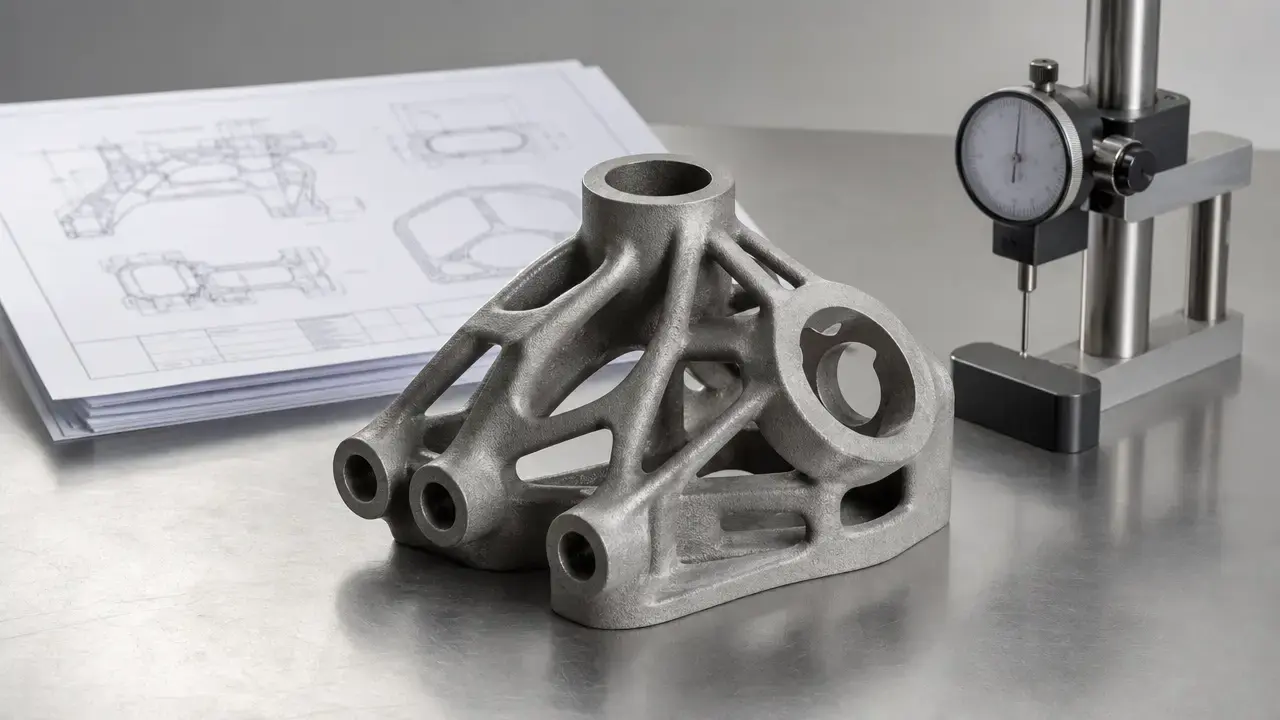

Summary
ISO ASTM 52901 additive manufacturing quality refers to the procurement-side framework defined by ISO/ASTM 52901:2017, officially titled Additive manufacturing — General principles — Requirements for purchased AM parts. In practical terms, it covers purchased additive-manufactured parts: what the buyer communicates, what the supplier addresses, and how acceptance is defined before production. The public scope says it can serve as a basis for minimum acceptance requirements, with stricter supplementary requirements added at order time. ISO/ASTM 52901 is a standard, not an ISO-issued certification for parts or companies. [1] [3]
That distinction matters. The document helps structure purchased-part requirements and acceptance expectations, but it does not by itself qualify a machine, approve a supplier for every future order, or show that a part is fit for a regulated critical use. Those are separate matters involving production capability, process controls, and, where applicable, formal qualification or validation beyond 52901’s public scope. [1] [8] [9] [10] [17]
What ISO/ASTM 52901 is — and is not
ISO/ASTM 52901 is best understood as an AM procurement standard. It defines and specifies requirements for purchased parts made by additive manufacturing and gives guidance on the order-time information exchanged between the customer and the part provider. In other words, it provides a framework for stating what is being bought, what evidence is expected, and how acceptance will be judged for that order. [1] [2]
Here, conformance means meeting the specified requirements agreed for a particular part order or procurement situation. Buyers may use that idea in supplier reviews, quality agreements, or audit trails, but it is not the same as an ISO-issued certificate, because ISO states that certification is performed by independent bodies and that ISO itself does not provide certification or conformity assessment. [1] [3]
What 52901 does vs. what it does not do
| What 52901 does | What 52901 does not do |
|---|---|
| Structures communication of purchased-part requirements between customer and supplier. [1] [2] | Set universal tolerances for all AM parts. [1] [2] |
| Establishes order-specific acceptance expectations. [1] [2] | Automatically qualify machines or processes. [1] [8] [10] |
| Lets buyers specify evidence, inspection, and documentation needs at order time. [1] [2] | Provide sector approval for aerospace, medical, or other critical uses. [3] [17] |
| Provides a procurement basis for purchased-part acceptance. [1] [2] | Replace broader process, site, or part qualification activities. [8] [9] [17] |
The public scope does not support claims about universal quality thresholds. ISO/ASTM 52901 helps a buyer specify what must be delivered for a purchased part, but it does not replace documents aimed at production quality assurance or process control. At a high level, ISO/ASTM 52920 defines quality assurance measures along the manufacturing process, while ISO/ASTM 52904 covers operation and production control of metal powder bed fusion processes for critical applications. [8] [9] [10]
Where 52901 fits in the AM standards stack
Why it is an ISO/ASTM joint standard
The dual ISO/ASTM label reflects how AM standards are developed, not a special product-approval route. ASTM Committee F42 on Additive Manufacturing Technologies was formed in 2009, and ISO and ASTM signed their cooperative agreement in September 2011. ISO/TC 261’s projects page says ISO/ASTM additive manufacturing standards are developed by Joint Groups made up of experts nominated by ISO/TC 261 and ASTM F42, while ASTM lists F42.95 as the U.S. TAG to ISO TC 261. [4] [5] [6] [18]
Related standards by role, not by directory
In standards language, additive manufacturing is the anchored term, with ISO/ASTM 52900:2021 serving as the fundamentals and vocabulary document. Many engineers and buyers still say 3D printing, but an additive manufacturing quality framework works better when terminology, purchasing requirements, production assurance, process control, product definition, and post-processing inspection are treated as distinct roles rather than interchangeable documents. [7] [8] [9] [10] [14] [15]
| Document | Primary role | When to mention it | What not to imply |
|---|---|---|---|
| 52900 | Fundamentals and vocabulary. [7] | When terminology needs a standards anchor. [7] | That it sets purchased-part acceptance rules. [7] |
| 52901 | Requirements for purchased AM parts. [1] [2] | When a buyer and supplier define order requirements and acceptance evidence. [1] [2] | That it qualifies every machine, supplier, or application. [1] [3] |
| 52920 | Quality assurance measures along the manufacturing process, with requirements additional to existing QMS structures. [8] [9] | When discussing AM production-site activities, process/site criteria, and manufacturing assurance. [8] [9] | That it replaces the purchasing focus of 52901. [8] [9] |
| 52904 | Metal powder bed fusion process control for critical applications. [10] | When machine operation and production control are central to metal PBF work. [10] | That all AM processes are covered. [10] |
| Y14.46 | Uniform specification in product definition data and related documents for AM. [14] | When drawings, model-based definition, or product data carry AM requirements. [14] | That it is an AM production quality standard. [14] |
| 52908 | Post-processing, inspection and testing for powder bed fusion finished parts. [15] | When finished metal PBF parts need post-processing and inspection language. [15] | That 52901 itself defines all post-processing or inspection methods. [1] [15] |
Read this stack from the procurement question outward. If the issue is “what did the buyer ask for, and what must the supplier deliver as evidence,” 52901 is the starting point. If the issue shifts to shop-floor assurance, process or site criteria, product-definition data, or post-processing inspection, adjacent documents become relevant without changing 52901’s narrower purchased-part role. [1] [8] [9] [10] [14] [15]
What the official public scope requires for purchased AM parts
This article stays at public-scope level because the open ISO and ASTM pages identify the document’s role and scope, but they do not publish the full licensed body text. What can be verified publicly is that ISO/ASTM 52901 defines and specifies requirements for purchased parts made by additive manufacturing, gives guidance on order-time exchange between customer and part provider, and serves as a basis for minimum acceptance requirements. [1] [2]
Official public summaries support six exchange categories in this additive manufacturing quality assurance context. [1] [2]
- customer order information
- part definition data
- feedstock requirements
- final part characteristics and properties
- inspection requirements
- part acceptance methods
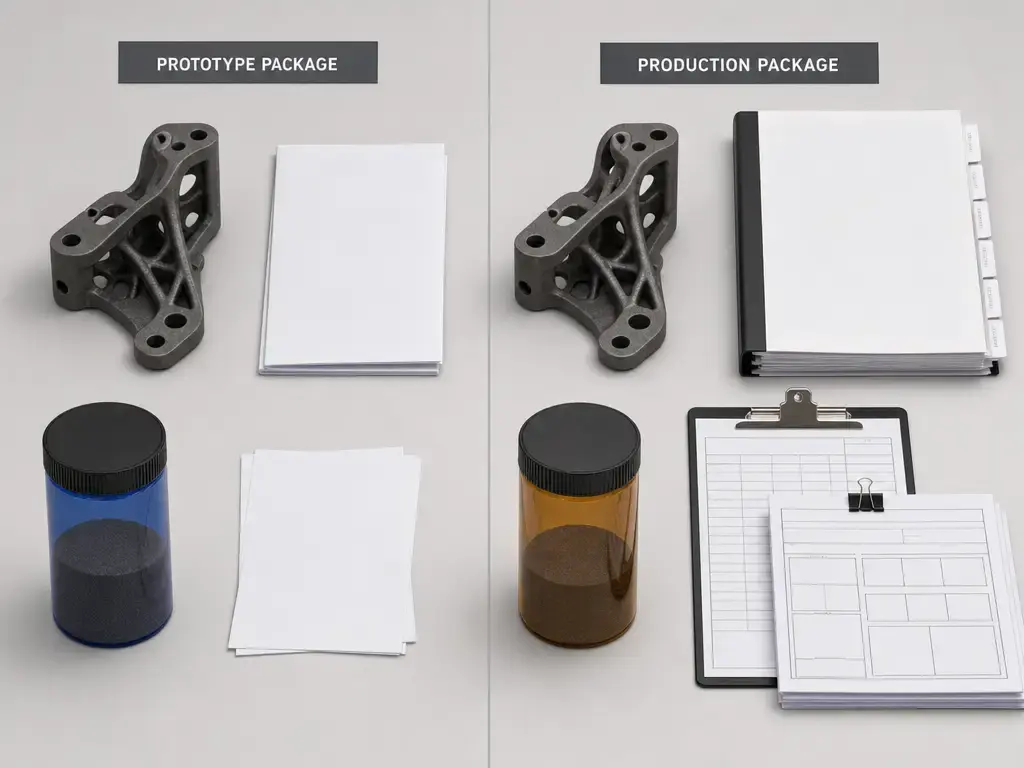
Taken together, these categories define the purchasing interface: what is being ordered, how the part is defined, what feedstock expectations apply, what characteristics the delivered part must achieve, what inspection is required, and how acceptance will be decided. The public scope also says that supplementary requirements can be added at order time, which is why a low-risk prototype and a production part can reasonably require different evidence, inspection, or documentation packages. [1] [2]
No reliable verified open-access source found for clause-level purchase-order sub-items or acceptance sub-type definitions beyond those official summaries. For that reason, this article does not reproduce deeper clause detail or define internal term variants unless a licensed copy is supplied later. [1] [2]
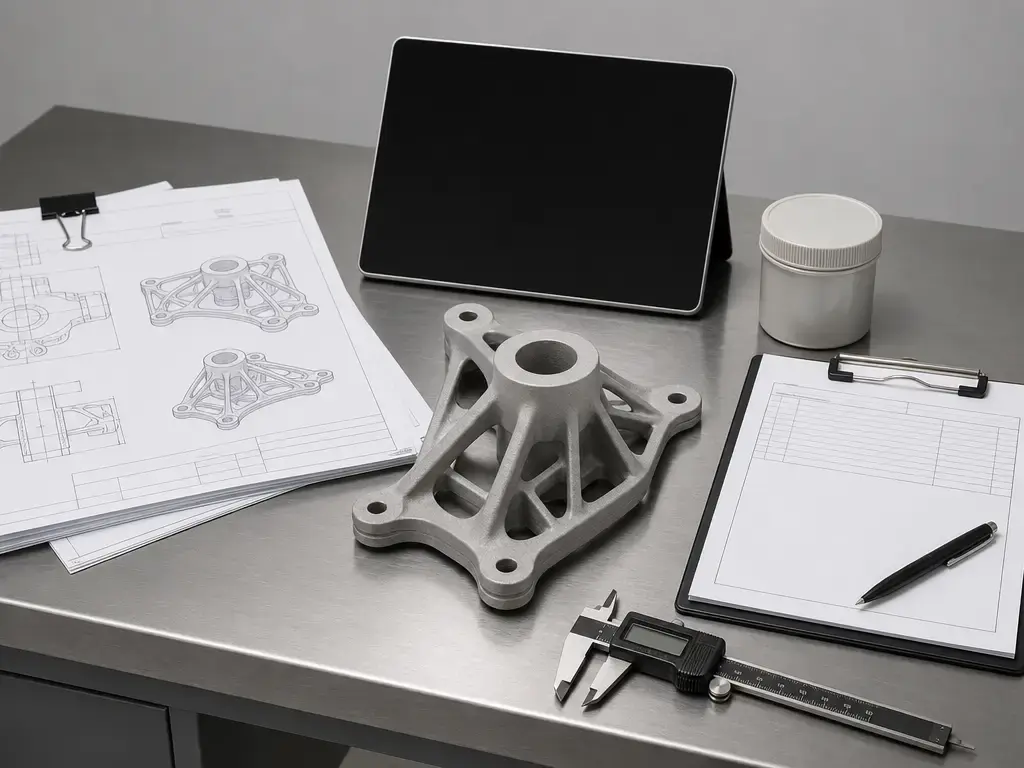
Procurement requirements vs supplier capability vs part qualification
Purchased-part requirements
ISO/ASTM 52901 sits on the procurement side of additive manufacturing. It is where the buyer and supplier connect geometry or product-definition information, material expectations, inspection evidence, documentation needs, and the order-specific basis for acceptance. Meeting those ordered requirements supports conformance for that purchase, not a broader claim about every future build the supplier may produce. [1] [2]
Capability and production-site requirements
Supplier capability is a different question. It asks whether the organization, equipment, process controls, records, and production site can repeatedly support industrial AM work under defined conditions. ISO/ASTM 52920 is closer to that layer because it defines quality assurance measures along the manufacturing process, and the ASTM scope states that it specifies AM-relevant process and site criteria and provides requirements additional to existing QMS standards. For metal powder bed fusion in critical applications, ISO/ASTM 52904 goes further into operation and production control of the process itself. [8] [9] [10]
| Activity | Main question | Example governing source |
|---|---|---|
| Purchased-part ordering and acceptance | Did the order state the needed requirements, and does the delivered part meet them? [1] [2] | ISO/ASTM 52901. [1] [2] |
| Process and site capability | Can the supplier’s AM process and production site repeatedly operate under defined quality controls? [8] [9] | ISO/ASTM 52920, and sometimes ISO/ASTM 52904 for metal PBF critical applications. [8] [9] [10] |
| Formal part qualification | Is this specific part approved for a defined critical use? [17] | Qualification activity beyond purchased-part acceptance, informed by sector needs and measurement science. [17] |
Qualification and validation for critical use
Purchased-part acceptance should not be called qualification. NIST draws the boundary clearly: critical parts for defense, aerospace, and medical applications must be formally qualified before use. That broader activity can involve testing, process evidence, inspection strategy, and sector-specific rules, and it sits outside the narrower purchased-part communication role of 52901. [17]
Certification, conformance, and audit use
What ISO certification does and does not mean here
When buyers or suppliers talk about “52901 certification,” the phrase needs clarification. ISO says certification is provided by an independent body and that ISO itself does not provide certification or conformity assessment. A company may still be audited against requirements that reference ISO/ASTM 52901, but that does not mean ISO issued a certificate for the part, the supplier, or the process. [3]
What ASTM’s current AM certifications actually cover
ASTM AM Quality Certifications currently lists three programs in that family. [11]
- AMC-QS
- AMC-QF
- AMC-QP
These are external certification schemes built on multiple standards and program rules, not proof that ISO certifies anything. That distinction matters in contracts because a supplier may hold a program certificate, a site may be audited to specific criteria, and a purchased part may be accepted against an order, but those are different claims. [3] [11]
AMC-QP currently says it demonstrates that the PBF-LB/M process is in compliance with ISO/ASTM 52904 and that the supplier conforms to requirements in ISO/ASTM 52901; the same page also says the certification can be extended to other processes such as MEX and DED against applicable standards. AMC-QS says it is built on ISO/ASTM 52901, 52904, 52920, and applicable QMS standards, and that the auditee must already hold an active QMS certification such as ISO 9001, AS/EN 9100, ISO 13485, or IATF 16949. That program structure should not be projected back onto 52901 itself, which remains the purchased-parts standard. [12] [13]
Traceability, inspection, and acceptance wording
Manufacturing and document traceability
On the 52901 side, additive manufacturing traceability is mainly a records and procurement-language issue. A delivered part should be linkable to the order, part-definition data, feedstock requirements, inspection requirements, and acceptance context agreed before production. Because the public scope explicitly includes inspection requirements and part acceptance methods, buyers should avoid vague wording such as “inspect per standard” if they have specific evidence or records in mind. Detailed acceptance sub-type definitions are omitted here because no reliable verified open-access source found in official ISO or ASTM public pages goes beyond abstract or scope level for that detail. [1] [2]
Metrological traceability in measurement language
Metrological traceability is narrower than procurement recordkeeping. NIST defines metrological traceability as a property of a measurement result whereby the result is related to a reference through a documented, unbroken chain of calibrations, each contributing to measurement uncertainty. NIST also notes that people often use the shorter term for other ideas such as sample, document, instrument, or material history, so procurement language should state explicitly when metrological traceability of a reported measurement result is required. [16]
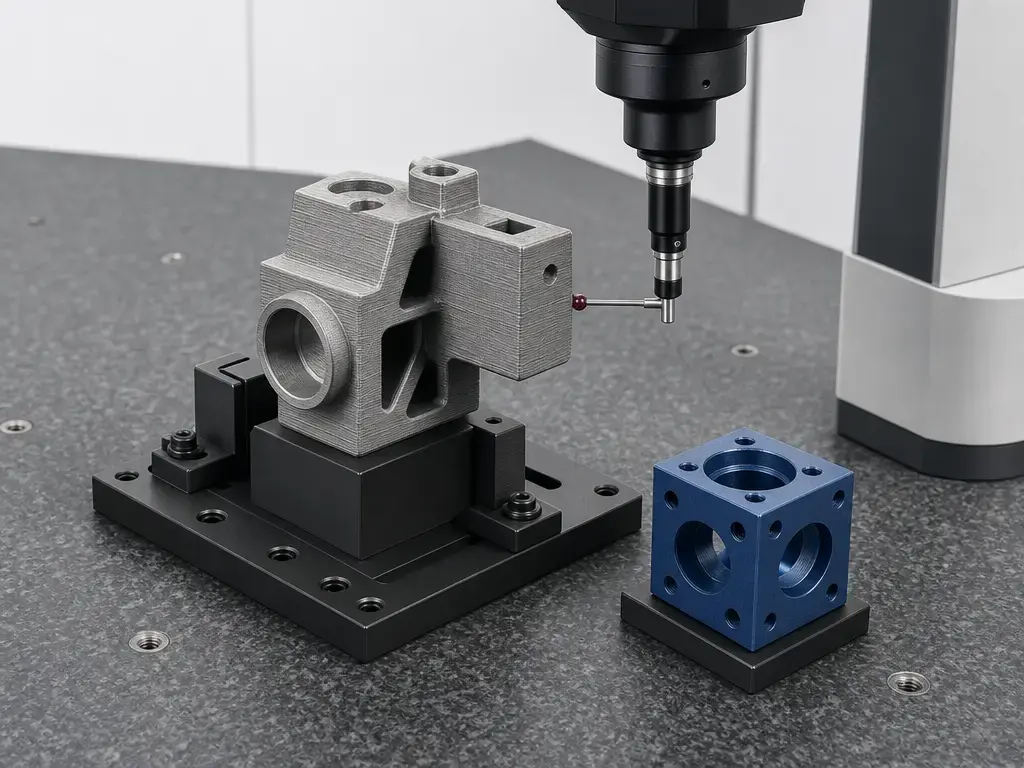
Limits and practical use cases
ISO/ASTM 52901 is most useful when a buyer is outsourcing AM work and needs the order to carry clear technical expectations. Practical uses include aligning customer and supplier before a build, making inspection evidence explicit, and managing a prototype-to-production handoff where an informal print request is no longer enough. The public scope supports that use because it is a basis for minimum acceptance requirements and allows stricter supplementary requirements to be added at order time. [1] [2]
Its limits matter just as much. ISO/ASTM 52901 does not set universal tolerances, universal test values, automatic qualification, or a substitute for sector regulation. Production assurance belongs closer to ISO/ASTM 52920, which addresses quality assurance measures along the manufacturing process and adds AM-specific requirements to existing QMS structures, while metal PBF critical-application process control belongs closer to ISO/ASTM 52904. For defense, aerospace, and medical critical parts, NIST states that formal qualification is still required before use. Detailed acceptance sub-type definitions are not expanded here because official public sources do not verify them at open-access level. [1] [2] [8] [9] [10] [17]
The practical takeaway is simple: ISO ASTM 52901 additive manufacturing quality is procurement communication first. It helps define what was ordered, what evidence is expected, and how the delivered part will be accepted. It does not by itself prove supplier capability, validate a production route, or qualify a critical part for service. [1] [8] [9] [10] [17]
FAQ
What is ISO/ASTM 52901?
ISO/ASTM 52901:2017 is the joint ISO/ASTM standard for requirements for purchased additive-manufactured parts. In practice, it structures order-time communication between buyer and supplier about part definition, inspection expectations, and the basis for accepting a purchased AM part. [1] [2]
Is ISO/ASTM 52901 a certification?
No. ISO says certification is provided by an independent body and that ISO itself does not provide certification or conformity assessment. A company can be audited against requirements that reference 52901, but that is different from ISO issuing a certificate. [3]
What does the standard publicly say must be exchanged when ordering purchased AM parts?
The official public scope identifies six exchange categories: customer order information, part definition data, feedstock requirements, final part characteristics and properties, inspection requirements, and part acceptance methods. Publicly available ISO and ASTM pages also say the standard can be used as a basis for minimum acceptance requirements and that supplementary requirements can be added at order time. [1] [2]
How is ISO/ASTM 52901 different from ISO/ASTM 52920?
ISO/ASTM 52901 is about purchased-part requirements communication and acceptance for the order. ISO/ASTM 52920 is about qualification principles for industrial AM processes and production sites and defines quality assurance measures along the manufacturing process, with requirements additional to existing QMS standards. In short, 52901 helps state what the buyer ordered, while 52920 addresses how AM production is controlled and organized. [8] [9]
How is ISO/ASTM 52901 different from ISO/ASTM 52904 or AMC-QP certification?
ISO/ASTM 52904 addresses metal powder bed fusion process operation and production control for critical applications, which is a narrower process-control role than 52901’s purchased-parts role. AMC-QP is an external certification program whose current official page says it demonstrates PBF-LB/M compliance with ISO/ASTM 52904 and supplier conformance to ISO/ASTM 52901, so its scope should not be read back into 52901 itself. [10] [12]
Does ISO/ASTM 52901 set tolerances, test methods, or pass/fail values for all AM parts?
No. The public information supports minimum acceptance requirements and order-time supplementary requirements, but it does not establish universal tolerances, universal test methods, or universal pass/fail values for every AM part. No reliable verified open-access source found for detailed acceptance sub-type definitions beyond the official abstract and scope-level pages. [1] [2]
How should traceability be described without confusing document traceability with metrological traceability?
For procurement language, describe the records link explicitly: order, part definition, material information, inspection report, and acceptance decision. For measurement language, use the full term metrological traceability, because NIST reserves that concept for a measurement result tied to a reference through a documented, unbroken calibration chain and notes that the shorter term is often used for different ideas. [1] [2] [16]
Sources
- ISO/ASTM 52901:2017 official ISO page, ISO, published 2017, confirmed 2023
- ISO/ASTM52901 Standard Guide for Additive Manufacturing – General Principles – Requirements for Purchased AM Parts, ASTM International, active page last updated Oct. 15, 2025
- ISO conformity assessment page, ISO, current page
- ISO/TC 261 committee home and ISO-ASTM cooperation page, ISO/TC 261, current page
- ASTM Committee F42 page, ASTM International, current page
- ASTM F42 subcommittees page, ASTM International, current page
- ISO/ASTM 52900:2021 official ISO page, ISO, published 2021, confirmed 2025
- ISO/ASTM 52920:2023 official ISO page, ISO, published 2023
- ISO/ASTM52920-23 official ASTM page, ASTM International, active page last updated Aug. 11, 2023
- ISO/ASTM 52904:2024 official ISO page, ISO, published 2024
- ASTM AM Quality Certifications overview, AM CoE, current page
- AM Process Certification (AMC-QP, PBF-LB/M), AM CoE, current page
- AM Quality System Certification (AMC-QS), AM CoE, current page
- ASME Y14.46-2022 Product Definition for Additive Manufacturing page, ASME, 2022
- ISO/ASTM 52908:2023 official ISO page, ISO, published 2023
- Metrological Traceability: Frequently Asked Questions and NIST Policy, NIST, current page
- Additive Manufacturing Part Qualification, NIST, updated March 26, 2025
- ISO/TC 261 Projects page, ISO/TC 261, current page