
Engineers at MIT have come up with a breakthrough fabrication technology that creates soft, microscopic 3D structures with moving parts controlled entirely by magnets. Developed alongside collaborators at EPFL and the University of Cincinnati, this new method tackles long-standing challenges in 3D printing magnetic materials at the micron scale. By using a specialized “double-dip” process, the team can produce “magno-bots” smaller than a grain of sand that can grip, flip, and maneuver on command, reports MIT News.
3D printing magnetic structures was historically difficult because magnetic particles often scatter the printer’s laser, weakening the final result. “Directly 3D printing deformable micron-scale structures with a high fraction of magnetic particles is extremely difficult, often involving a tradeoff between magnetic functionality and structural integrity,” said co-lead author Rachel Sun.
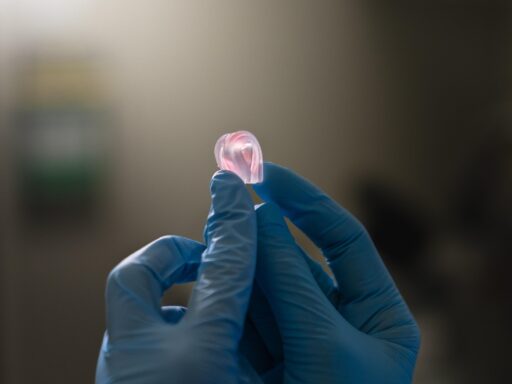
To address this, the researchers first 3D-print the intricate architecture using a standard polymer gel. They then soak the structure in an iron-ion solution followed by a hydroxide bath, which creates magnetic iron-oxide nanoparticles directly inside the gel. This allows for “unprecedented design freedom to print multifunctional structures,” according to Sun. By tuning the laser power during the initial 3D printing phase, the team can even control how magnetic specific parts of a single structure become.
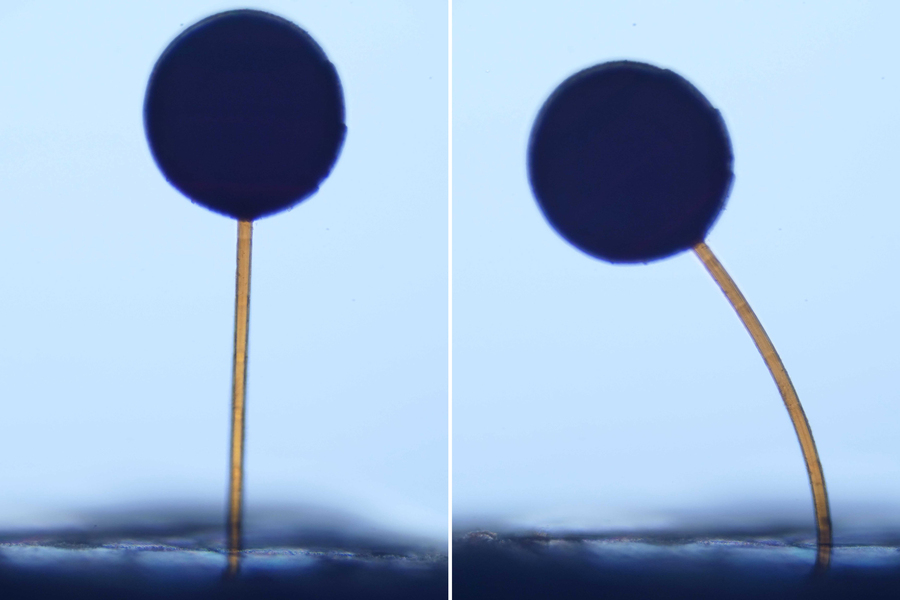
The team demonstrated this by creating tiny lollipop-shaped grippers and “bistable” switches the size of a red blood cell. These components respond instantly to an external magnet, mimicking the movement of a Venus flytrap or a robotic hand.
“We can now make a soft, intricate 3D architecture with components that can move and deform in complex ways within the same microscopic structure,” said Carlos Portela, Associate Professor of Mechanical Engineering at MIT. “For soft microscopic robotics, or stimuli-responsive matter, that could be a game-changing capability.” In the future, Portela and the team envision these 3D architectures acting as tiny medical robots guided through the human body: “It could latch onto something, for instance, to take a biopsy. That is a vision that others can take from this work.”