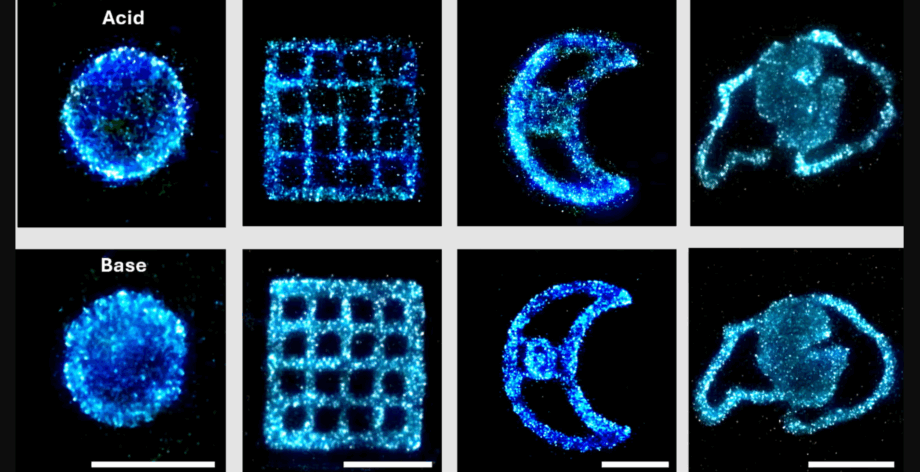
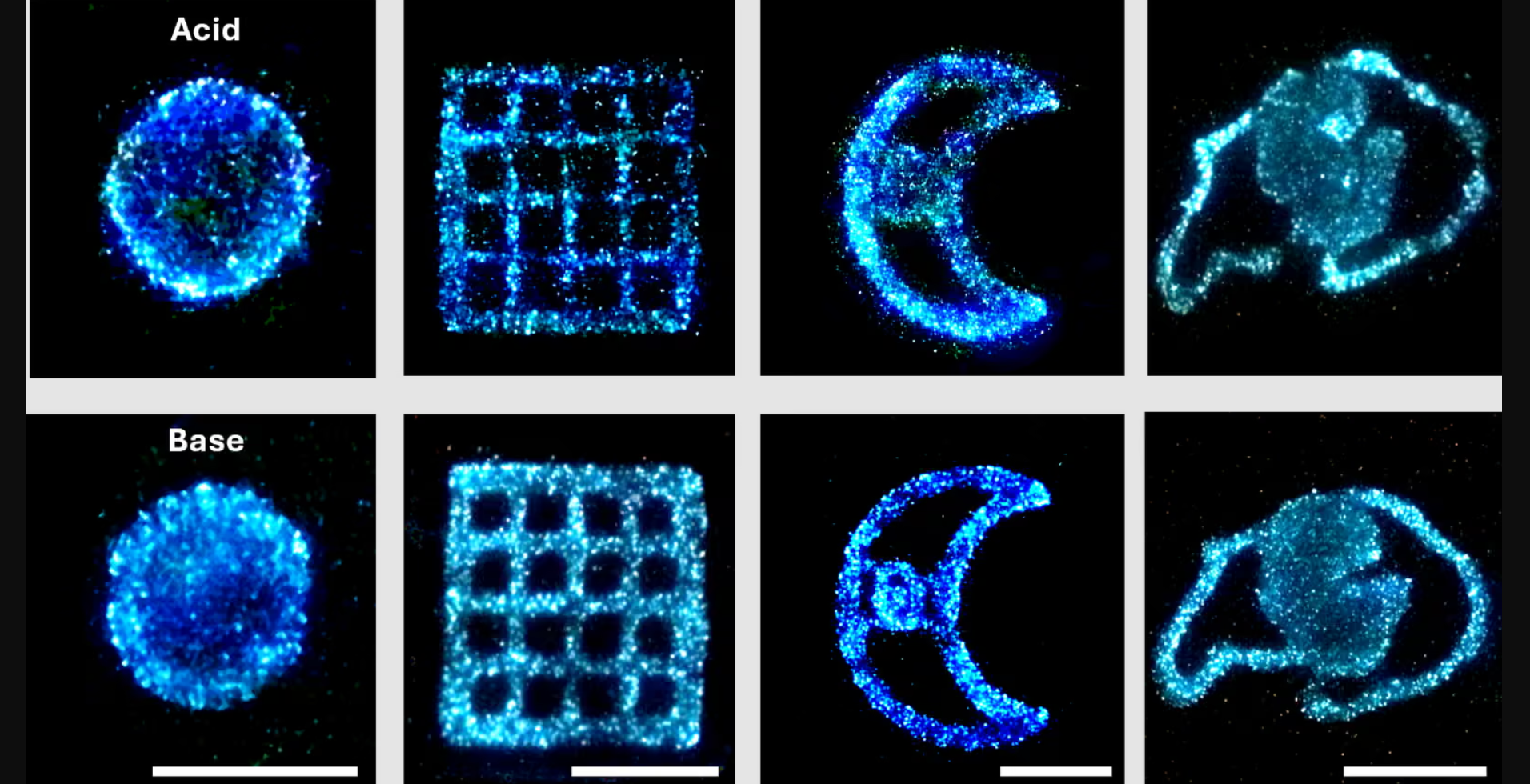

Researchers at CU Boulder have 3D-printed a living material that glows without electricity, with bioluminescent algae embedded inside water-based structures. According to CU Boulder Today, the groundbreaking invention could eventually support technologies ranging from autonomous underwater robots to environmental sensing systems – powered by organics instead of batteries.
The study, published in Science Advances, focuses on Pyrocystis lunula, a species of bioluminescent algae famous for producing the striking blue glow sometimes seen in ocean waves. The research team discovered a way to activate and sustain that glow using simple acidic and basic chemical solutions.
“This project was a moonshot idea,” said Wil Srubar, professor in the Department of Civil, Environmental and Architectural Engineering. “I was curious if we could create a world in which we don’t use electricity but rather use biology to produce light.”
The team exposed the algae to acidic and basic environments and found that both could trigger light production. In acidic conditions, the algae remained brightly illuminated for up to 25 minutes, which is dramatically longer compared to the millisecond flashes typically seen in nature.
“It was a very exciting moment when we found the right chemical stimulant that allowed the light to stay on for a long time,” said Giulia Brachi, first author and research associate. “This is the first time we have figured out how to sustain luminescence.”
To turn these astonishing glowing organisms into functional materials, researchers embedded the algae inside a naturally derived hydrogel and used 3D printing to create illuminated structures, including geometric patterns and a CU Buffalo logo. The algae stayed alive inside the printed forms for weeks, with some structures retaining 75% of their brightness after four weeks.
Beyond the visual impact, the work highlights a more sustainable approach to lighting. Since the algae are photosynthetic, they absorb carbon dioxide while producing light.
“We’re storing carbon while we’re producing light, whereas conventionally, we emit carbon to light up spaces,” noted Srubar.
Researchers now plan to keep investigating whether the algae can respond to additional chemicals, potentially opening the door to living water-quality sensors and other responsive biotechnologies.