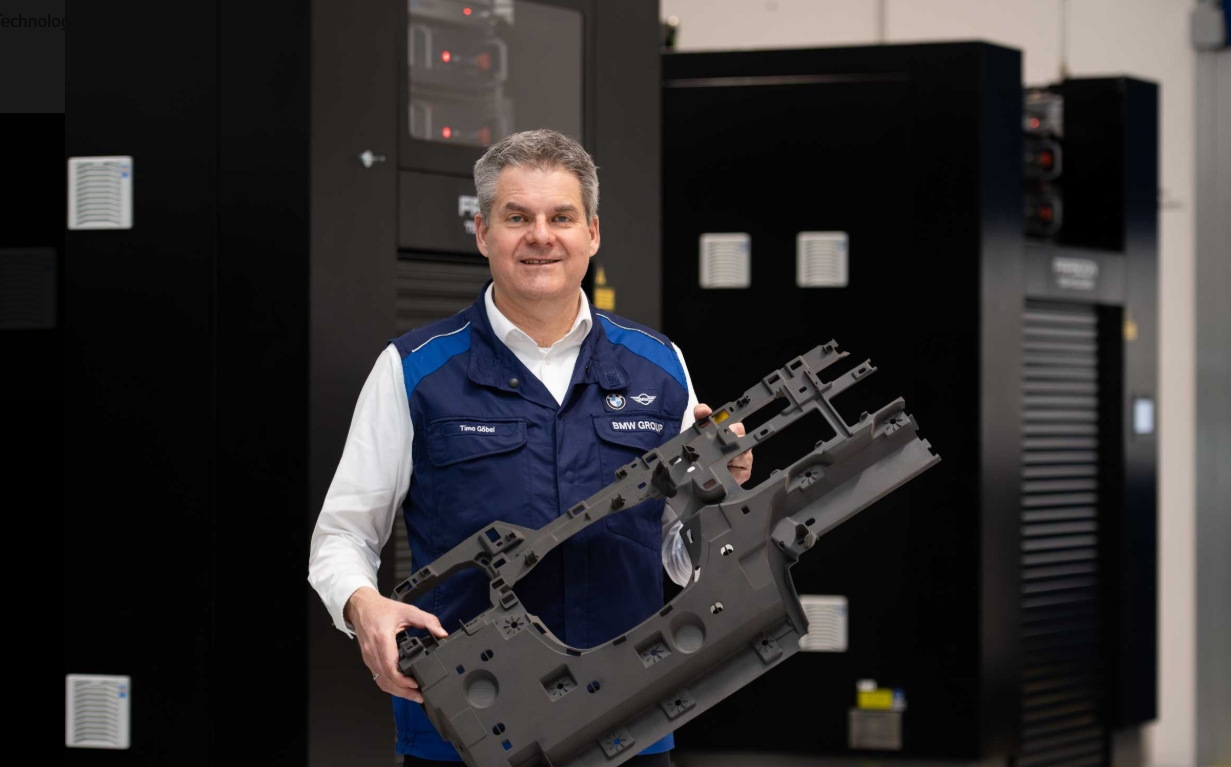

The BMW Group is taking the next step toward large-scale industrial 3D printing. At its Additive Manufacturing Campus in Oberschleißheim, the company is expanding its use of additive technologies with new automated systems, open-material platforms, and an extended technology portfolio. The goal is to integrate additive manufacturing more deeply across the entire vehicle life cycle, from early concept development to series production and after-sales parts.
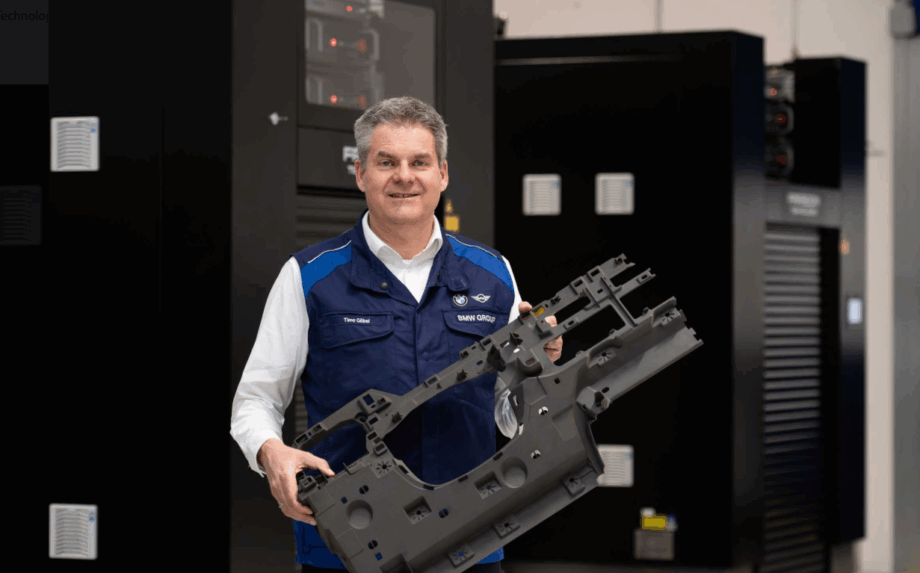
Additive manufacturing is already widely used across BMW’s brands, including MINI, BMW, Rolls-Royce, and BMW Motorrad. According to Timo Göbel, Head of Additive Manufacturing at BMW Group, the technology has moved well beyond prototyping. “Additive manufacturing is now fully integrated across all phases of the product life cycle,” he said in an interview. “3D-printed components are used from early development and prototype production all the way to series production and to support the global production network.”
The company’s Additive Manufacturing Campus plays a central role in scaling these capabilities. Göbel notes that new automated and digitally connected process chains are helping the technology move toward larger production volumes. “A key pillar of our scaling strategy is the use of automated, digitally networked process chains, open-material systems, and open interfaces,” he said, allowing additive manufacturing to integrate seamlessly into existing production structures.
BMW is also expanding its technology mix. In addition to new generations of metal 3D printers, the company plans to introduce Wire Arc Additive Manufacturing (WAAM) into its production network. This method enables the rapid production of large metal components by depositing material layer by layer using a welding arc.
“WAAM significantly accelerates the production of large-format components and integrates optimally into our existing systems,” Göbel noted. The technology is already used in prototype development and vehicle testing, and BMW plans to begin series production of the first WAAM-produced components in 2027.
For BMW, additive manufacturing is becoming more than a development tool, it is evolving into a fully integrated production technology that could reshape how vehicles and their components are designed and manufactured.