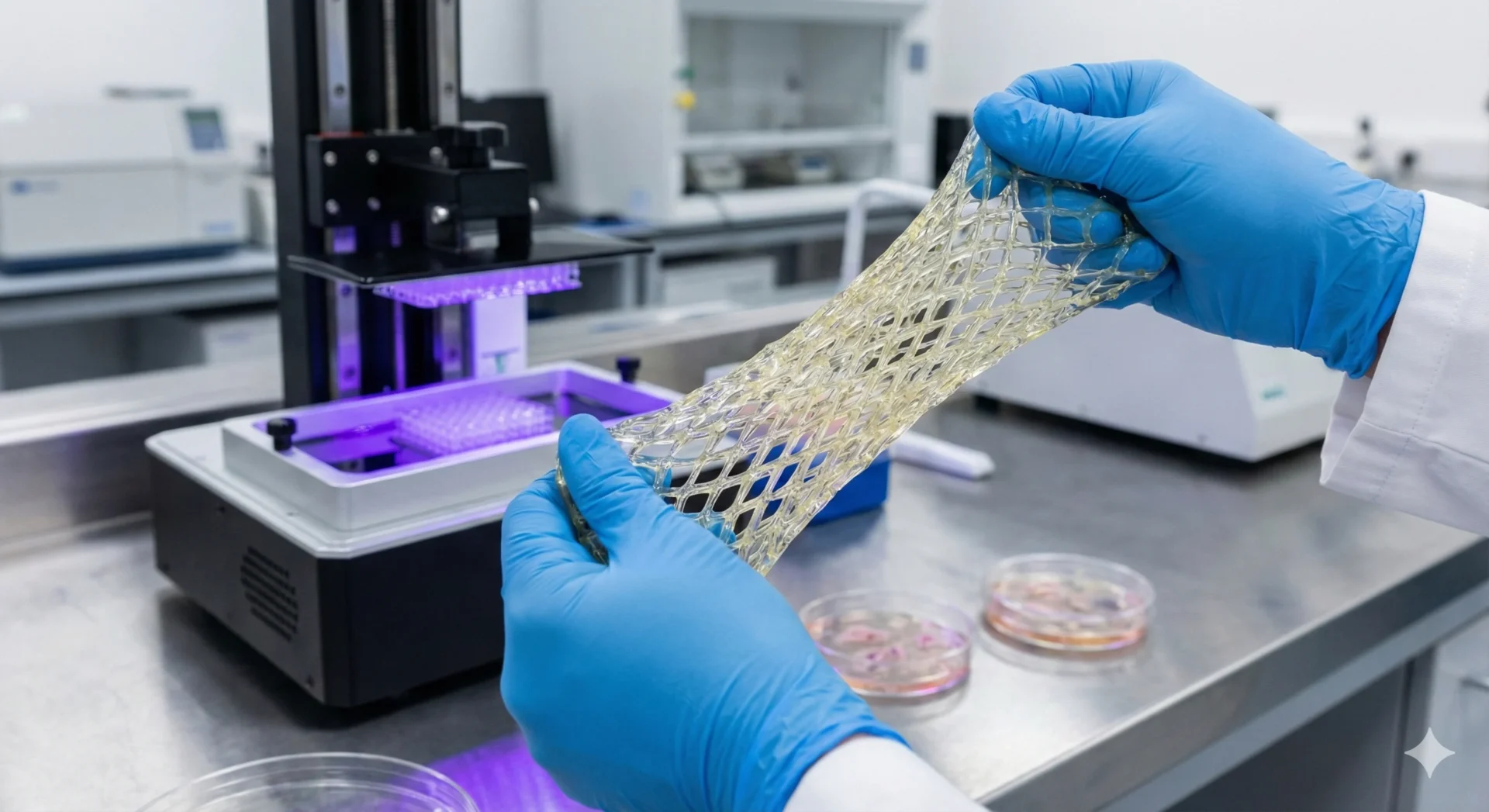

The research team at the University of Virginia (UVA) has presented an innovative 3D-printable polymer that could revolutionize fields ranging from organ transplants to advanced battery technology. Detailed in the journal Advanced Materials, the study unveils a highly elastic, immune-system-friendly form of polyethylene glycol (PEG), a material already widely used in biomedical technology.
The advancement stems from the need to address the issue of traditional PEG networks that tend to be brittle and fragile. The UVA Soft Biomatter Laboratory team, led by Associate Professor Liheng Cai and Ph.D. student and first author Baiqiang Huang, cracked the code by incorporating a unique molecular design.
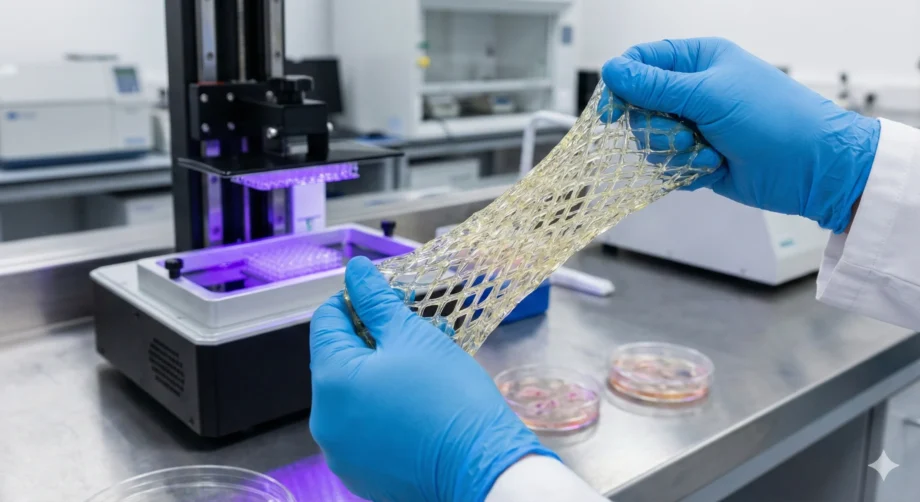
The scientists used a “foldable bottlebrush” structure, in which polymeric molecules feature flexible side chains radiating from a central backbone that “can collapse like an accordion,” storing excess length. Professor Cai explains the fundamental impact of the architecture: “Our group discovered this polymer and used this architecture to show that any materials made this way are very stretchable.”
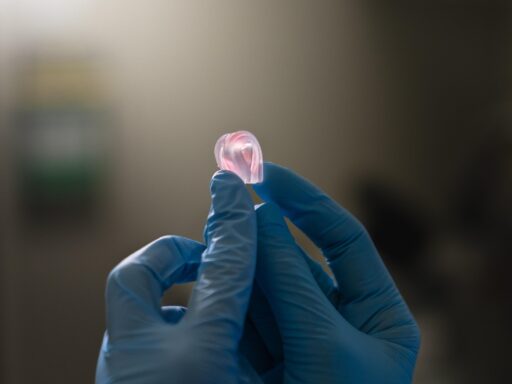
This newfound elasticity is vital for medical scaffolding, such as that needed for synthetic human organs, where flexibility and movement are essential.Lead author Huang, utilizing UV light to initiate polymerization, demonstrated the material’s versatility. “We can change the shape of the UV lights to create so many complicated structures,” he said, resulting in stretchy PEG-based hydrogels and solvent-free elastomers that can be soft or stiff. Crucially, the material proved biocompatible with cultured cells, which is great news for its potential use within the body.
Beyond medicine, the material shows promise for energy storage. Compared to existing options, this stretchy 3D-printable PEG boasts greater electrical conductivity and much higher stretchability, highlighting its potential as a high-performance solid-state electrolyte for advanced battery technologies. “Our team continues to explore potential extensions of the research in solid-state battery technologies,” concluded Cai. This breakthrough, funded by organizations including the National Science Foundation, signals a significant advance in additive manufacturing possibilities.