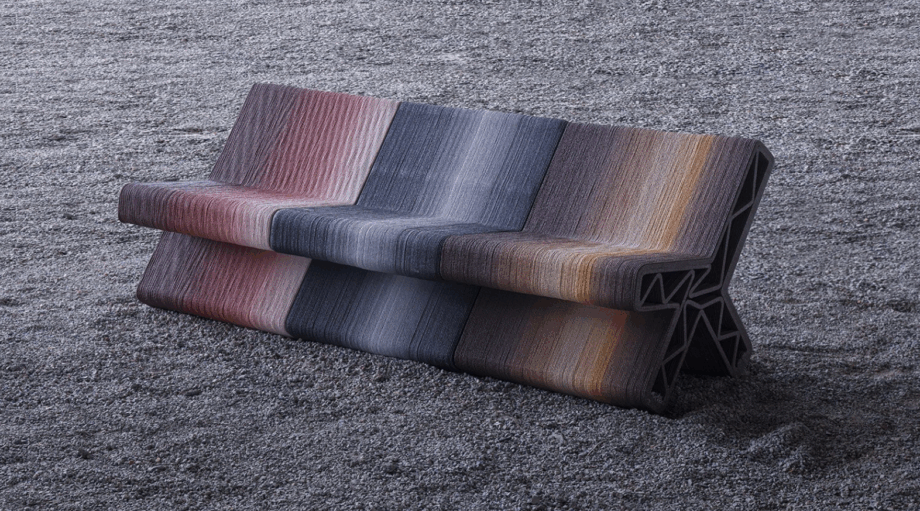
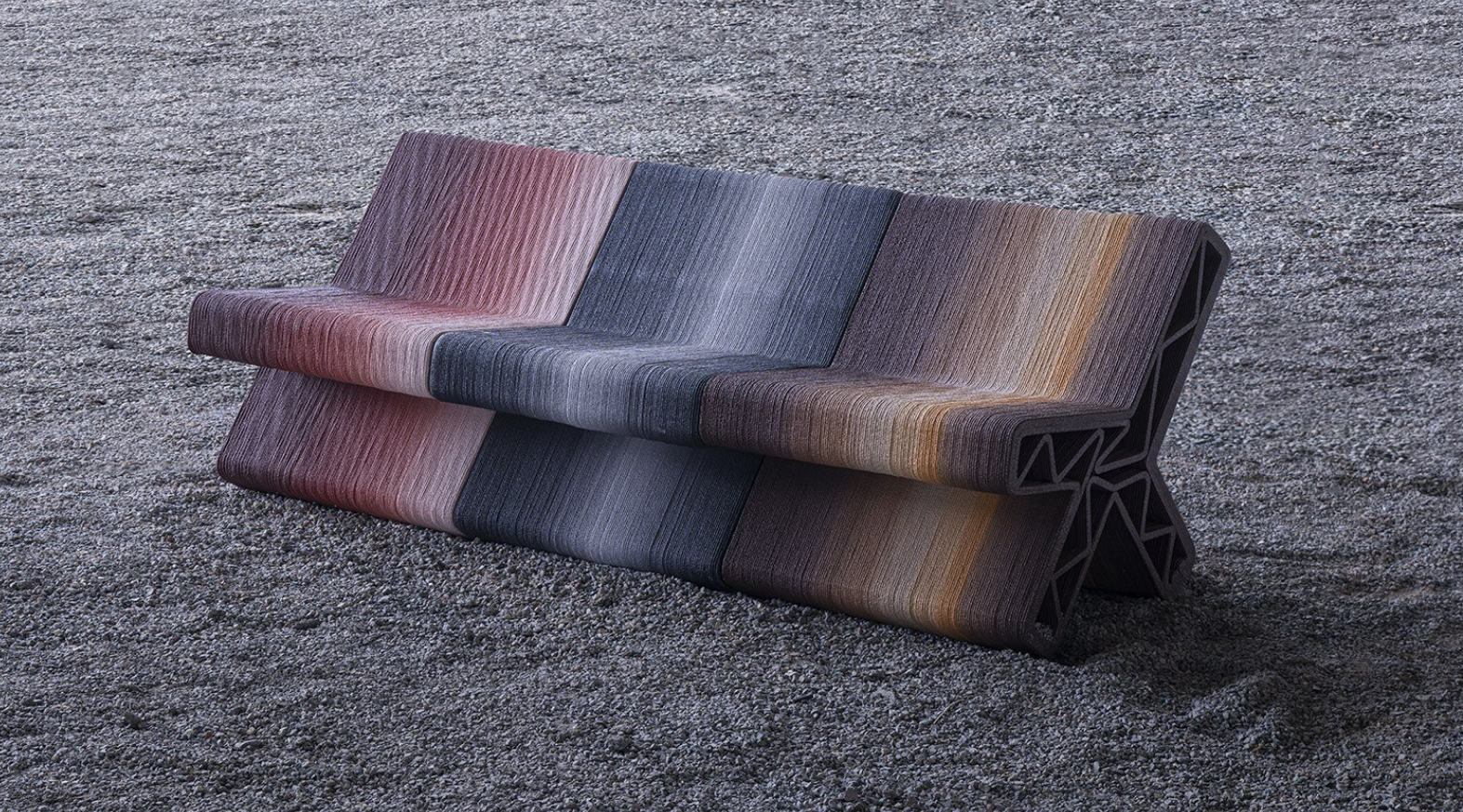

BENTU DESIGN has launched a new project that demonstrates how 3D technology can reshape the lifecycle of construction materials. The initiative titled Inorganic Growth: Regeneration of Urban Village Memory, turns demolition waste like concrete, brick, and mortar into 3D-printed street furniture, reports designboom.
“At its core, the project treats waste as a resource rather than a byproduct,” the team explained, with the developed composite containing up to 85% recycled material. The process combines crushing, sorting, and additive manufacturing in one localized workflow, with debris being reused directly on-site. According to BENTU DESIGN, this approach reduces transportation-related emissions by approximately 70%.
The material itself is engineered for performance. Once activated, fine particles are combined with fly ash and silica fume, creating a binding component, with coarser aggregates providing the structure. “The mixture balances extrusion fluidity with post-deposition stability,” the designers said, emphasizing the role of AI-assisted optimization and thixotropic agents in maintaining consistent print quality.
The project is an exploration of 3D printing’s expressive potential. Using a layer-by-layer deposition method similar to Fused Deposition Modeling, dual print heads distribute pigments to produce gradual color transitions. According to the team, these gradients are not decorative but emerge from the material itself. The unique tones are derived from brick, concrete, and ceramic fragments.
In addition to material innovation, Inorganic Growth positions 3D printing as a tool for urban continuity. “By retaining the physical substance of demolished structures, the furniture carries a trace of the original environment,” BENTU DESIGN explained.
With a material utilization rate of 92% and carbon reductions of up to 80% compared to conventional methods, the project offers a compelling model for circular, digitally driven urban infrastructure.