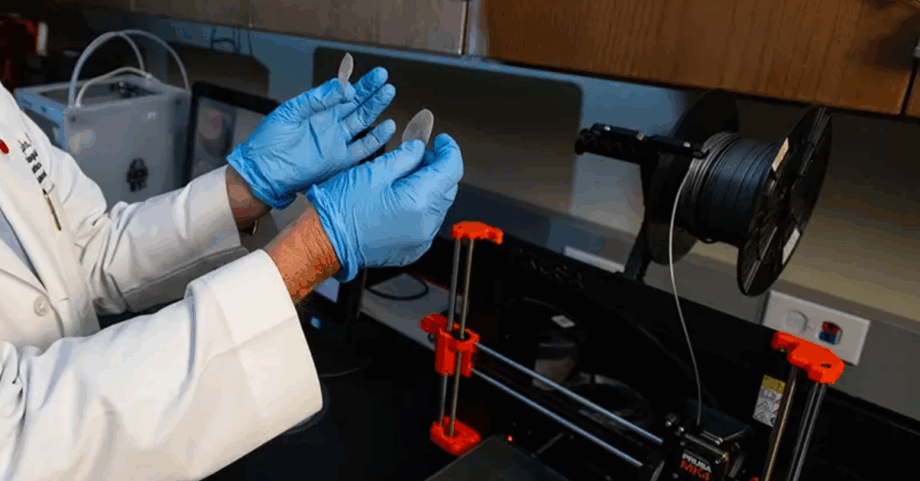
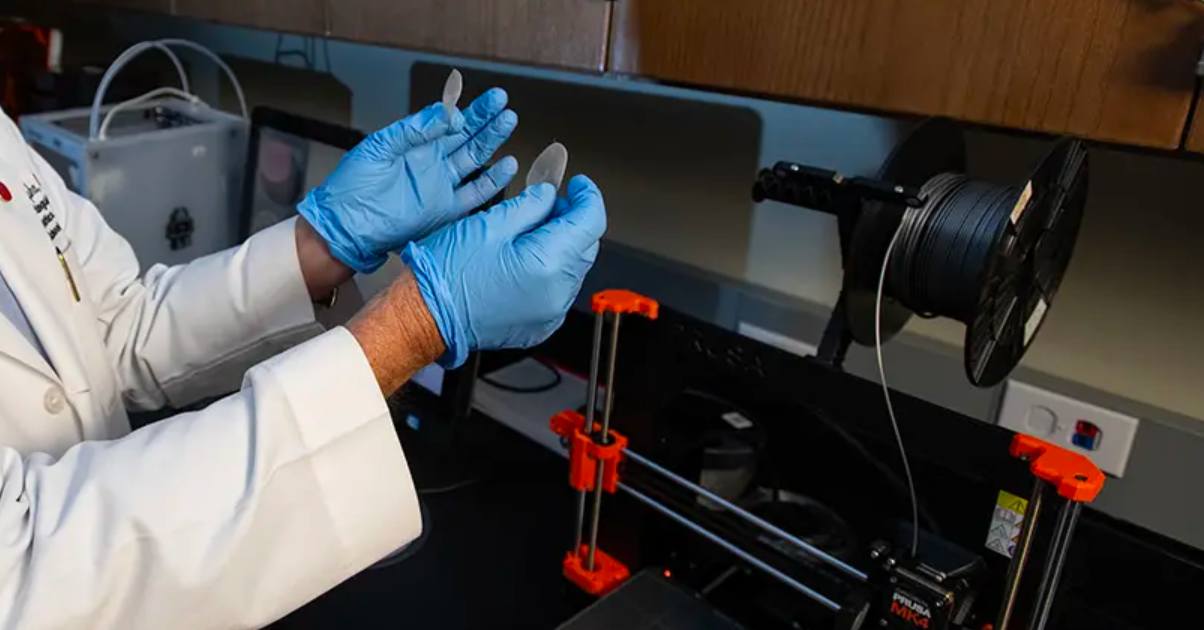

Researchers at the University of Mississippi are exploring 3D printing as a tool to aid in chronic wound treatment. The team is developing medicated patches designed to support healing. The team at the School of Pharmacy has designed a customizable scaffold to deliver biodegradable antibacterial compounds directly to the wound site.
Chronic wounds like diabetic ulcers or pressure sores are a common challenge, difficult to treat, and have an increased risk of infection. “People with limited mobility or diabetes often have wounds with reduced oxygen supply,” said postdoctoral researcher Sateesh Vemula. “This can slow the body’s normal repair process and make wounds more likely to become long-lasting.”
Engineered by scientists including Michael Repka and Nouf Alshammari, the solution relies on 3D printing to develop a breathable, patch-like structure made from chitosan, an organic material derived from crustaceans, insects, and fungi, and combined with plant-based antimicrobials. Beyond protecting the wound, the scaffold encourages tissue growth and minimizes inflammation.
“A lot of bandages are made with organic solvents, which actually hurt the wound-healing process,” Repka explained. “With the materials and technique we’re using, you don’t have organic solvents.” He added that avoiding long-term antibiotic use may also help reduce bacterial resistance.
3D printing allows for tailoring the patches to fit specific wounds. “The materials we used are also biodegradable,” Alshammari said. “With time, the scaffold is going to be absorbed into the skin.”
The team envisions potential for field applications. “If you have a generator that can run these 3D printers, you can print the scaffold you need,” Repka noted.
The results have been published in the European Journal of Pharmaceutics and Biopharmaceutics, while the team is working on further testing and review, including by the Food and Drug Administration. Clinical use is the next goal, translating the innovation from research to patients.